Creating costumes isn’t the same as creating clothes that people wear to work, school, or out and about. Creating Disney costumes takes this to the next level. These costumes aren’t just worn in performances on stages, but also out in parks in a variety of different weather conditions. The costumes are accompanied by make-up, hairstyling, wigs, and other accessories.
Ahead of the opening of The Princess Cavalcade at Disney Adventure World on July 24, 2026, Disneyland Paris shared a conversation with the cavalcade’s costume designer, Isabelle Lemarié, as well as hair and make-up designers Julie Martinez and Jordan Ribeiro about the role costumes play in this production, along with the effort that goes into them. Check out this conversation below!
Before we talk about your work on The Disney Princess Cavalcade, could each of you tell us a bit about your role and your career path at Disneyland Paris?
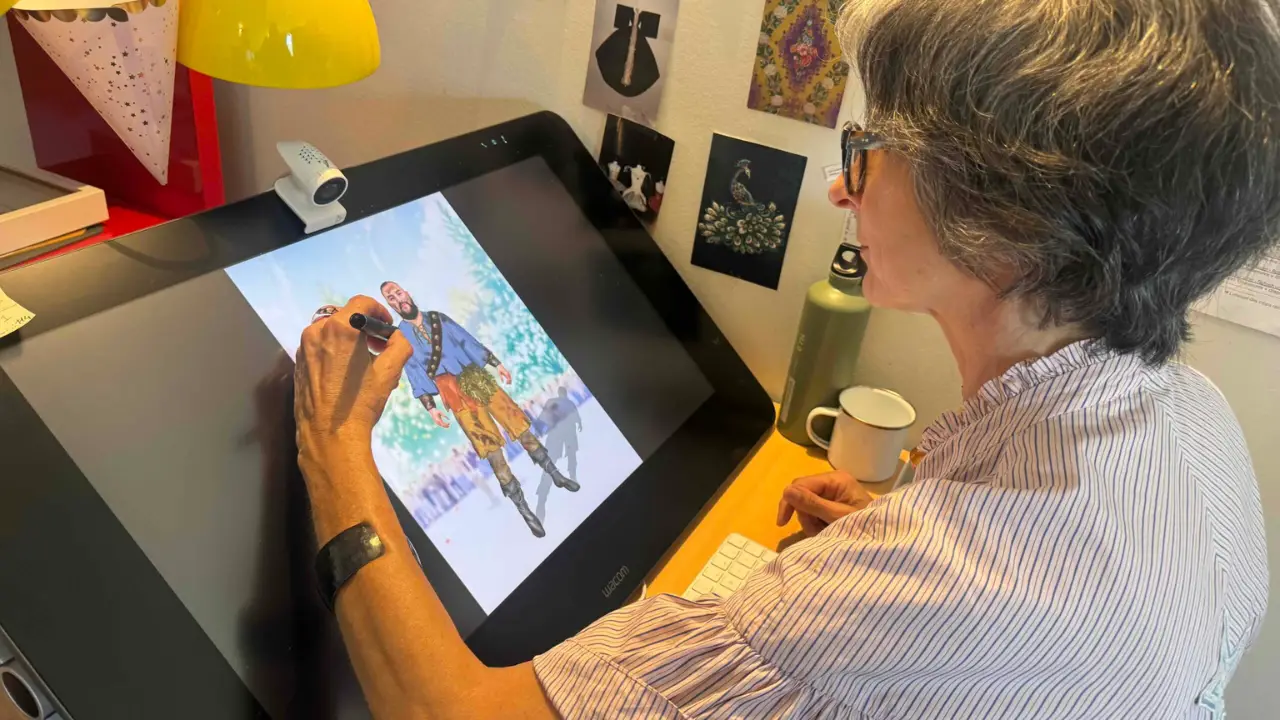
Isabelle: I’ve been working at Disneyland Paris for 30 years. I started out as a dresser on the shows, then became an assistant, and later a costume designer. For the past 15 years, I’ve been a costume designer for the shows and parades. It is a fascinating profession that requires a good knowledge of stage costumes, the history of costume and dressmaking. We design costumes based on beautiful stories and a stage setting… Research into materials is also very important. Among the projects that have inspired me the most, there is The Forest of Enchantment (2016), a truly beautiful production on which I had the pleasure of working with Julie for the first time. There is also Disney Junior’s Dream Factory in 2021, A Million Splashes of Colour in 2024, and, more recently, the opening of World of Frozen here at Disney Adventure World.
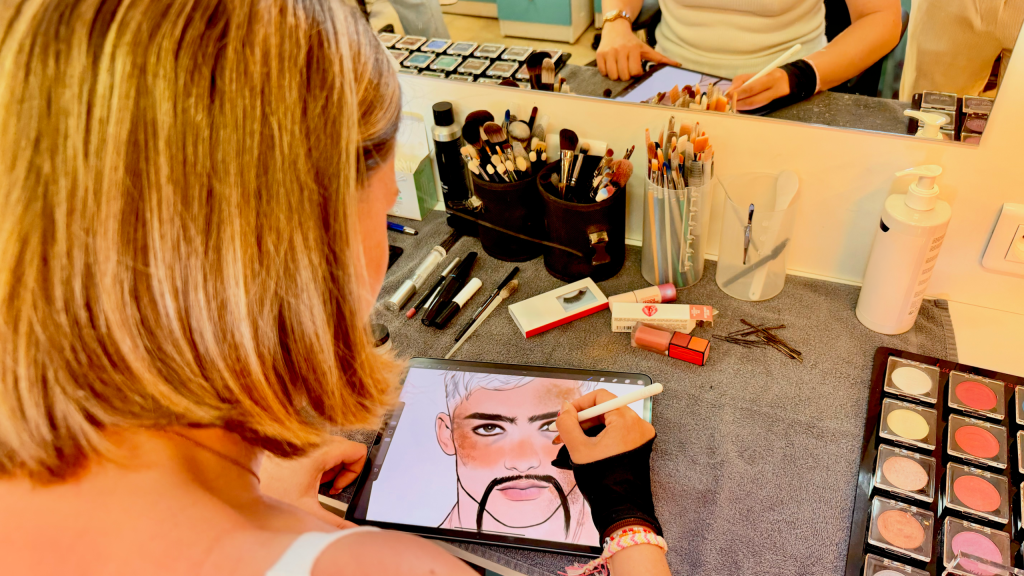
Julie: I’ve been with the company for ten years. I started out doing on-set make-up artistry, which meant I was doing the make-up for performers on set. I went on to become a senior Cast Member and worked extensively on the shows, before moving into a creative role about four years ago. My first major creative project was Alice and the Queen of Hearts: Back to Wonderland.
Jordan: I’m a hairdresser and wig-maker. I started at Disneyland Paris as an intern ten years ago, then became a Cast Member. I then moved on to the cosmetics workshop, where I was responsible for styling the Audio-Animatronics characters in the attractions, before becoming Head Hair and Wig Stylist and then Cosmetics Designer, just like Julie. When we work together, I usually take care of the hairstyles and wigs, and Julie does the make-up, but we can easily swap roles. As you can see, Isabelle, Julie and I make a great team – without forgetting the milliners and everyone else in the hat-making trade, with whom we also work so closely.
How did you design the costumes for the various performers in The Disney Princess Cavalcade?
Isabelle: Once the directors, Françoise Baffioni and Matteo Borghi, had presented the project to us and told us which Disney Princesses were to be featured, we immersed ourselves in the animated films, because everything starts with the stories created by the Studios. Matteo also encouraged us to take a look at the ‘Art of…’ books published to coincide with the release of each Disney animated feature film. They were a major source of inspiration as they contain a wealth of images and concepts, particularly with regard to the characters, with their iconic costumes and motifs.
But for our performers, we decided to design original costumes in the same artistic style as those in Disney films.

From New Orleans to Pacific Islands, every float in the cavalcade is an invitation to travel. How did you convey this through the costumes?
Isabelle: Tiana’s float takes us from the city of New Orleans to the bayou. For the urban look, the artists accompanying her wear vests and caps. And to evoke the bayou, I had a bit of fun with the patterns – water lilies – printed on different coloured backgrounds.
For Raya’s float, we stayed fairly true to the film. Although Kumandra is a fictional kingdom, it clearly evokes Southeast Asia. I really like this look and drew direct inspiration from it when designing the performers’ outfits. I looked for a print similar to those in the film, which I produced in three colours. The costumes are also deliberately asymmetrical, which adds an extra dynamic feel.
Jordan: As for Julie and I, we used Isabelle’s sketches as a starting point to develop hairstyles featuring little braids, as well as make-up looks inspired by the film’s elegant yet colourful aesthetic.
The creators of Moana were keen to pay tribute to the Pacific Islands. What was your approach?
Isabelle: It was exactly the same. I wanted the costumes for this team to look authentic and to reflect the spirit of this culture. I really enjoyed working with different materials, such as raffia for the skirts, and prints. I wanted a ‘handmade’ look, with textures a bit like chalk, inspired by pastels, as if the costumes had been painted on the spot. We also used raffia for the bracelets, with sewn-on shells. And for the necklaces, I had the idea of using macramé, a form of weaving very similar to what you see in the film. The idea is to take the audience on this journey through all these striking details.
Jordan: The artists who accompany Moana on this adventure also wear beautiful flower crowns. I had lots of discussions with Isabelle to ensure that their colours would complement those of the costumes, using shades of pink, yellow and orange. It means the colours really pop. From a technical point of view, it was a real challenge, as our crowns have to fit all head sizes and the fastening has to be stable and secure enough so that they don’t move whilst our performers are dancing. To achieve this, we worked closely in-house with the milliners in the couture workshop to devise a fastening system that would hold the wig, the base (the artist’s hair prepared to sit beneath the wig) and the floral crown securely in place.
The artists who will be performing alongside Rapunzel have a completely different vibe!
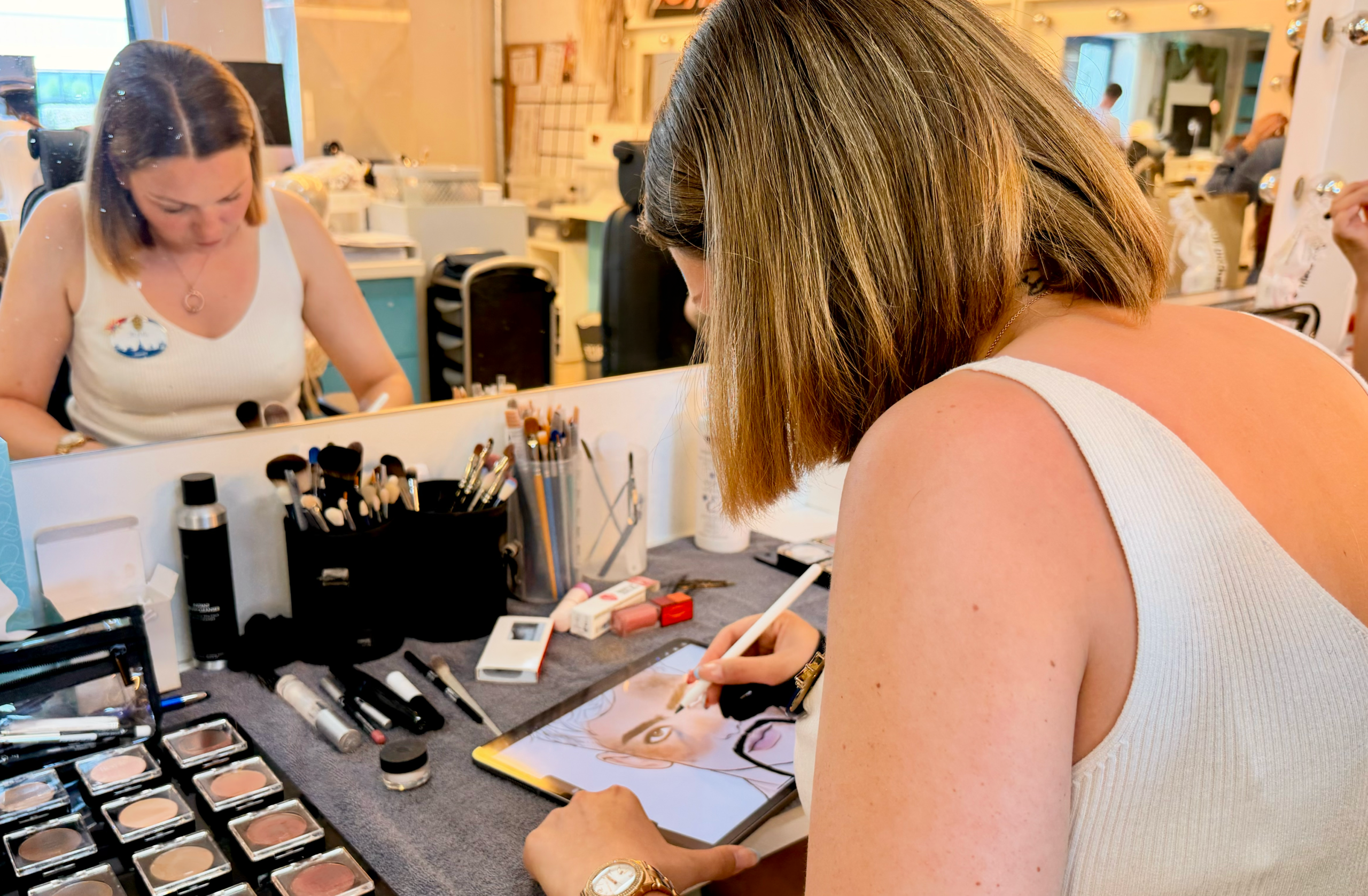
Isabelle: I was given free rein to come up with something very cartoon-like. I started with the scene ‘I’ve Got a Dream’, which takes place in the Canard Boiteux tavern. I’ve watched it over and over again. Our performers are thugs, and what makes this production special is that each of them is a character in their own right; each has a personality that we had to convey through their costumes, particularly by making use of different fabrics. These are both raw and natural. A patina serves to accentuate the light and shadow. I really enjoyed developing this highly theatrical approach.
Jordan: For the performers’ wigs, we took our inspiration from the directors’ concept and Isabelle’s sketches. This time, the hairstyles are intentionally chaotic! On this set, they play a particularly important role in bringing the story to life, and this includes wigs and facial hairpieces such as moustaches and goatees, which had to be designed so that they could be put on and taken off easily and quickly several times a day. It’s a particularly interesting and really very funny section! Usually, every detail of a wig’s hairstyle is decided in advance, right down to the individual strand. But on this unit, we have things that are completely unstructured. We’re looking at the overall result. The technique reflects the characters perfectly, with a zany side that suits them down to the ground!
Julie: When it came to the make-up, I also drew a lot of inspiration from the costumes Isabelle designed. Everything starts from there, with the aim of creating harmony from the top of the head down to the feet. For the thugs, we opted for an approach based on exaggeration and caricature, to better highlight each character’s identity. So I worked very closely with the directors to give each character a specific look. We added prosthetic noses to give them a comical, cartoon-like appearance. There’s even a touch of magic about the make-up. The bulk of the work involved making each character distinctive – particularly through the use of cheerful, vibrant colours – whilst ensuring they blended harmoniously with the main character, who in this case is Rapunzel. I would also like to thank the team I work with every day in the field of creative cosmetology. It’s a real team effort: we work together to drive creative projects forward, sharing our ideas and expertise to bring our shows to life here at Disneyland Paris.
How do the performers cope on a day-to-day basis with the wigs and make-up you have designed?
Jordan: Hair styling is carried out entirely by the cosmetology teams. In some cases, an artist may fit and secure the wig on their own, but this is always done under the supervision of the production teams, to ensure that the designers’ vision is always faithfully upheld.
Julie: We’re often asked whether the artists apply their own make-up or have it applied for them. We have a team of make-up artists who are always on hand. The rest of the time, the performers do their own make-up. The rehearsal period for a show like this includes a training phase that can last several weeks or even several months, depending on the project, to ensure that each performer has mastered their make-up perfectly. We also provide them with step-by-step instructions so that they can work independently, whilst our operational cosmetics teams are always on hand to offer support should the need arise.
The functional aspect of costumes is also essential to the creative process.
Isabelle: Together with my team – which consists of a costume designer and three assistants – we focus particularly on ergonomics. The clothes must be comfortable and allow complete freedom of movement. So we work together to choose fabrics that are soft and not too warm in summer, and that keep us warm in winter, because a cavalcade transcends the seasons. More layers of clothing will then be added as the temperature drops. We also have a sourcing specialist who attends major textile trade fairs and regularly brings us back innovative solutions to better protect and support our performers.

And where do the textiles you use come from?
Isabelle: It all comes from France, from Paris as well as from the provinces. The textiles are then embroidered, finished and printed here in our workshops.
Costumes, make-up and wigs combine creativity and technical skills.
Isabelle: It is a privilege to be able to express ourselves in both these areas within our respective fields of expertise. Every project is an opportunity to take on new challenges, and with The Disney Princess Cavalcade, there was no shortage of them!
Are you excited about the arrival of The Disney Princess Cavalcade at Disney Adventure World? Who is your favorite Disney princess? Share your thoughts and opinions in the comments below!