The Disneyland Resort, as everyone knows, will turn 25 years old on February 8, 2026. That marks the date, in 2001, when Disney’s California Adventure (as it was then known) and Disney’s Grand Californian Hotel were officially dedicated and opened to the public. Lost to Disney history, for the most part, is that Downtown Disney, the third new component of the Disneyland Resort, was officially opened on January 12.
Back in 1990, resort expansion had been announced as a part of the Disney Decade. While most of the attention had been focused on the next theme park, there were also plans for up to three new hotels and a shopping/dining district that would be open to the public. All of this was intended to be open by the year 2000.
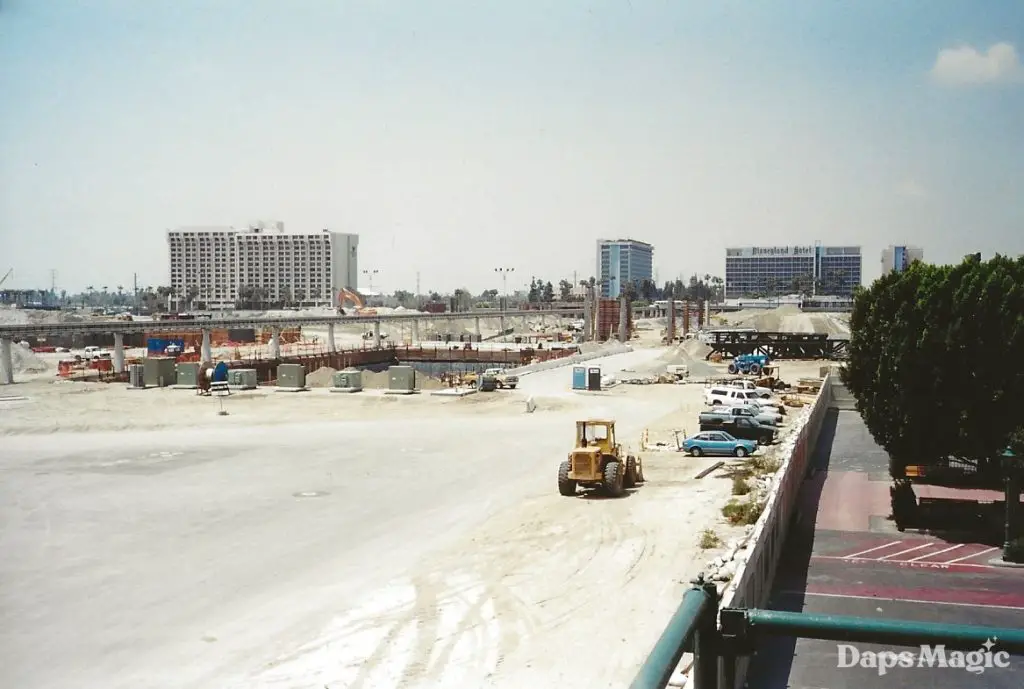
All these improvements were planned for the existing acreage that had been the main parking lot for Disneyland since it opened its doors in 1955. For the shopping district, however, there was also a great deal of demolition on the original Disneyland Hotel. Swept away were the original, low scaled bungalow rooms, the massive swimming pool, and the shopping/dining complex that had been added in the course of 45 years.
Also closed down for initial site preparation was the Disneyland Monorail. Early plans called for additional stops in the new theme park, as well as in the hotel “district.” These were eliminated as plans were scaled back, and in the end, the monorail continued on the same course it had traveled since its first, and only, expansion in 1961. The trains were closed for a time, however, when a section of the track had to be removed to accommodate construction.
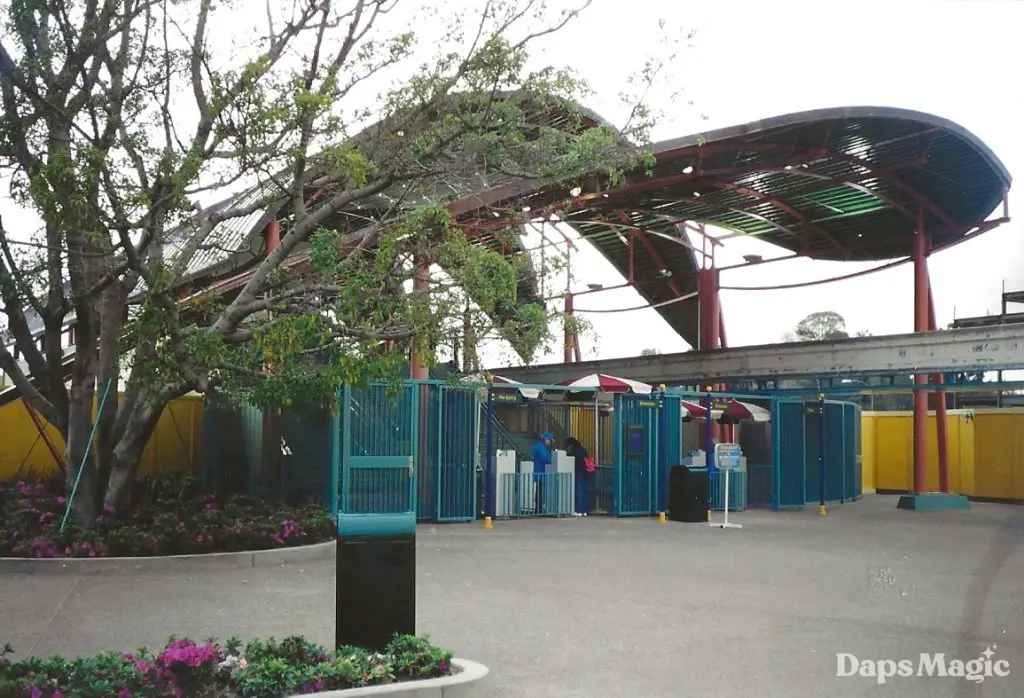
Monorail service for Disneyland Hotel guests was deemed important enough that service was instituted over the intact section of the route, with a single train traveling forward and backward. As soon as the renovated station (in the same location as the old one) was ready, a walled-in walkway through the construction site connected it to the hotel. A few strategically placed cutouts allowed “sidewalk superintendents” to follow the progress of the construction.
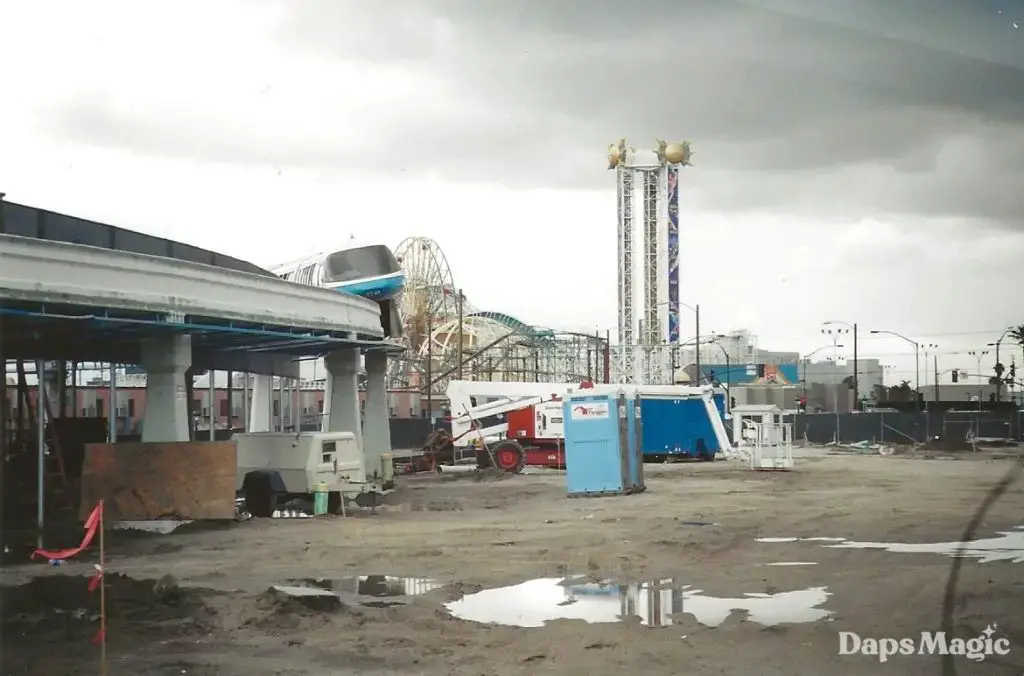
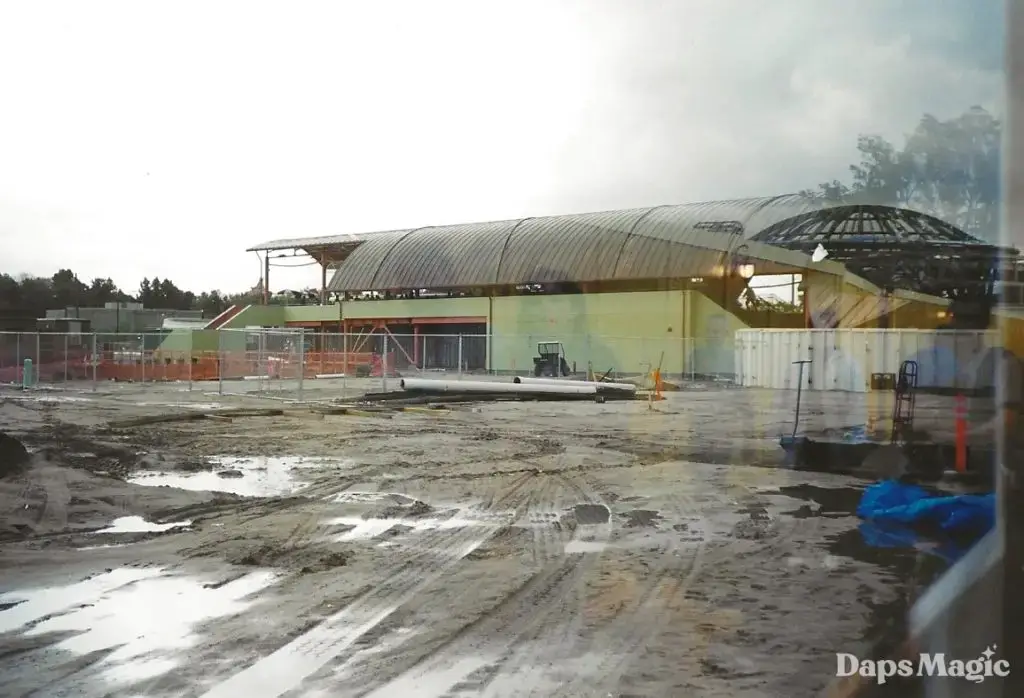
The view south, through to the burgeoning Paradise Pier section of California Adventure, would soon be blocked by the AMC Theatre complex, with the Lego Store filling the inside of the curve. To the north, the “backside” of the platform was visible until the Rainforest Cafe filled that space.
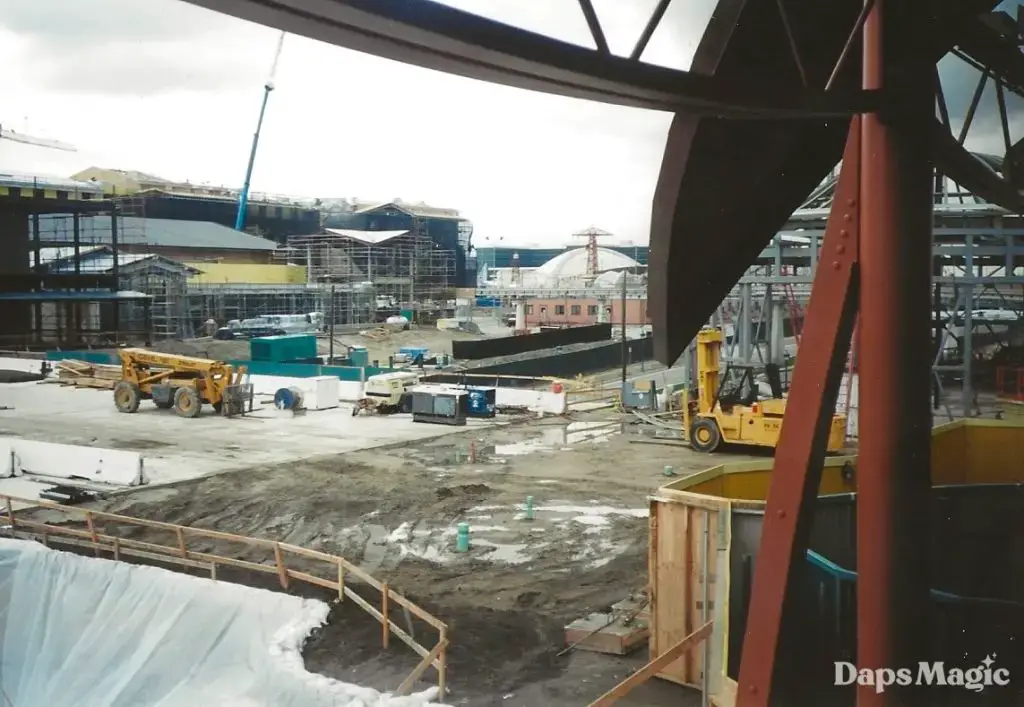
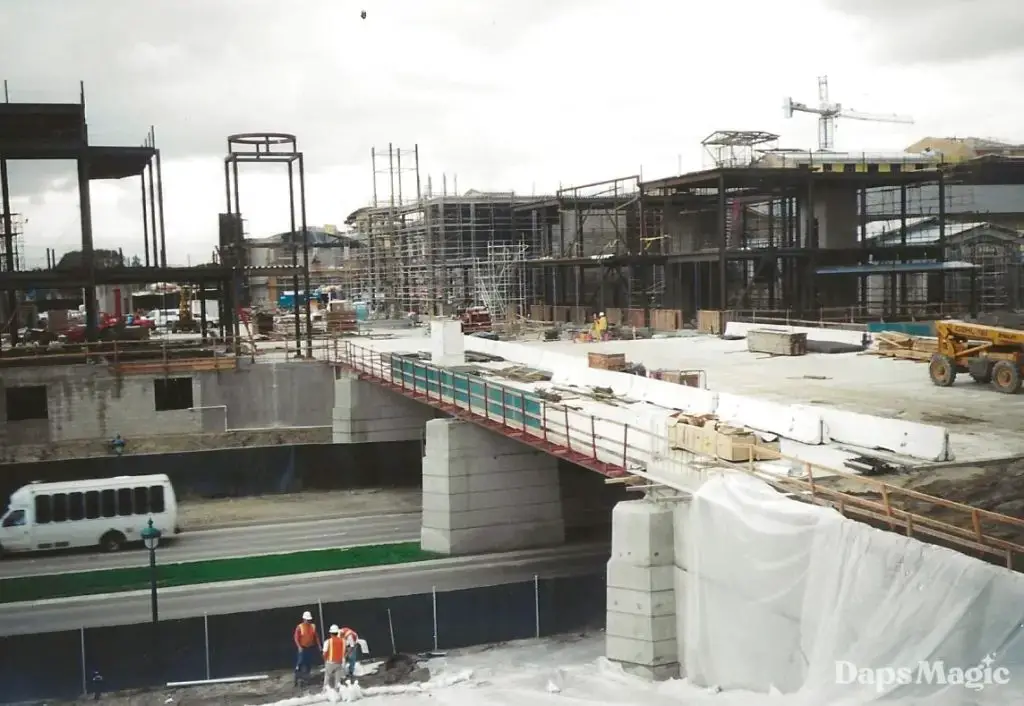
From the platform itself, it was possible to get an elevated view of the construction on the other side of West Street.
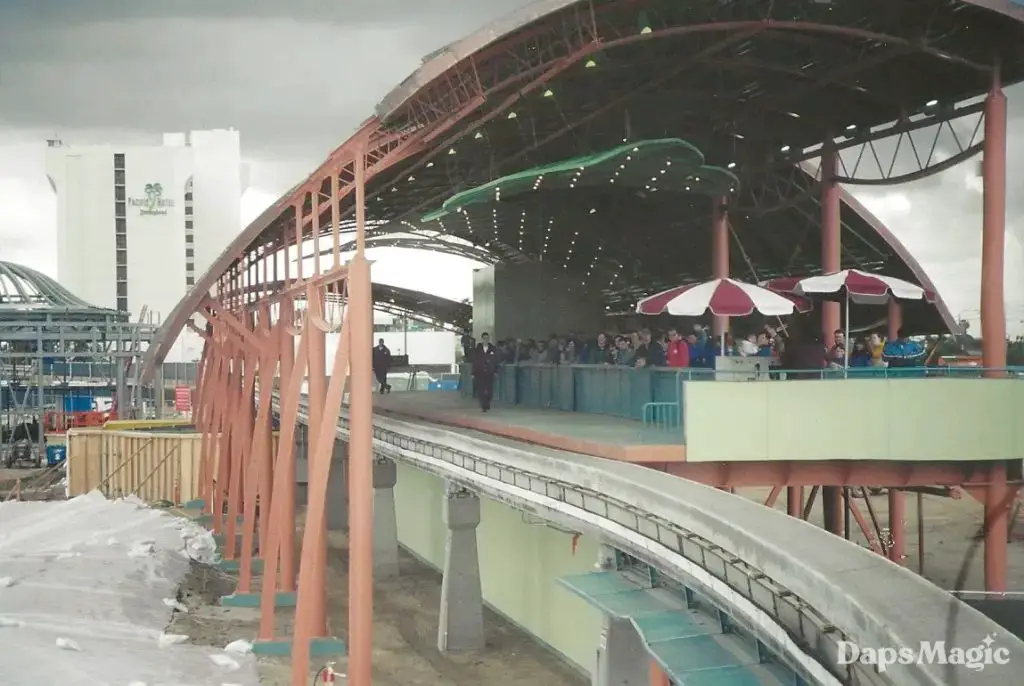
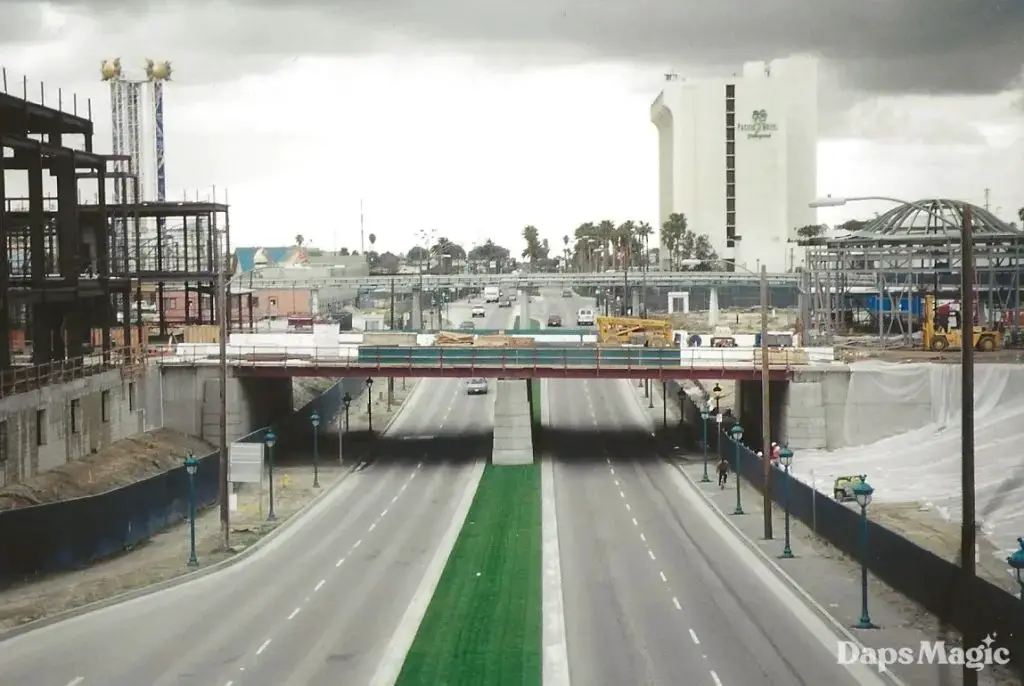
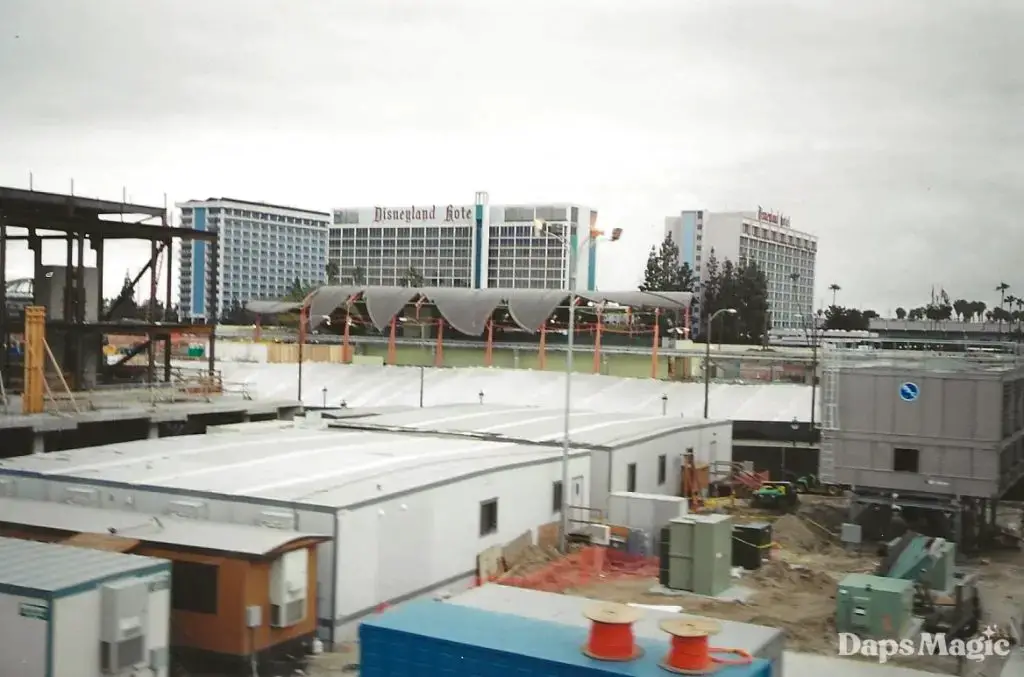
From the windows of the monorail, more could be seen, at least until it made its way into Disneyland itself.
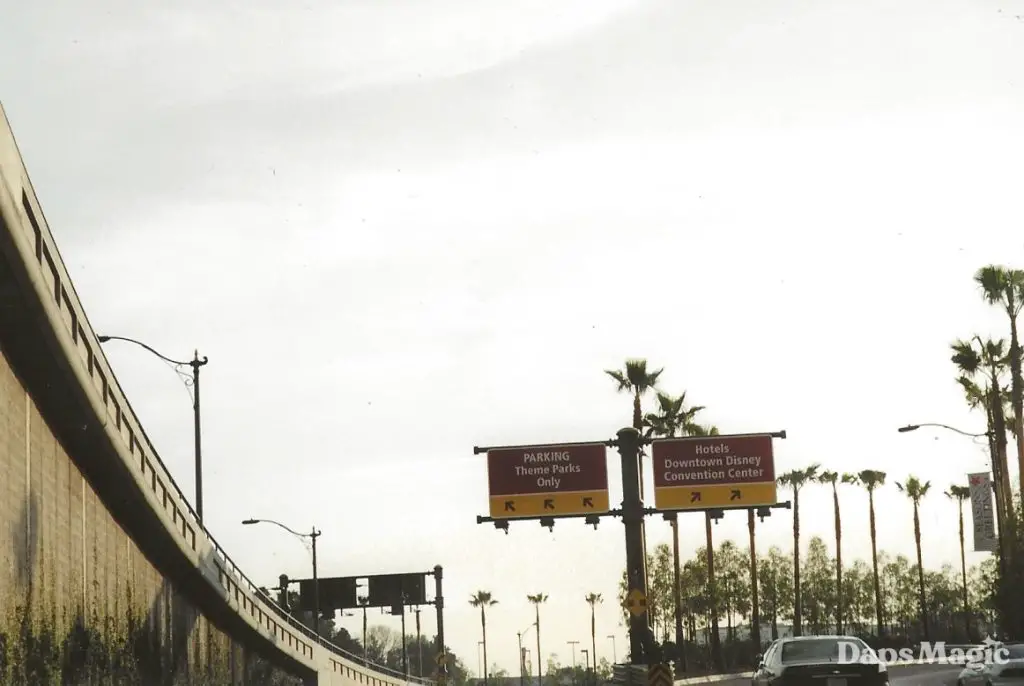
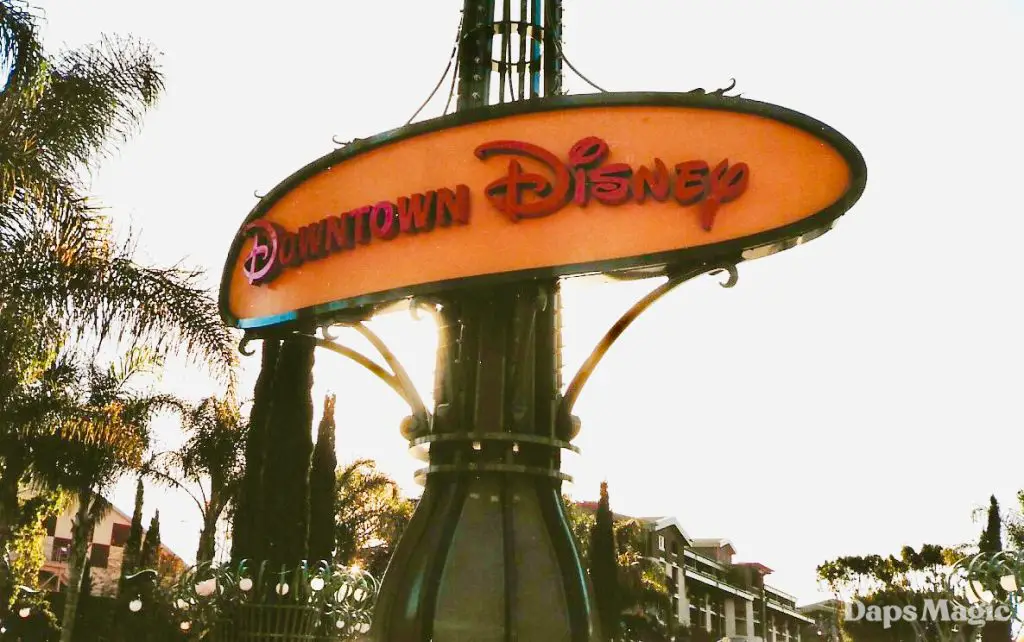
There were also literal signs that Downtown Disney’s opening date was approaching. These new directional signs split the traffic on Disneyland Drive (formerly West Street) in late 2000.
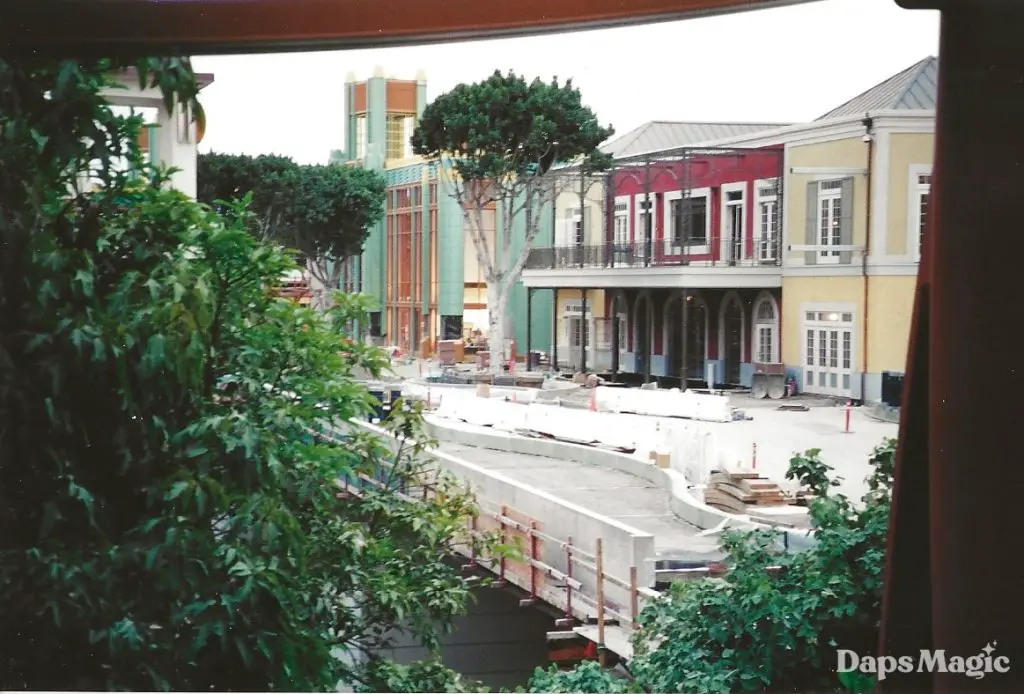
As buildings were given a variety of finishes, paving was laid, and landscaping was added. Downtown Disney would open under a canopy of mature shade trees, rescued by Disneyland horticulturists as they were being removed from Culver City.
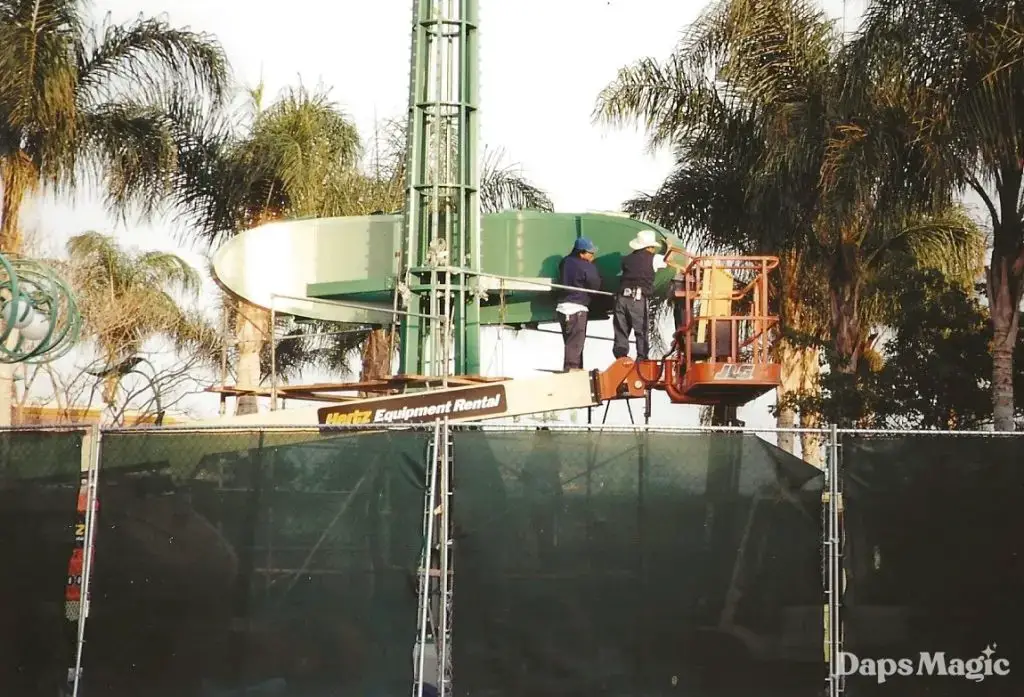
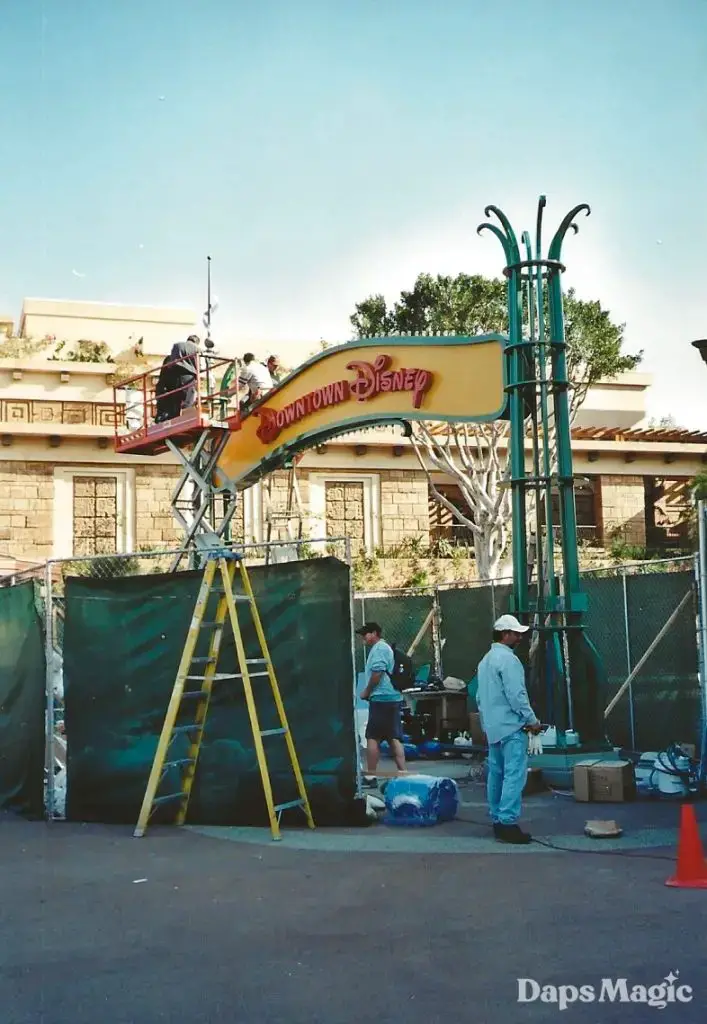
As 2000 drew to a close, finishing touches were being put into place, and construction fences were coming down. While no official announcement had been made, guests visiting the Resort following the 2000 New Year’s Eve party at Disneyland found that Downtown Disney… was open!
Most of these photos were taken during those “sneak preview” days, or immediately after the grand opening on January 12. These show how those first guests experienced this “exciting world-class dining, shopping and nighttime entertainment complex,” to borrow a phrase from the official press kit.
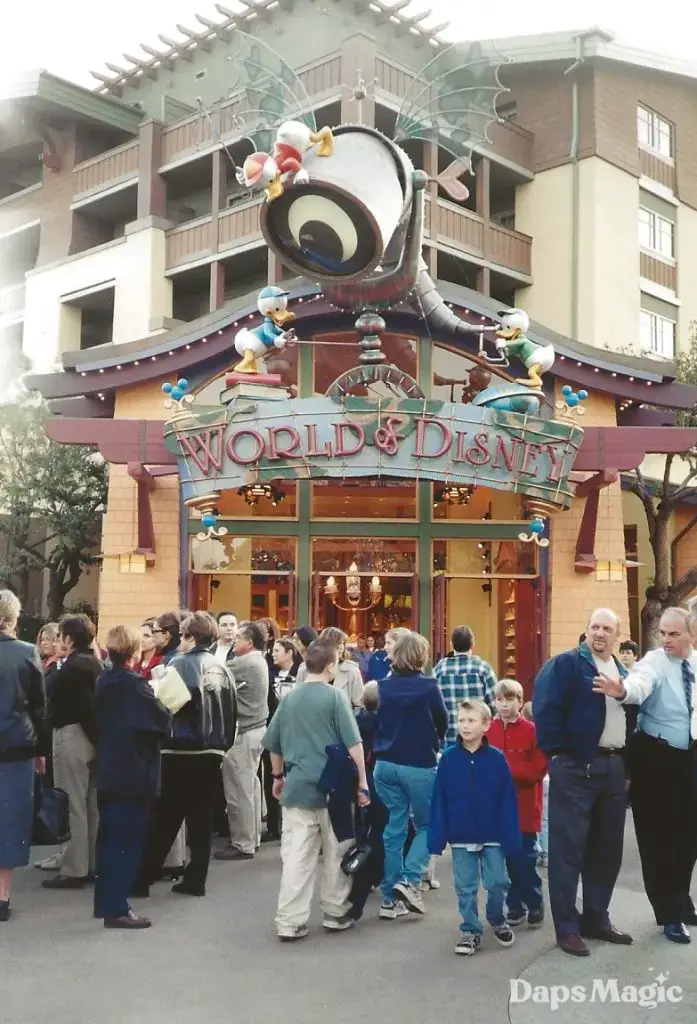
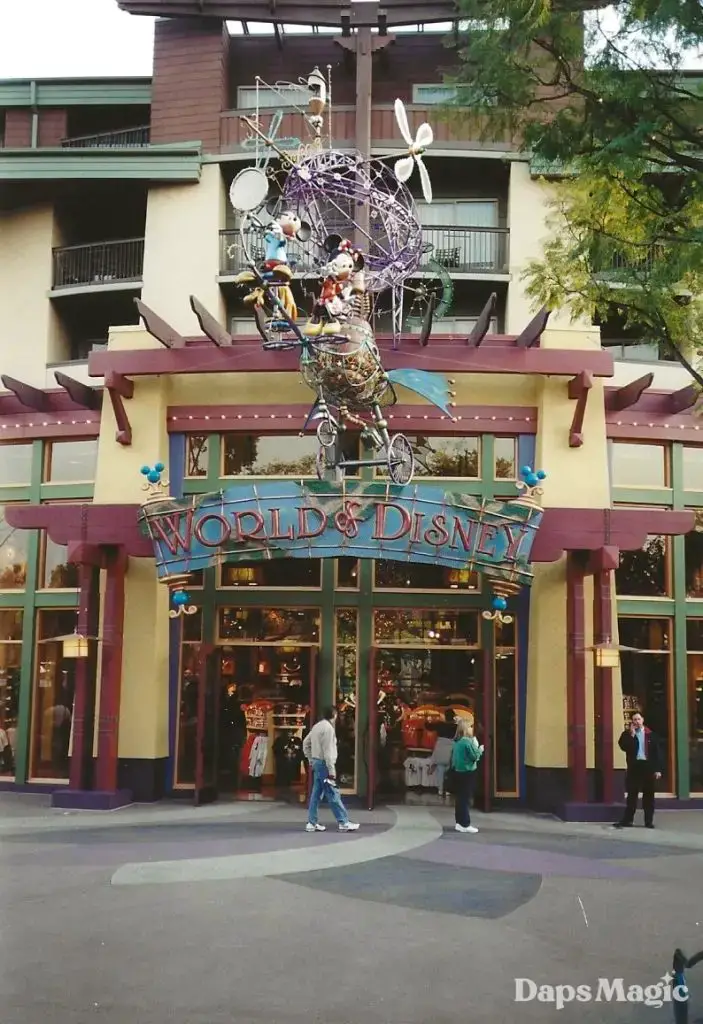
The first shop that one encountered from the eastern entrance was The World of Disney (although La Brea Bakery was just to the east). Disney fans who were familiar with Walt Disney World’s Downtown Disney would have been familiar with this massive new complex of interconnected shops. According to initial publicity, the World of Disney in Anaheim was the second-largest Disney retail outlet in the world. The 40,000 square feet of interior space was said to have the world’s largest display of exclusive Disney merchandise.
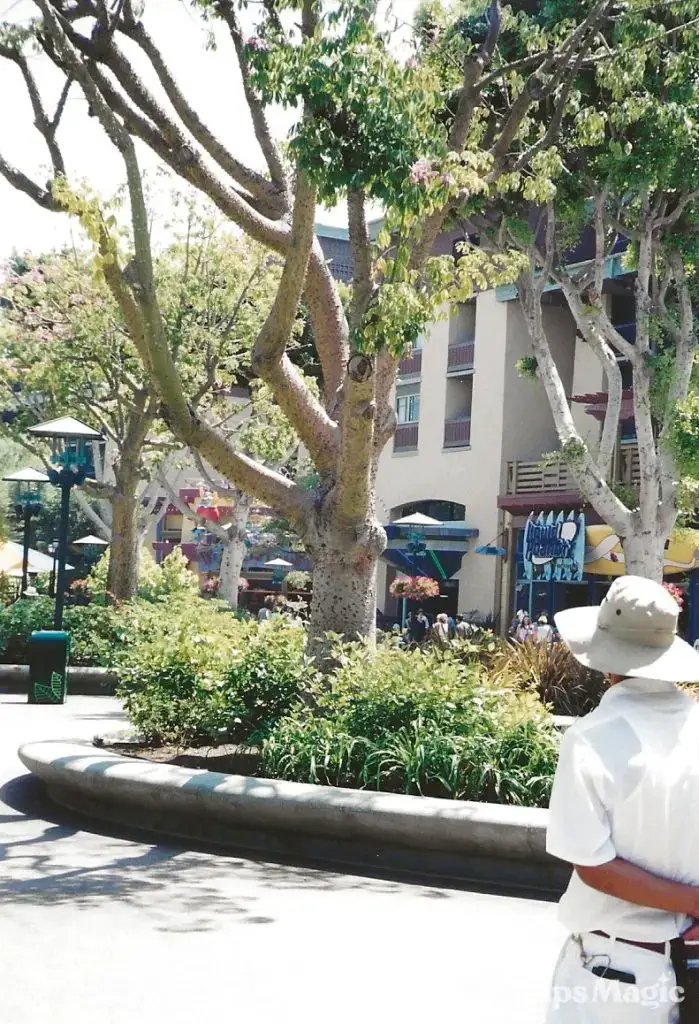
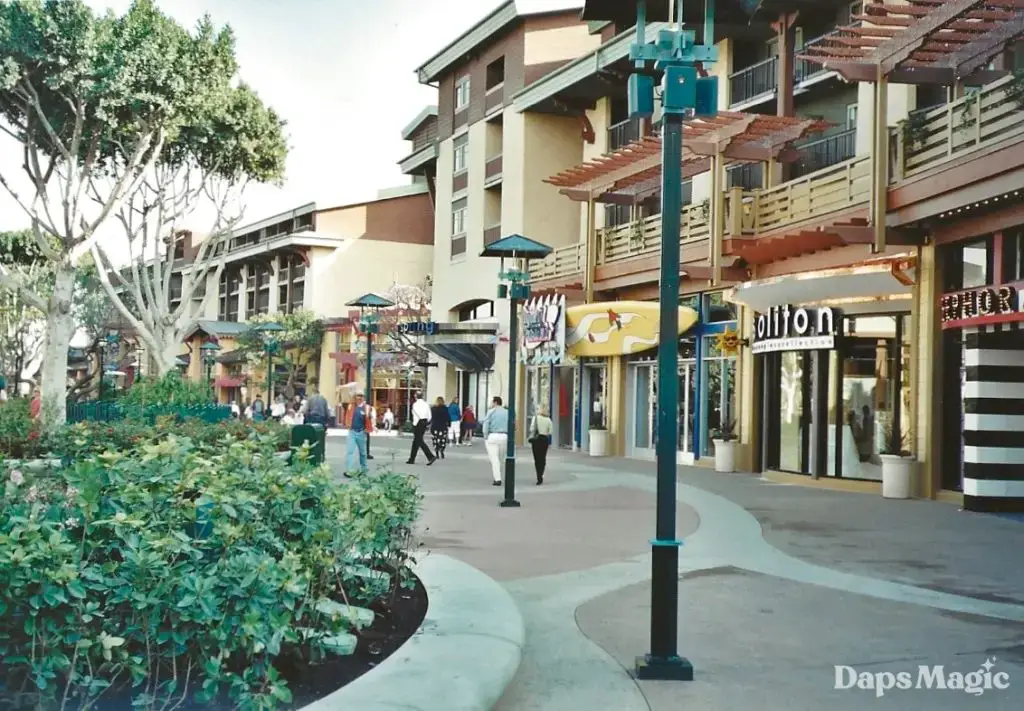
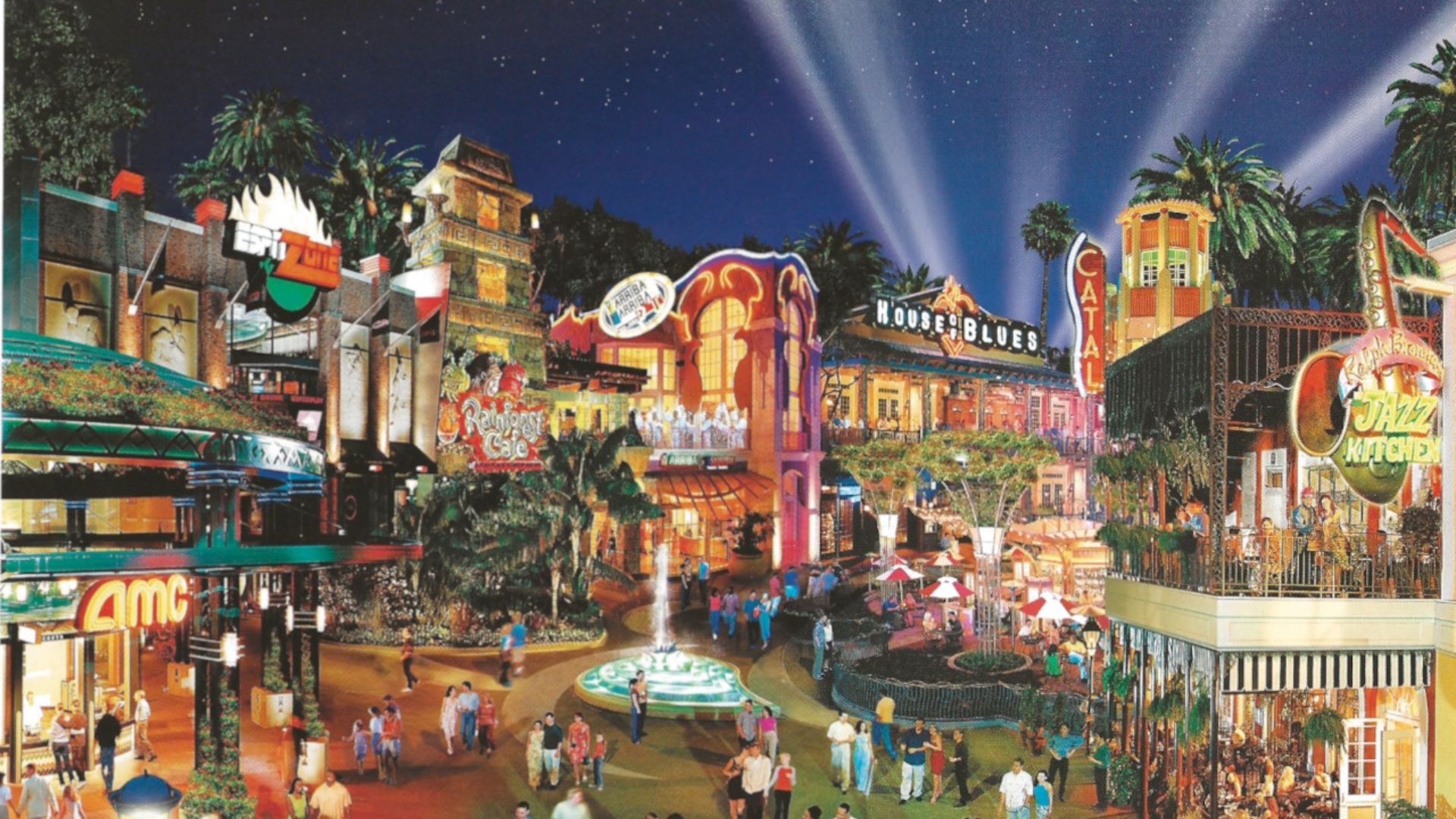
Continuing west, guests found a variety of other shops and eateries, nestled in four uniquely themed architectural districts. A lush urban garden surrounded and connected each area. Directly across from the western entrance of World of Disney was Mainspring, offering more than 5,000 watches. Other shops on the south side of this area were Liquid Planet (swimwear), Soliton (sunglasses), and Sephora (cosmetics and fragrances). To the south was Naples Ristorante e Pizzeria, Tin Pan Alley (metal collectible), and Basin (bath products).
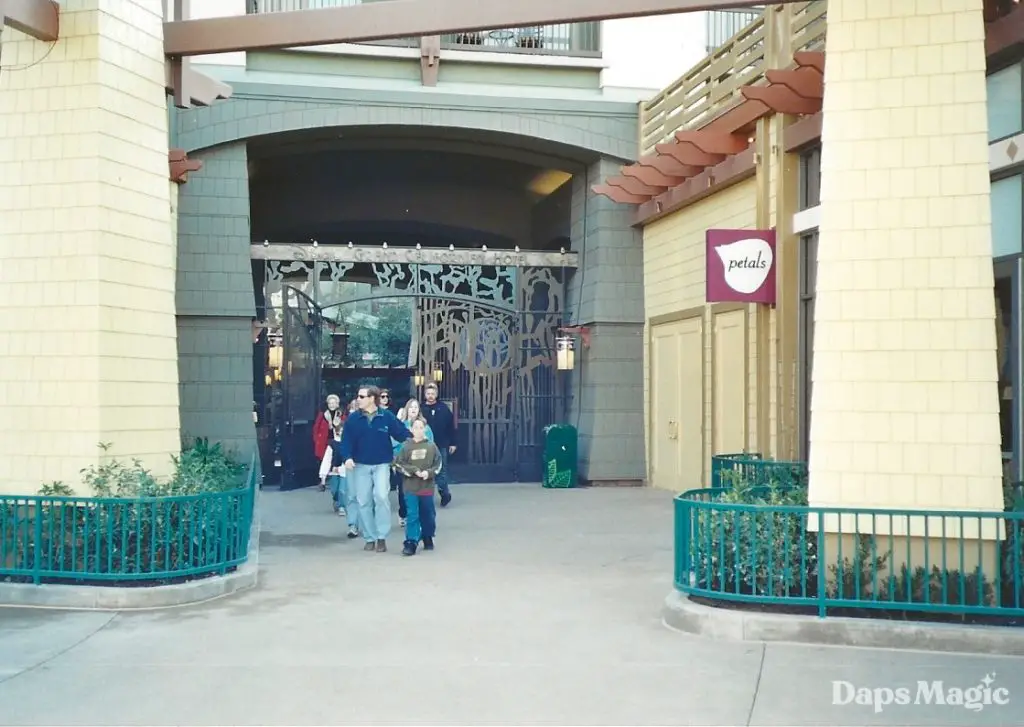
To the south was a dedicated entrance to the new Grand Californian Hotel. Scheduled for an official opening on February 8, it was also offering guests a sneak peek at its spectacular lobby, courtyards, and restaurants.
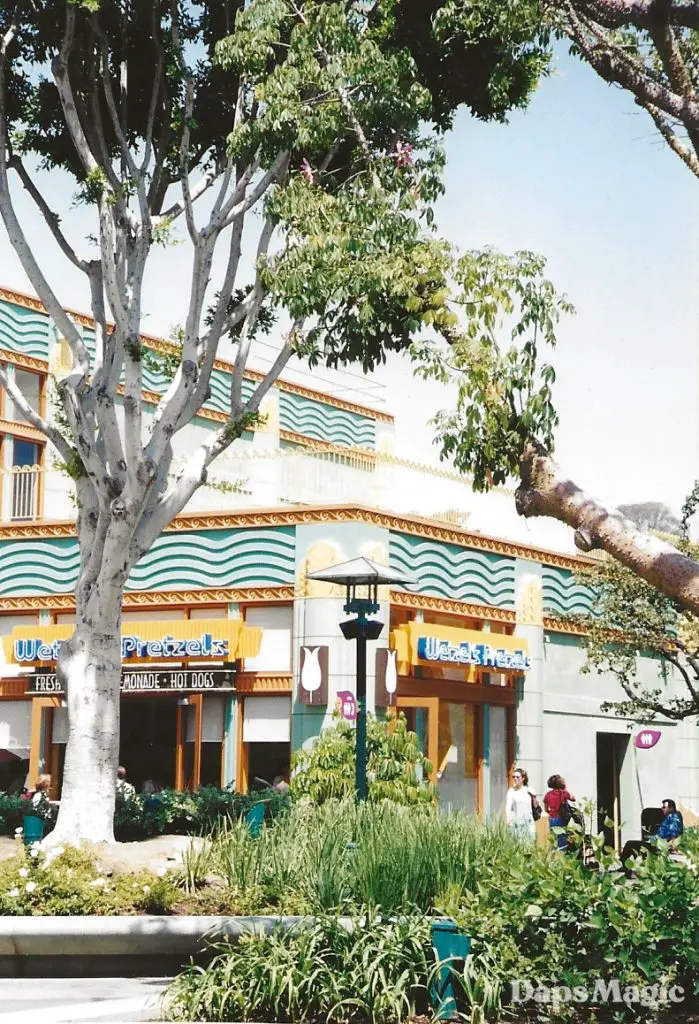
Wetzel’s Pretzels anchored the east end of the north side of the next district. At opening, the only other tenant in this art deco-inspired structure was a Department 56 retail store, featuring dazzling displays of their many collectible figurines.
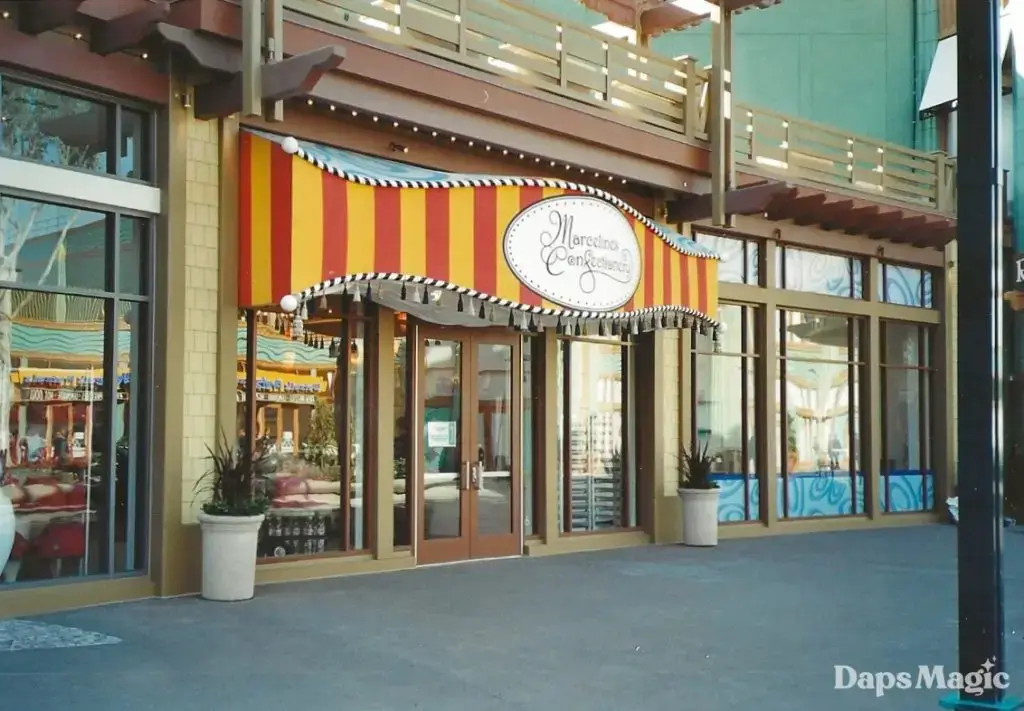
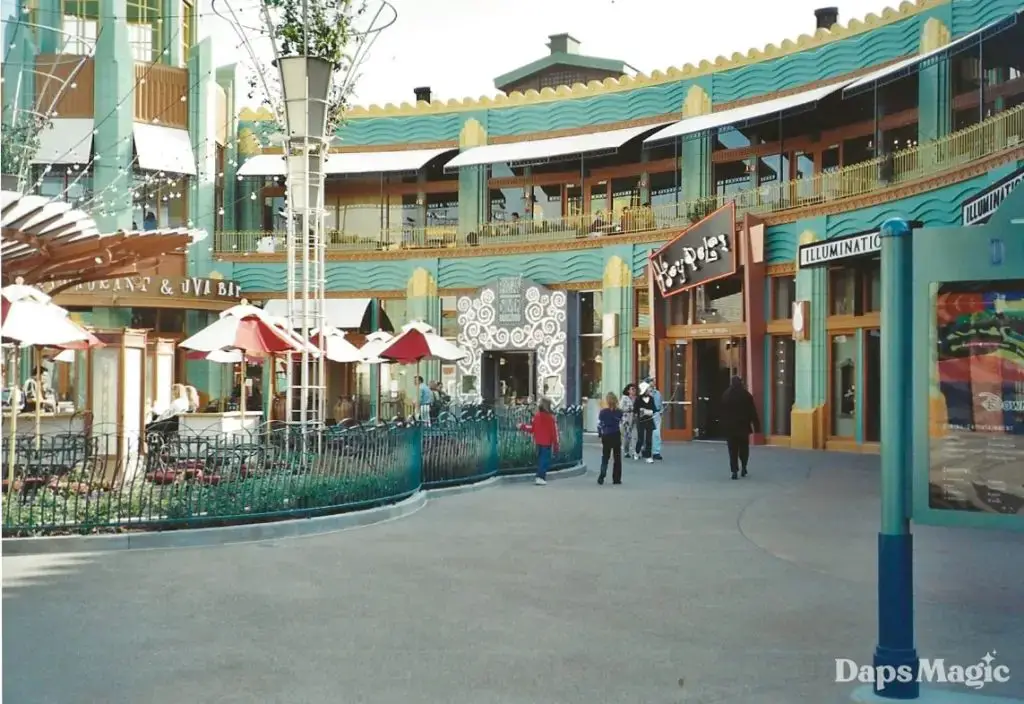
On the south side, Petals (“unique leather goods”) and Marceline’s Confectionery (candy, candy making AND a hidden Mickey in the logo) could be found to the east of Catal Restaurant and its outdoor Uva Bar. Continuing west were a series of four shops: Something Silver (jewelry), Hoypoloi (“uncommon” art and decor), Illuminations (handcrafted candles), and Island Charters (nautical and aviation gifts).
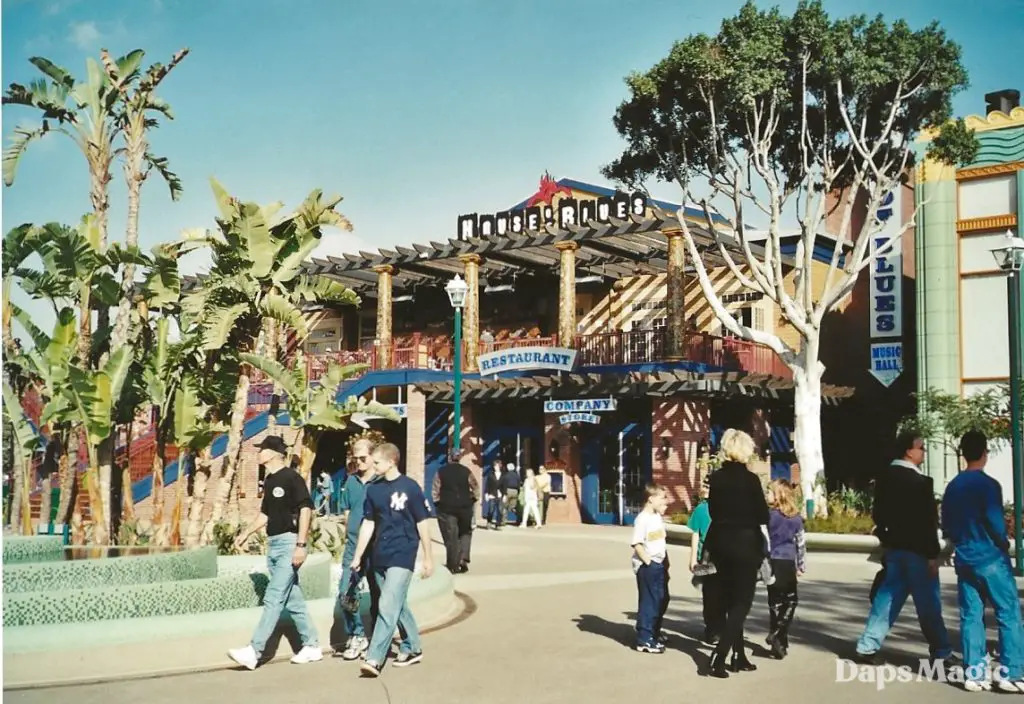
Just beyond this, the north side opened into a large courtyard with a fountain. The east side of this was occupied entirely by the massive House of Blues, with Music Hall, restaurant, and Company Store. Facing it to the west was Y Arriba Y Aribba, an 18,000 square foot “tapas-teatro restaurant.” Both show places featured continuous live entertainment. A large construction wall to the north of this courtyard promised the imminent arrival of Anaheim’s own DisneyQuest.
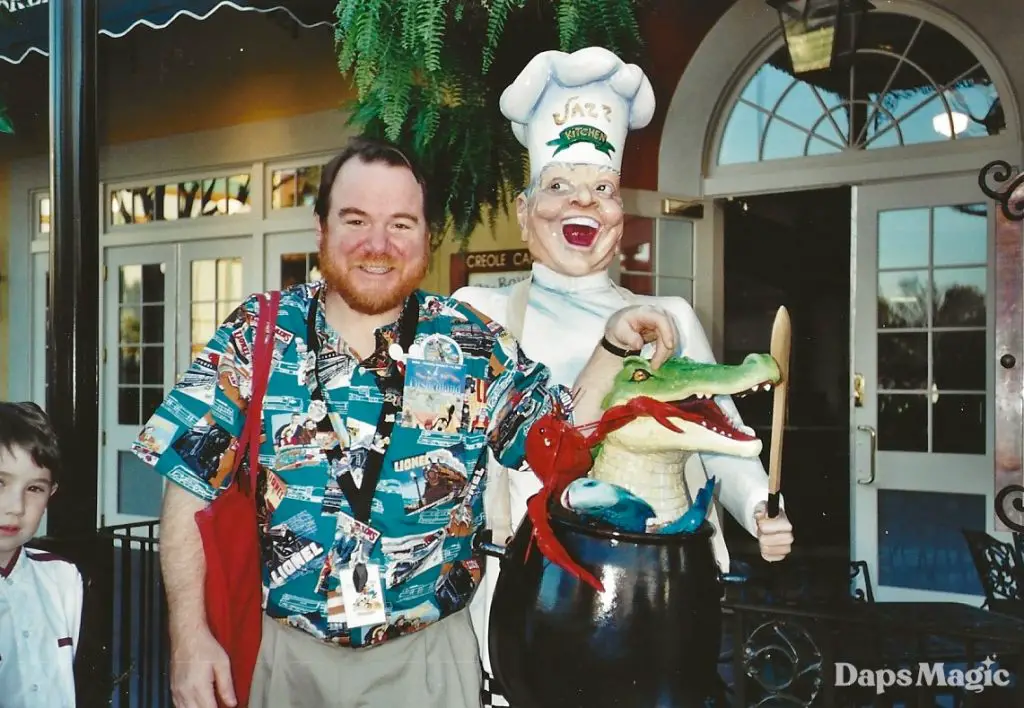
On the south side, across from the courtyard, was Ralph Brennan’s Jazz Kitchen. The 400-seat restaurant was presented by one of New Orleans’ most famous restaurateurs. (The life-sized statue of the jolly chef out front, presenting his gumbo pot filled with fish, crawdad, and grinning alligator, offered an irresistible photo opportunity.)
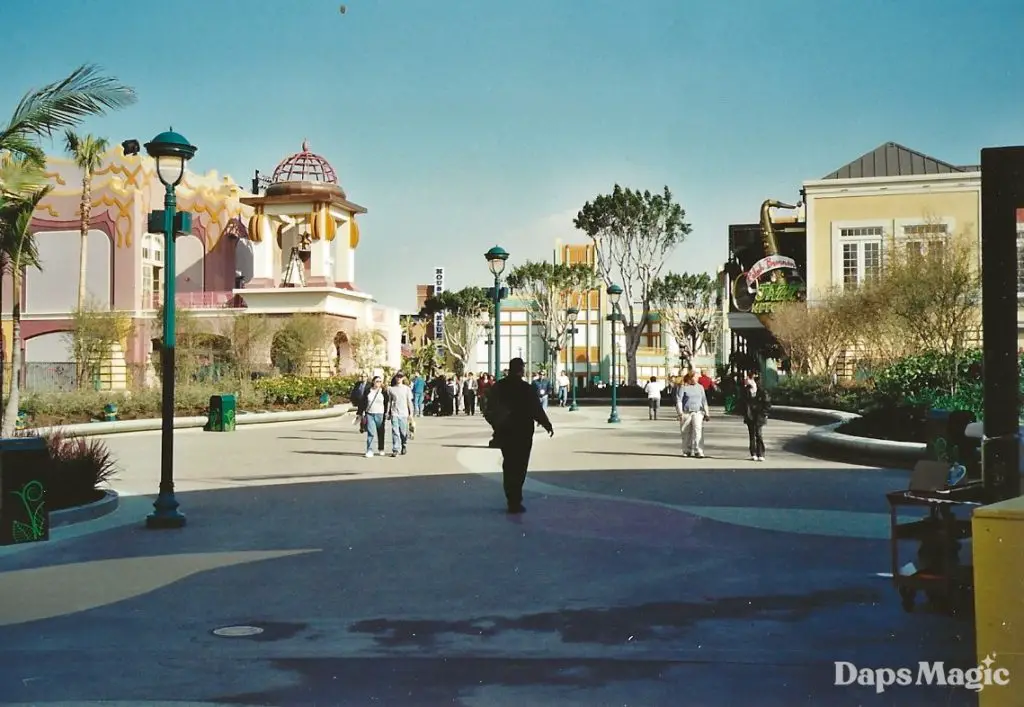
Here, Downtown Disney crossed over Disneyland Drive with a broad, landscaped pedestrian overpass. Looking back to the east, one could see Y Arriba Y Arriba to the north (left), and the Jazz Kitchen to the south (right).
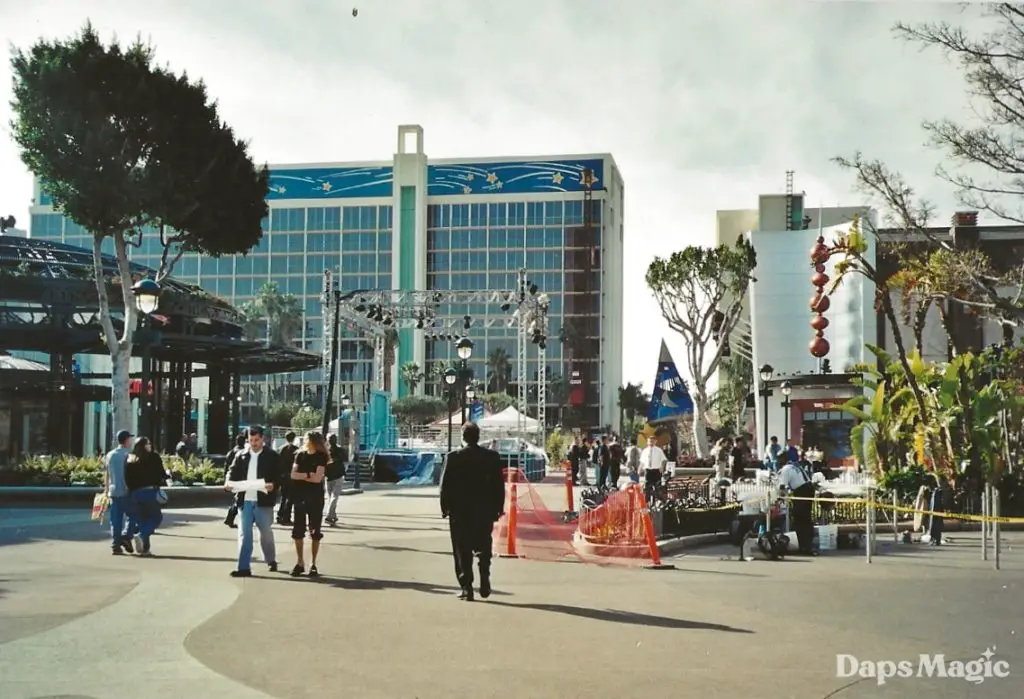
Downtown Disney ended at the Disneyland Hotel, at its west end. To the north were the Monorail station, Rainforest Cafe, and ESPN Zone. There was also a pedestrian entrance to serve a parking lot located off Disneyland Drive and Magic Way.
To the south was the Lego Store and the AMC Theatre complex. The entrance to the multiplex was flanked to the east by Starabilias (Hollywood memorabilia), Compass Books and Cafe, with an outdoor kiosk.
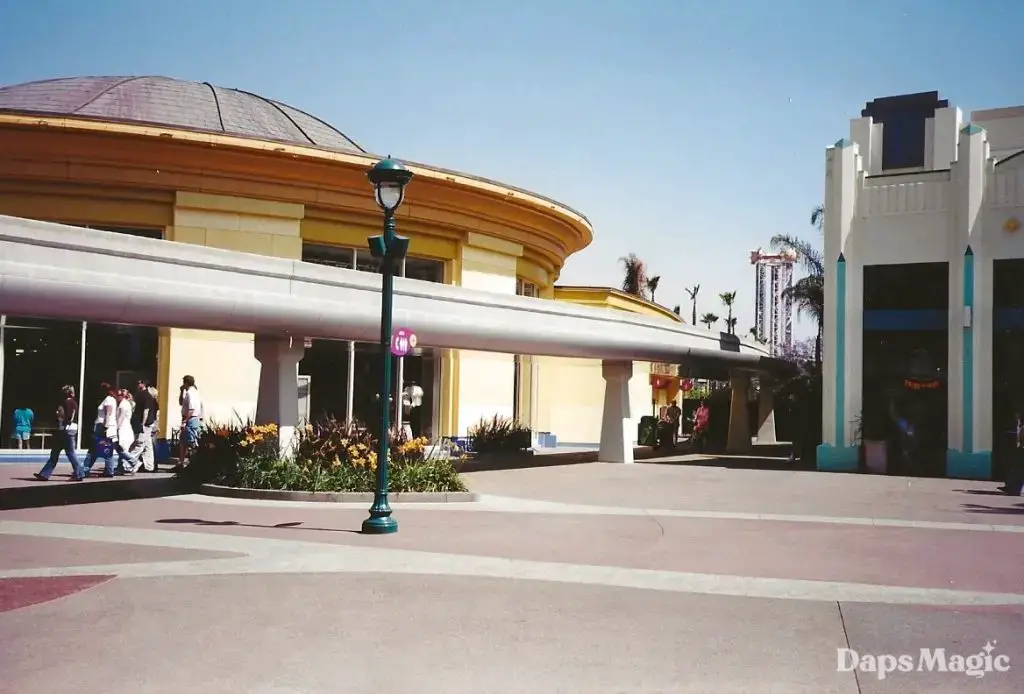
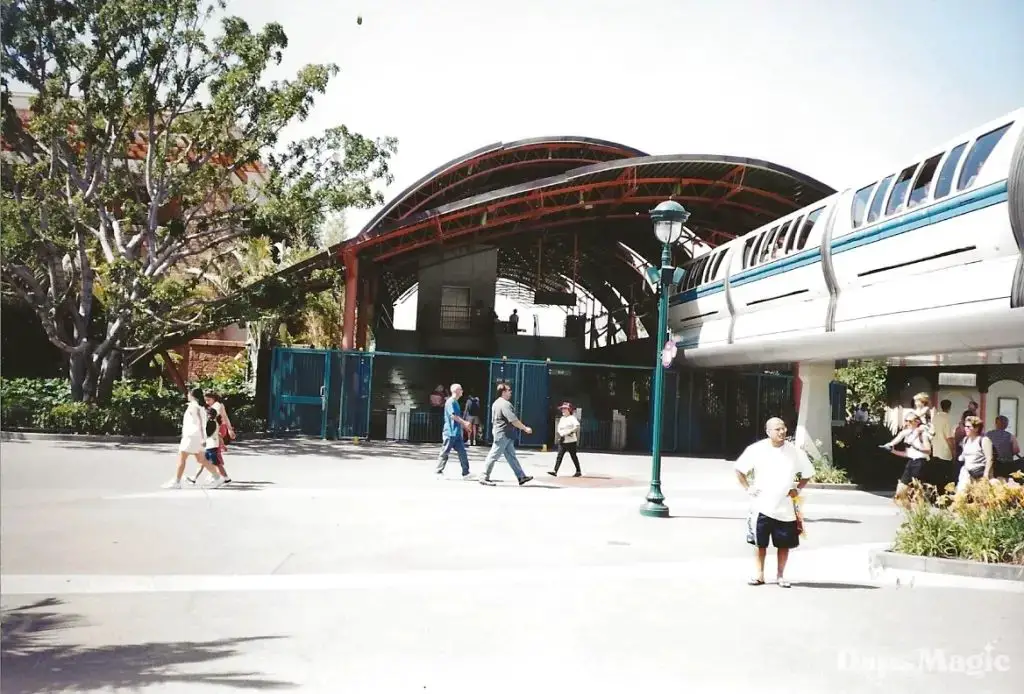
The Monorail now made its way into the Downtown Disney station, traveling between the LEGO Store and Starabilias. From here, guests could take a one-way trip directly into Disneyland Park’s Tomorrowland.
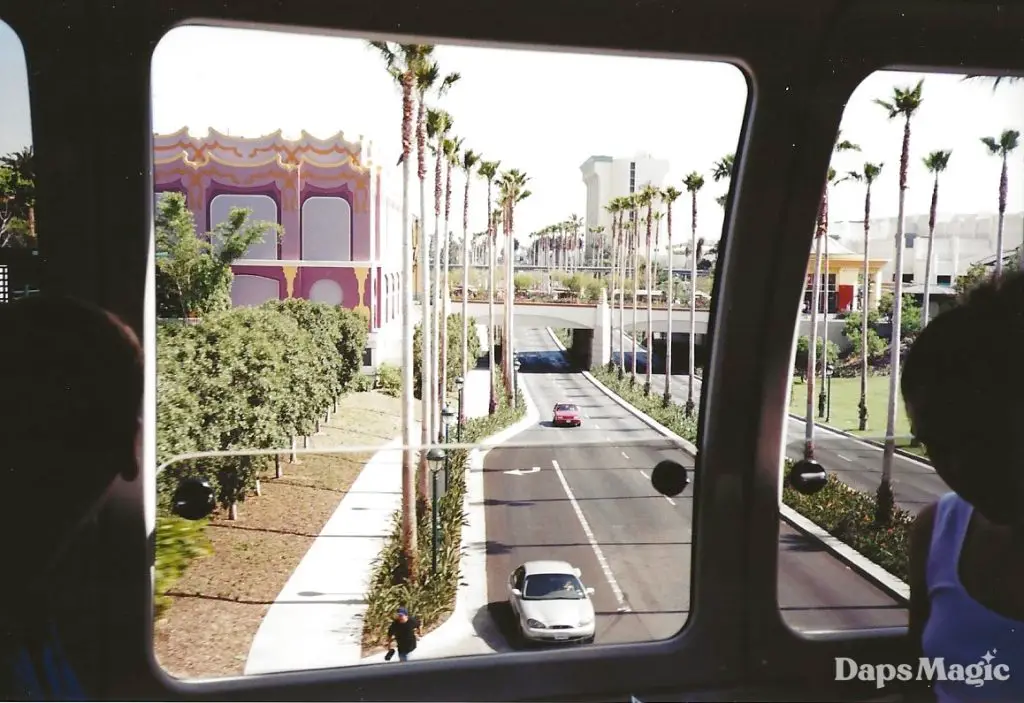
Along the way, it was possible to see a very different view than had been seen since the monorail was first extended back in 1961. But it was the same route.
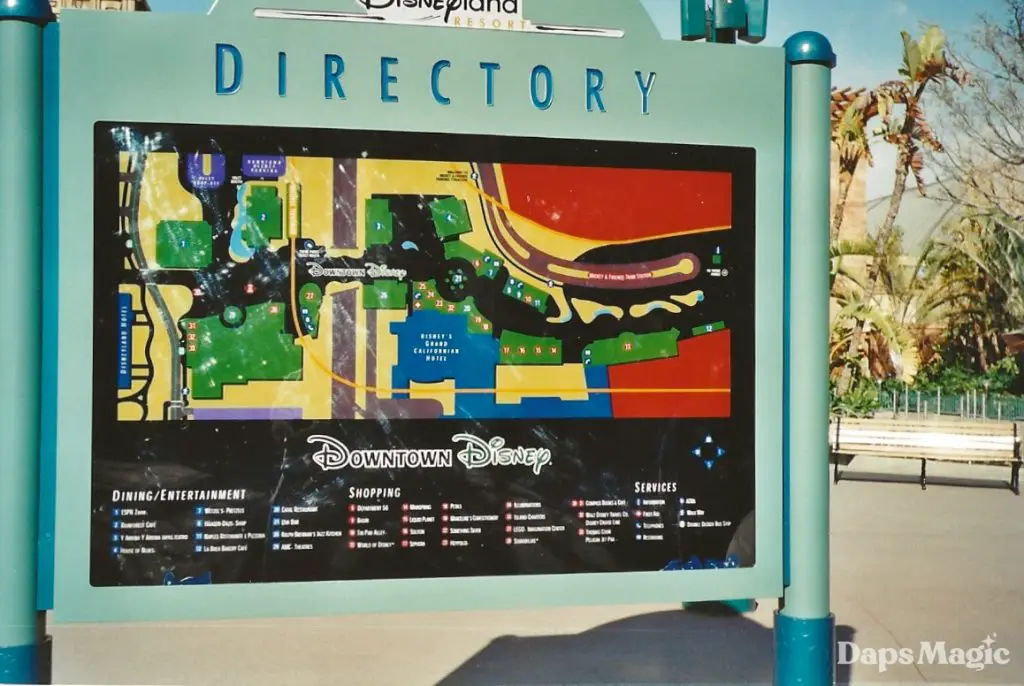
With so much to see and so much to do, Disney offered helpful directories, located at key points throughout Downtown Disney. Of course, guests couldn’t always rely on finding one the moment they needed it, so the Resort also offered an actual Downtown Disney Guidemap.
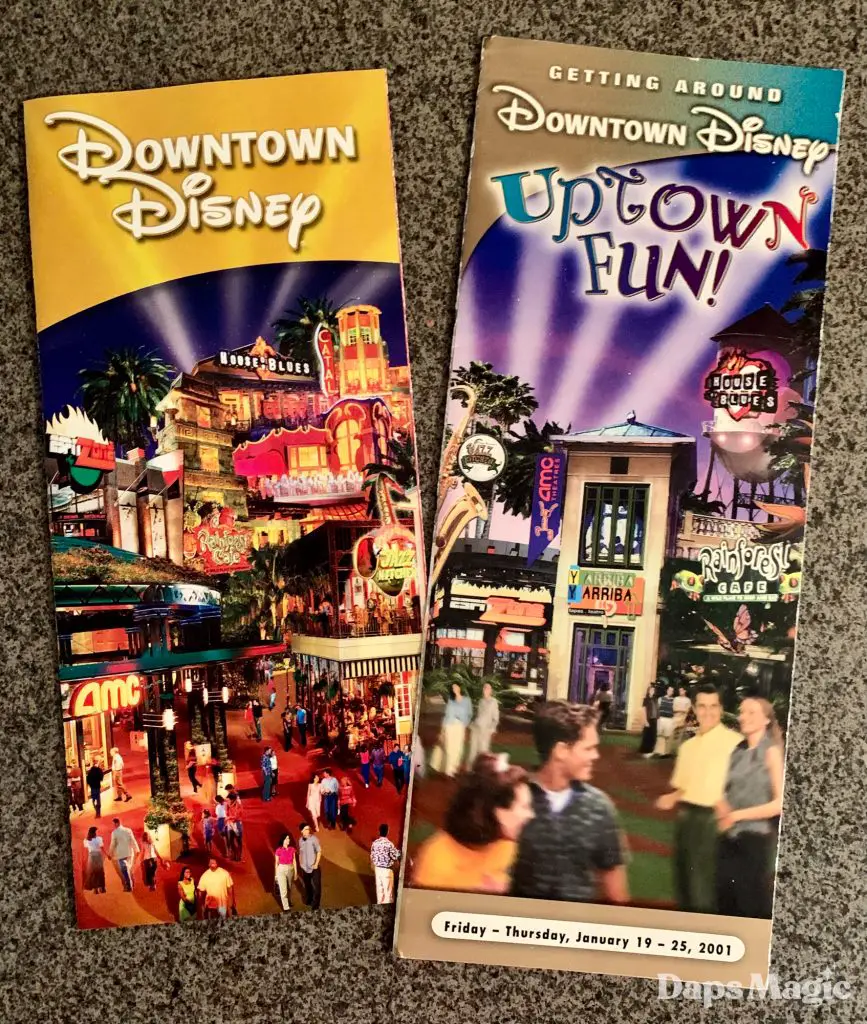
Here are the first two Downtown Disney brochures, one to describe the place and the other to help guests find their way around. The larger Guidemap is dated for the week of January 19, the second full week of official operation.
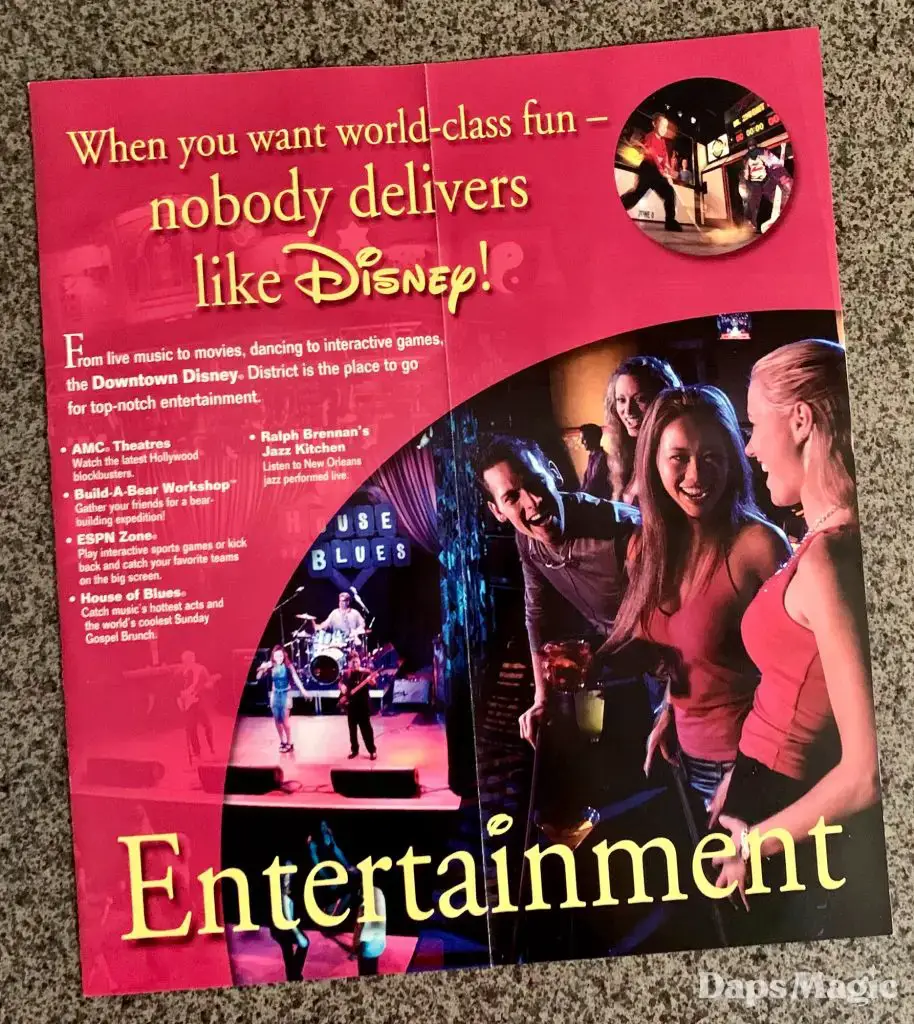
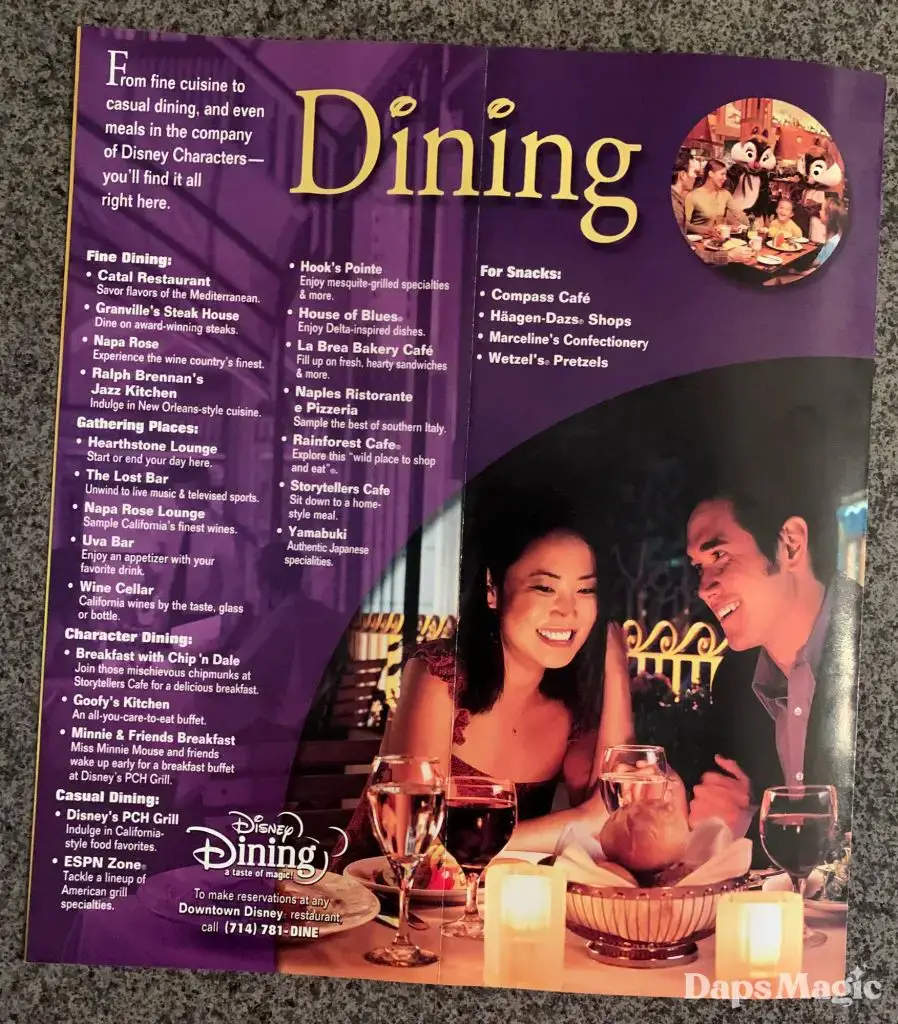
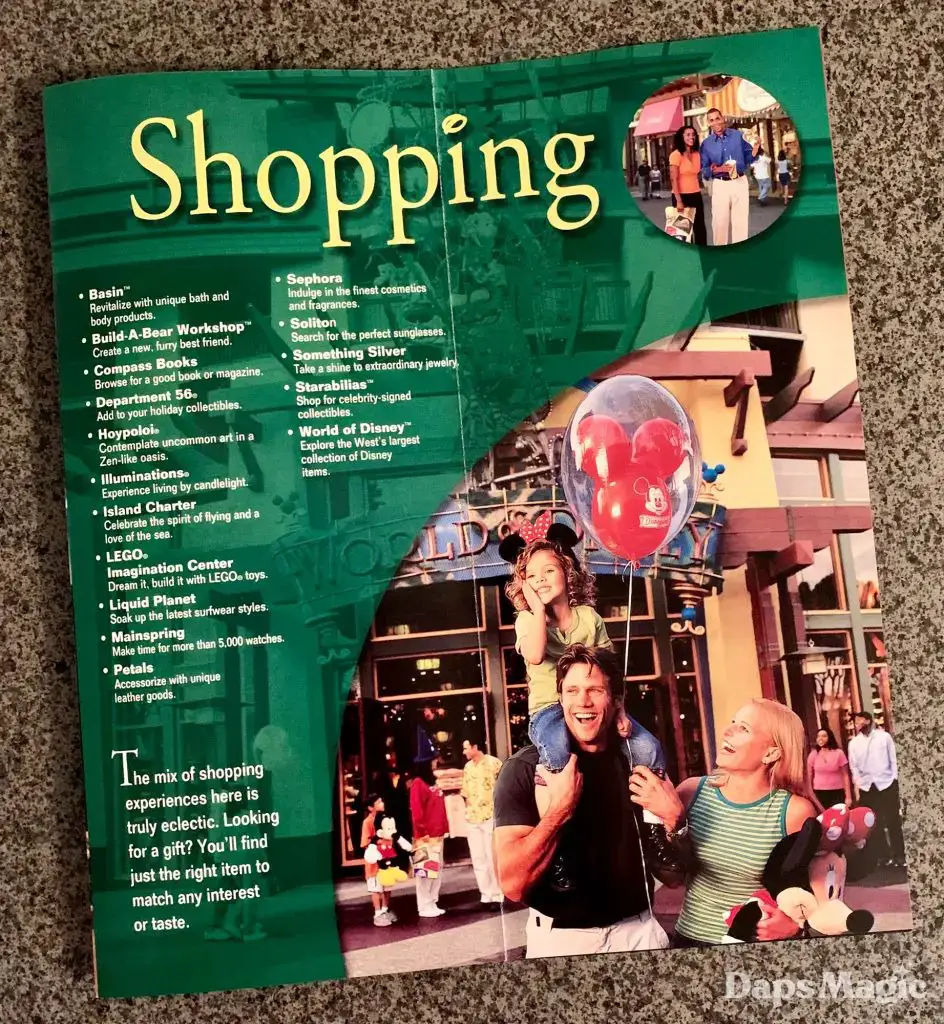
Inside the smaller brochure, all venues were described on the basis of categories: entertainment, dining, or shopping. This particular brochure is early enough that a few venues that were there for opening day are not included.
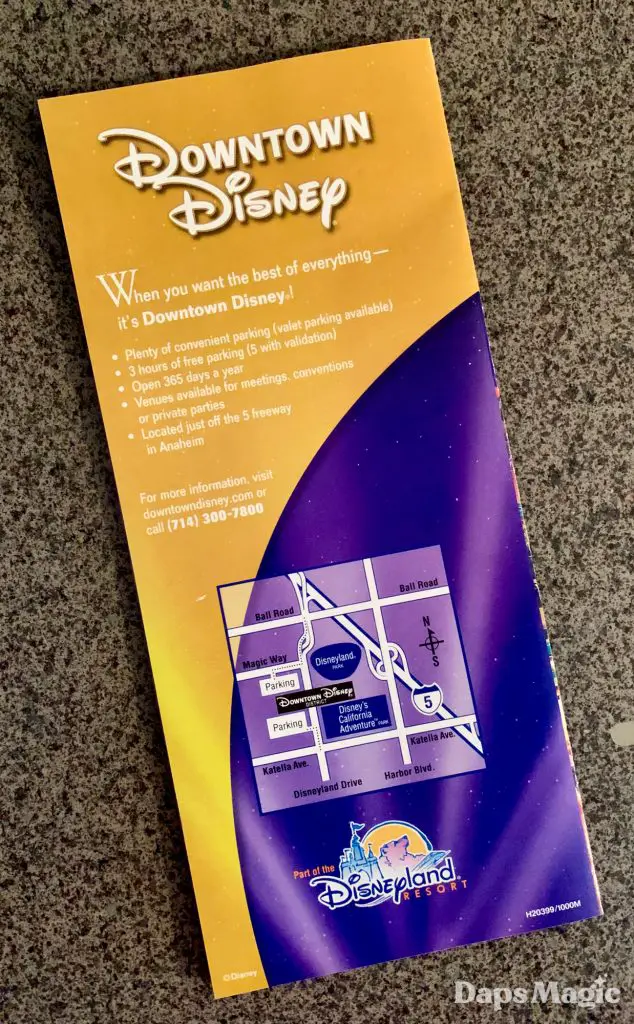
The back cover offers helpful reasons you should be making your way to Downtown Disney (three hours of free parking, open 365 days a year, and just off the 5 freeway!). There is also a simple map to show you where it is and how to find both parking lots. There is also the brand new, official Disneyland Resort logo.
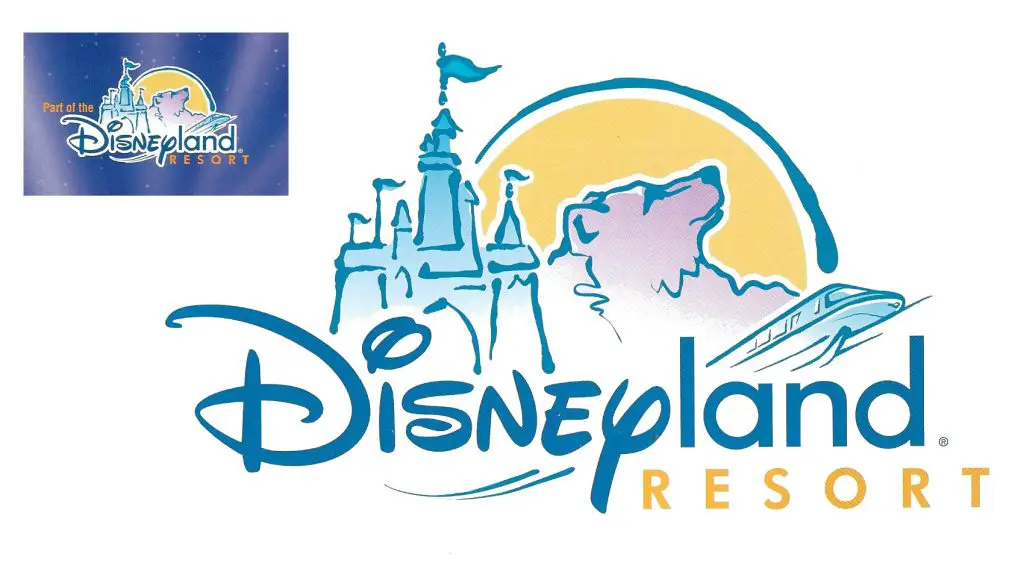
Here is that official logo. The design incorporated the symbols for Disneyland (Sleeping Beauty Castle) and Disney’s California Adventure (Grizzly Bear Peak), united by the Disneyland Monorail. Many guests were startled, if not to say unnerved, by the combination of the Disney signature font with block lettering. This led to one of what would be many controversies surrounding this expansion, with the eventual return of the beloved Disneyland Gothic logotype.
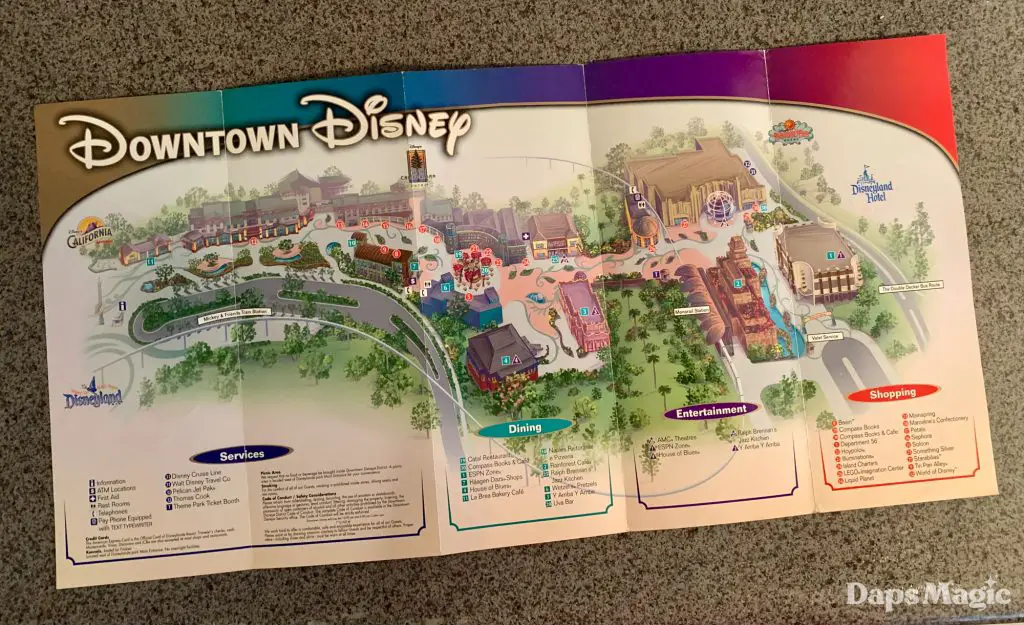
The larger brochure was, in these early days, a true guide map. The interior featured all of Downtown Disney, illustrated as one of the many lands of Disneyland. All of the opening day shops, restaurants, and entertainment venues have been described. There are two small shops, with four services, that were easily overlooked, however. On the west side of the AMC Theatre were two small shop fronts, side by side. The Walt Disney Travel Company and Disney Cruise Line occupied the shop to the north. To the south was Thomas Cook (traveler’s aids) and Pelican Jet Pak. Do not be embarrassed if you have never heard of this service. But do bear in mind, it is a very, very popular pack-and-ship service for tourists in Japan.
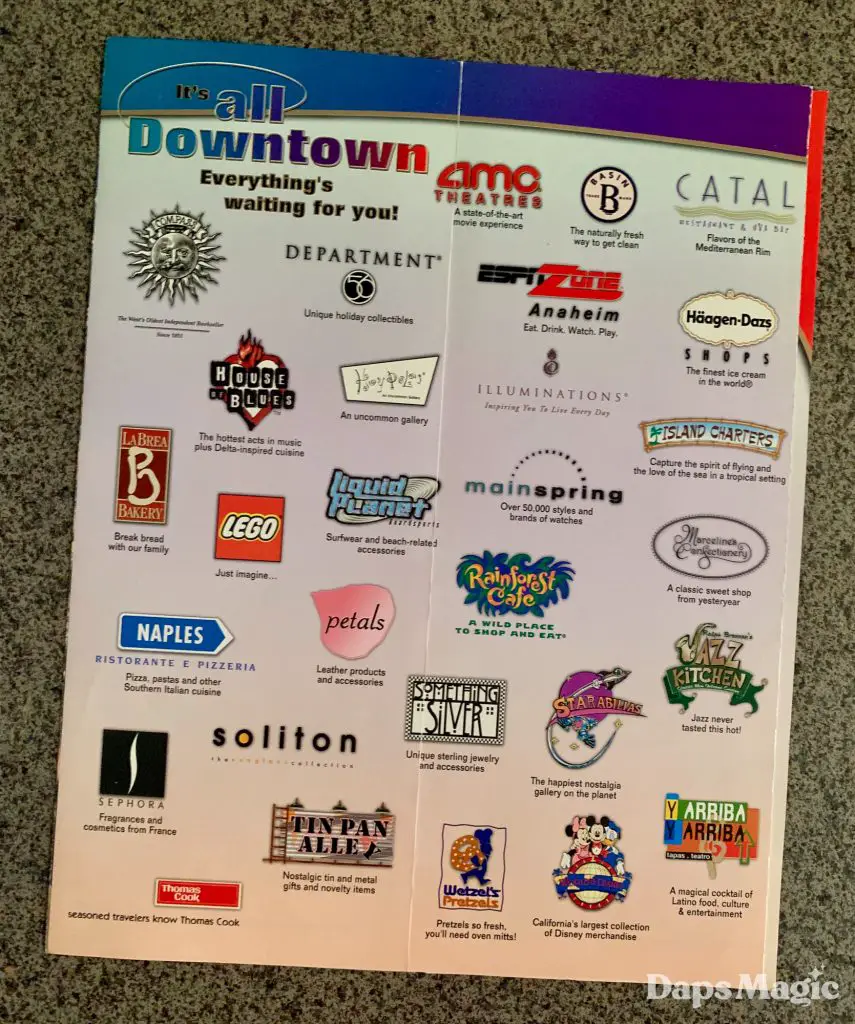
Two pages were devoted to the glittering array of logos for Downtown Disney’s inaugural year. Note that these are mostly higher-end vendors. This was by design.
Some months before Downtown Disney opened its doors, the nearby community of Orange opened a large outdoor shopping/dining/entertainment complex called The Block at Orange. It was an immediate hit and attracted large crowds. Among them were hordes of unaccompanied teenagers, who came in mostly to hang out. The Block found itself with an image problem and eventually had to hire additional security. Disney determined that it would control this problem by signing leases with businesses that appealed primarily to families and higher-end consumers.

Understandably, the schedule of events was a bit spare in those early days. However, it should be noted that in just the week shown here, House of Blues headlined reggae artist Gregory Isaacs with La Puente-based band Freakdaddy, guitarists Steve Tai and Eric Sardinas (and no, I do not know if Sardinas set his guitar on fire), as well as the Fullerton-based punk rock band Social Distortion. Something for everybody!
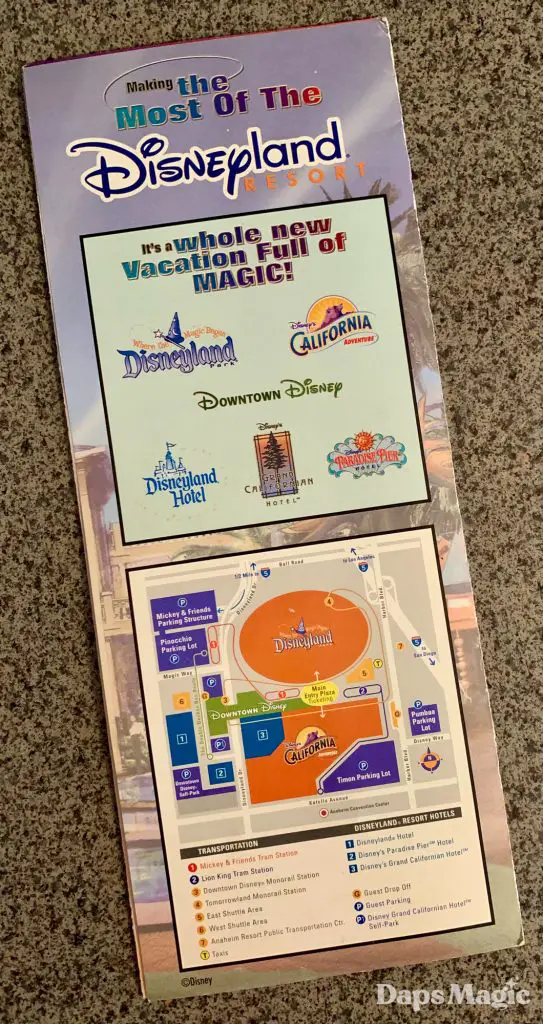
The back of this brochure featured more logos, this time for the five major venues that composed the new Disneyland Resort. There was also a handy map of Downtown Disney, intended to showcase the many ways you could make your way around the resort. There were trams from the east, trams from the west, area hotel shuttles, the Monorail, Anaheim public transportation, and (of course) the double-decker bus. You remember… the double-decker buses that made their way through Downtown Disney and the resort hotel district?
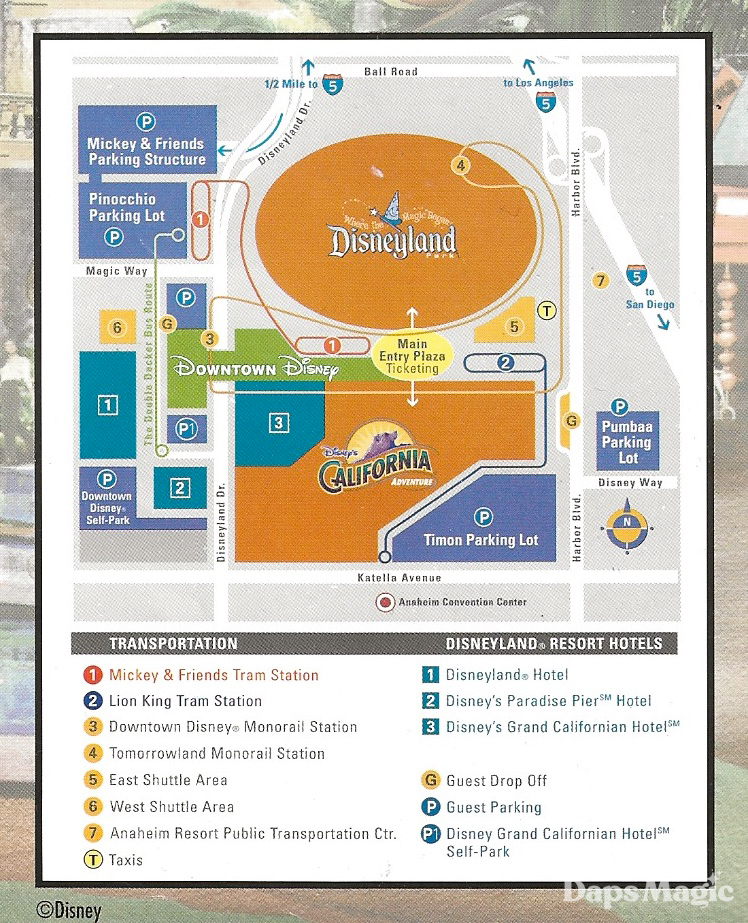
Here is a closer look at that map. Look carefully on the left-hand side, and you will see a pale green line bisecting the Disneyland Hotel (number 1 on the map) from Downtown Disney. This was a dedicated, internal transportation solution for the expected masses of guests who would want to conveniently travel from the new Mickey & Friends Parking Structure and Pinocchio Parking Lot to the Paradise Pier Hotel and Grand Californian Self-Park. They even built a two-lane concrete road with full curbs to accommodate the heavy buses. Portions of that roadway can still be seen just to the west of Downtown Disney, as you cross over to the Disneyland Hotel.
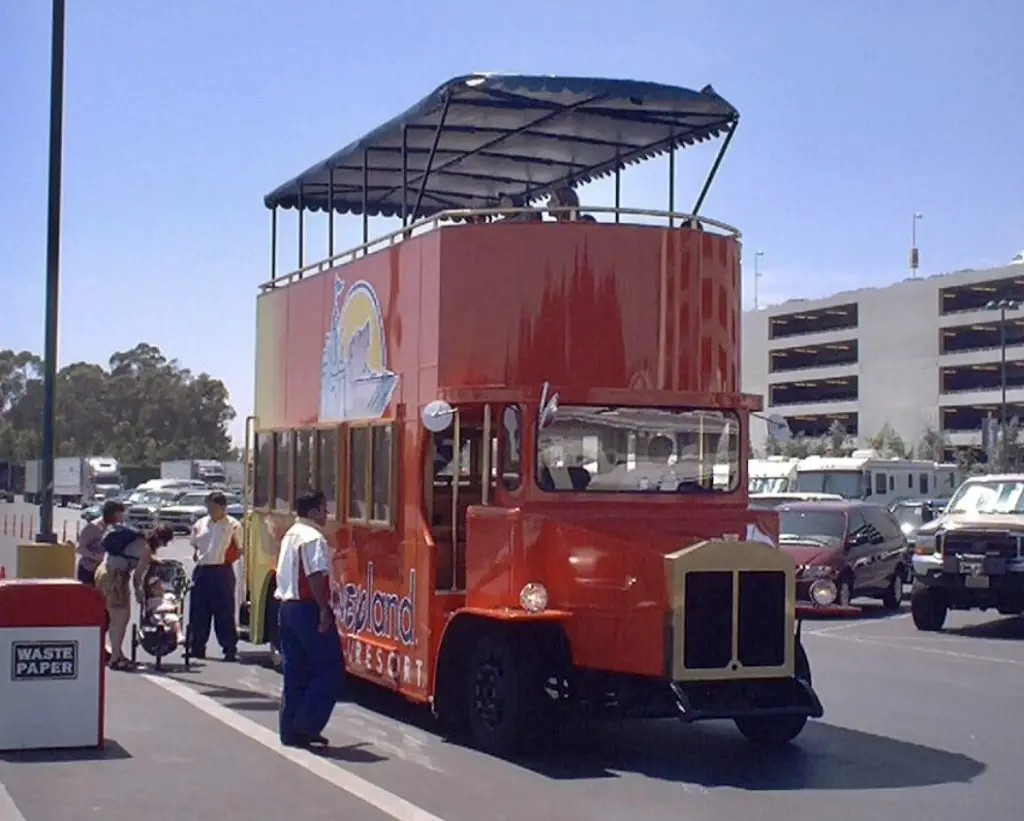
My thanks to Kevin Yee and Jason Schultz of Parkendium for this image of one of those buses during the incredibly short window of opportunity that they were operating. These were not intended to provide a quaint atmosphere, but were rather full-sized, full-strength workhorses. This one is seen at the Pinocchio surface lot stop, with the original Mickey & Friends parking structure in the background. A fun fact about these: the canopy at the top was designed to telescope down so the buses could be stored inside. For several years, they could be spotted in the back corner of the Chip ’n Dale level.
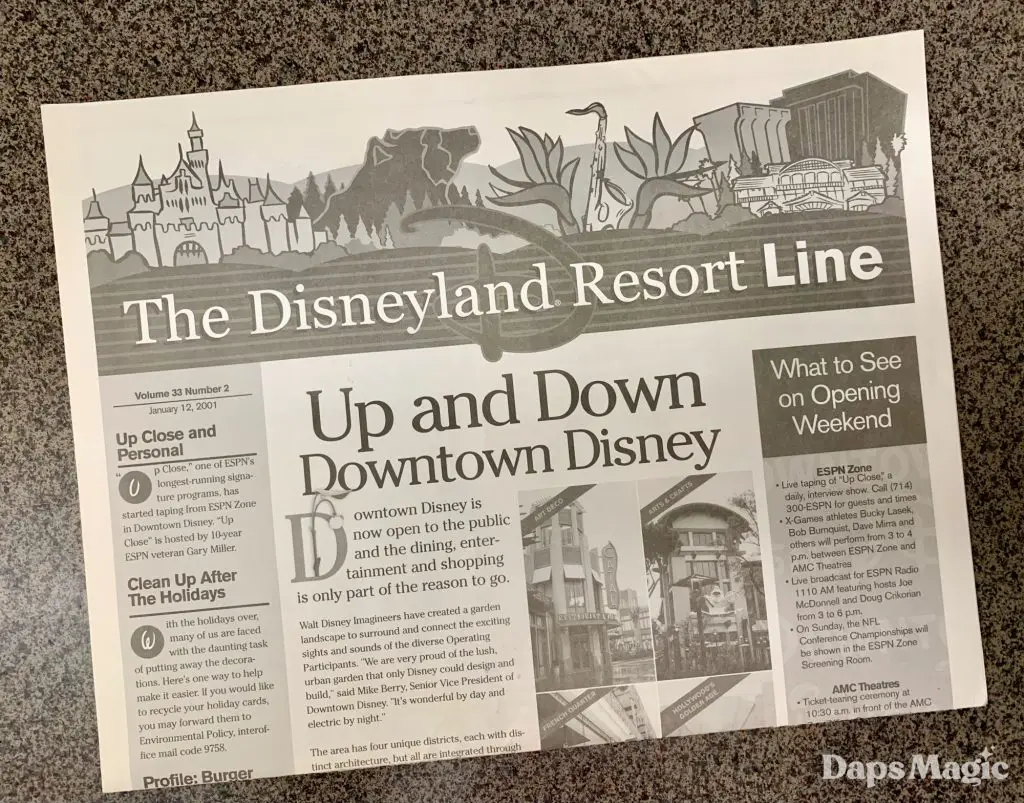
Opening day was, of course, celebrated by the Disneyland Resort cast. This is the Disneyland Resort Line for January 12, 2001. Under the management of Paul Pressler, The Line had been downgraded from a full color magazine to a black and white tabloid-sized newspaper.
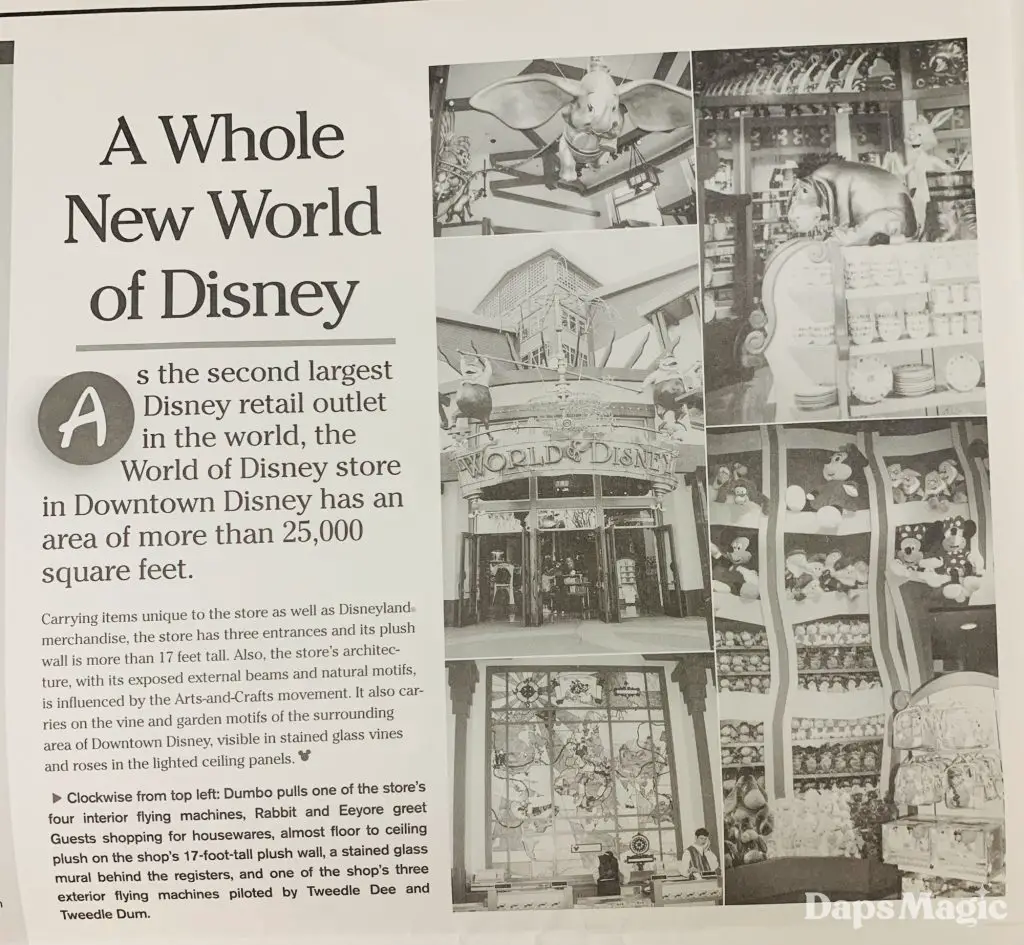
Inside, cast members could read all about the new World of Disney Store that was officially opening that day. Among the details: the store featured a 17-foot-tall “wall of plush.” (And all the House of Blues had to offer was Social Distortion.)
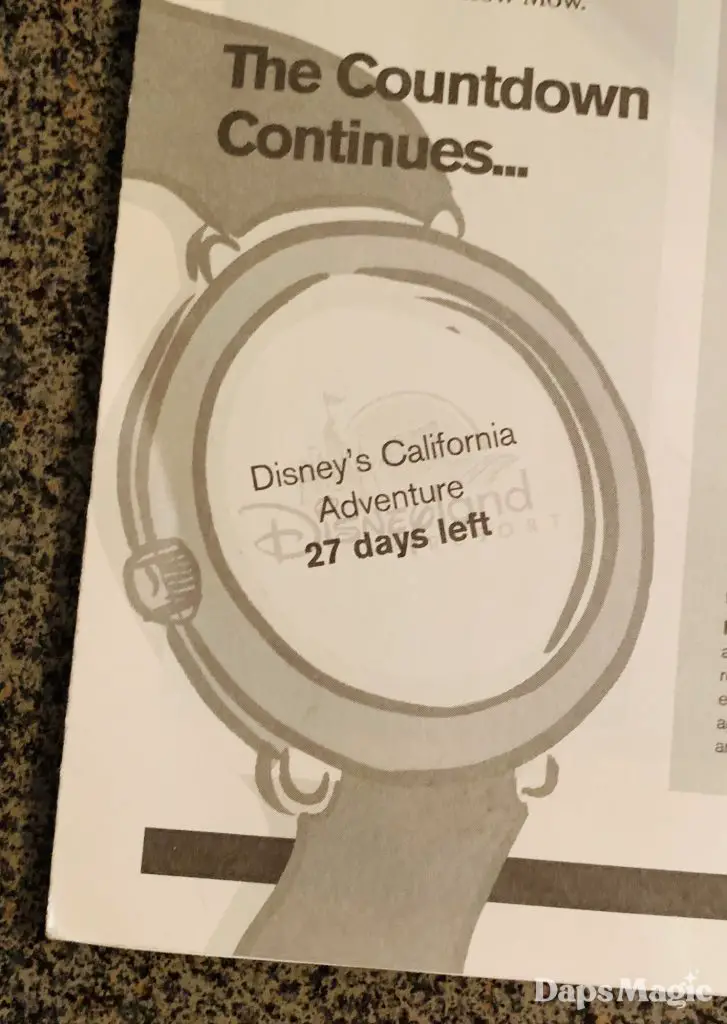
Down in the corner of the front cover of The Line, there was a countdown clock, ticking off the days for the next big opening. Only 27 days left until the Disneyland Resort would become a reality. But in the meantime, Downtown Disney was open for business.