When Disney’s California Adventure opened its doors to the public, it was intended to be the crown jewel of the Disney Decade. In reality, it was two years overdue, after some ten years of announcements, promises, and false starts. This will not be another article about that particular odyssey, as there are plenty of other places to find that. Rather, this will be a deep dive into what those very first guests to Disney’s California Adventure would find on its opening day. [And yes, I will be consistently referring to the park by its original name, possessive “s” and all.]
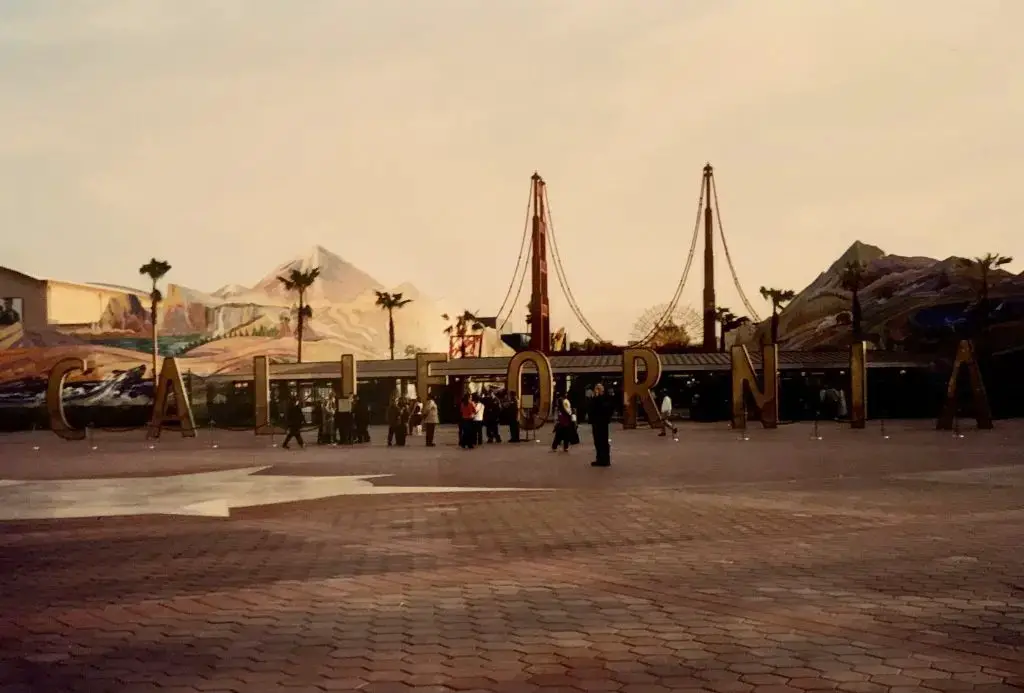
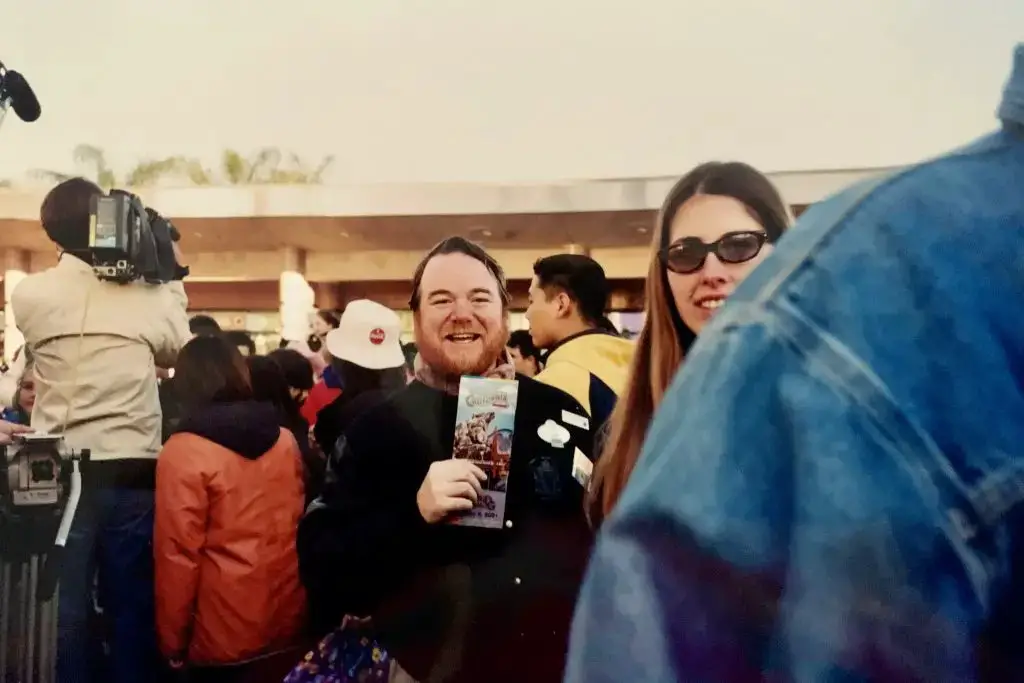
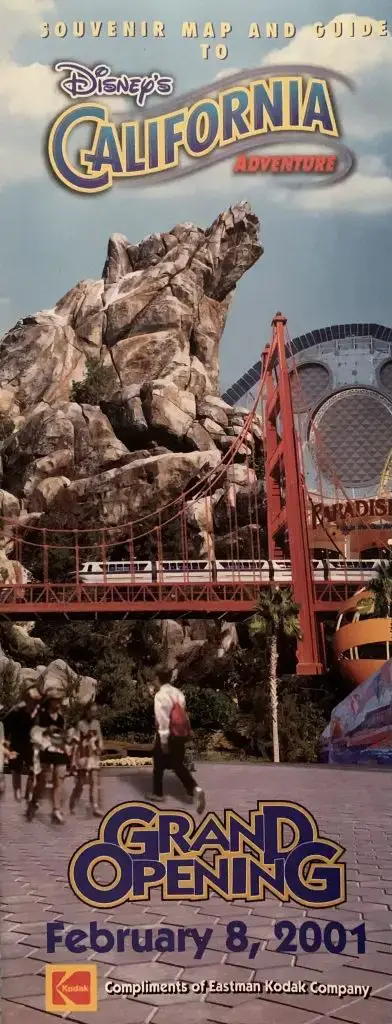
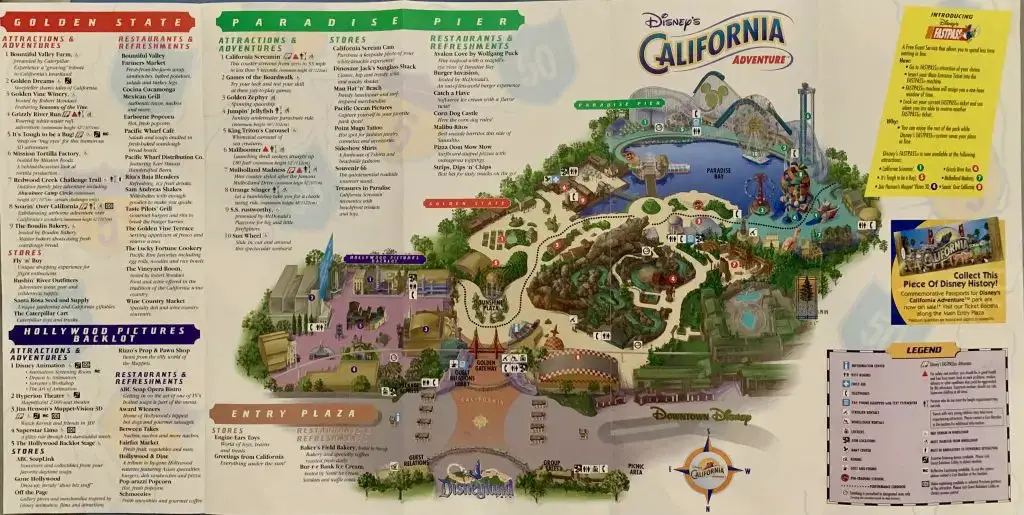
After an elaborate ceremony and a bit of a crush at the front gates, guests found themselves in a lightly attended park on opening day. According to the provided Guide Map, the park was divided into three cardinal realms: Golden State, Hollywood Pictures Backlot, and Paradise Pier. These were accessed via a limbo entry area that was officially named the Golden Gateway. Perhaps that was derived from the first major icon one would encounter there— a scaled down and squashed version of the Golden Gate Bridge. This “Golden State Bridge” rose up between a pair of 210 foot long hand fired and glazed tile murals. These massive one-of-a-kind art pieces included icons of northern California to the right, and Southern California to the left.
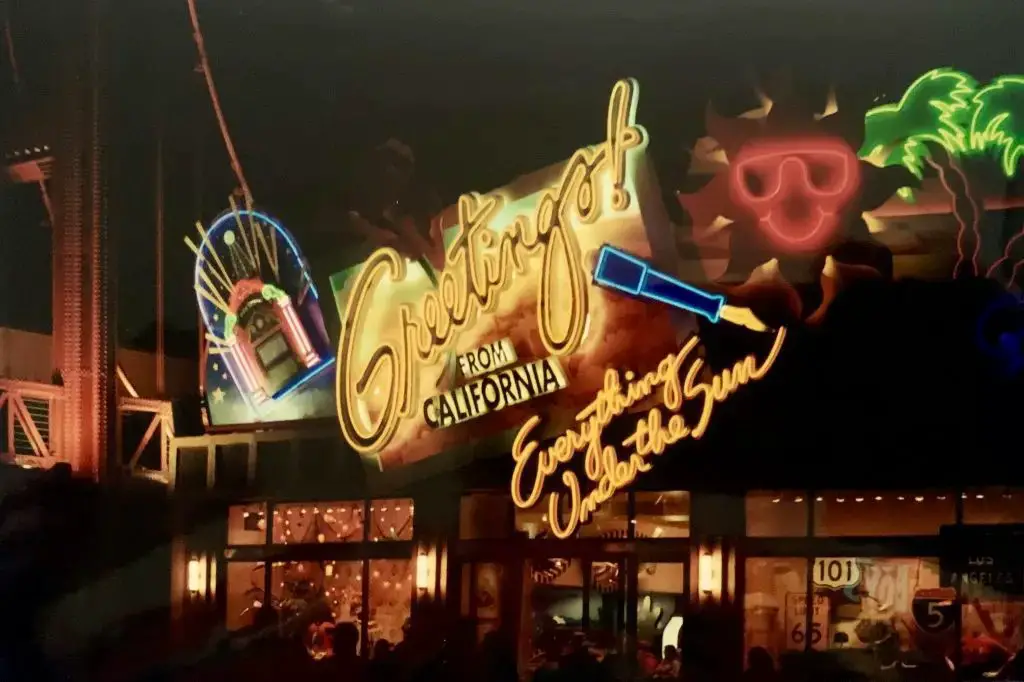
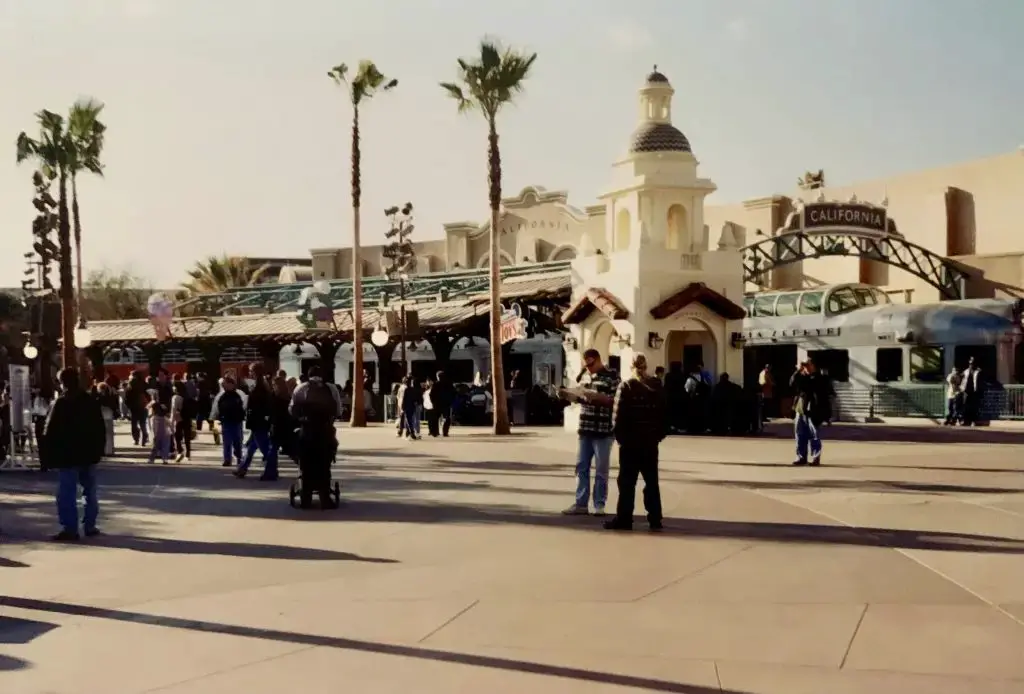
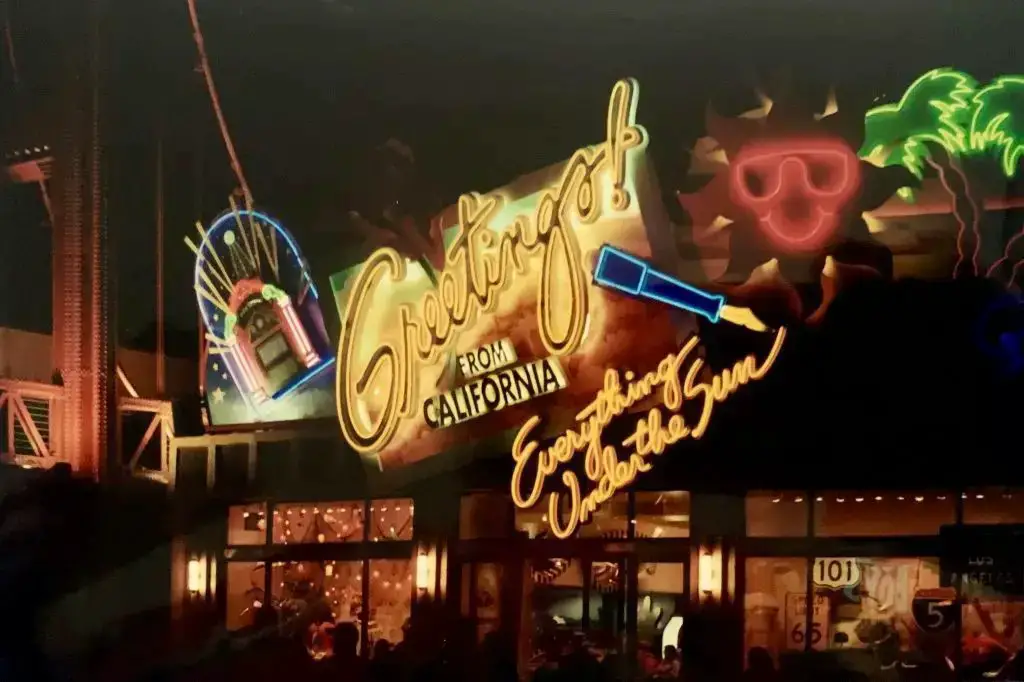
Passing under the bridge (and not incidentally, the monorail beam), one entered the “inner courtyard” of California Adventure, Sunshine Plaza. This was dominated by the massive Sun Icon, a 50 foot tall gold titanium disk, inlaid with tiny glass particles. Because it faced away from the actual sun, it was illuminated by six towering heliostats, computerized to track the sun through the day to provide dazzling reflected light. At night the Sun Icon was illuminated by high intensity red, orange, and yellow lights. The perimeter of Sunshine Plaza was split more or less into thirds. Straight ahead a wave fountain provided a kinetic base for the Sun Icon. To the left (east) was the largest souvenir shop in the park, Greetings From California. A massive neon sign and two separate shop fronts gave access to this store. To the right (west) could be found a detailed architectural replica of a streamlined train. This gave access to another shop, Engine-Ears Toys, and two eateries, Bur-r-r Bank Ice Cream and Baker’s Field Bakery (puns were rife in the original California Adventure).
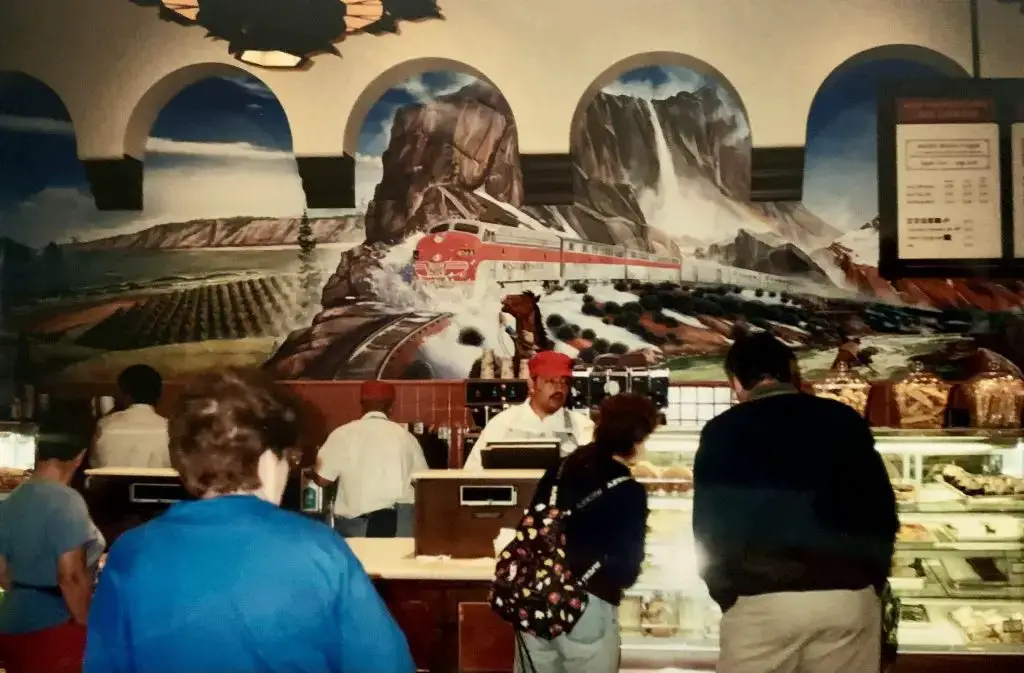
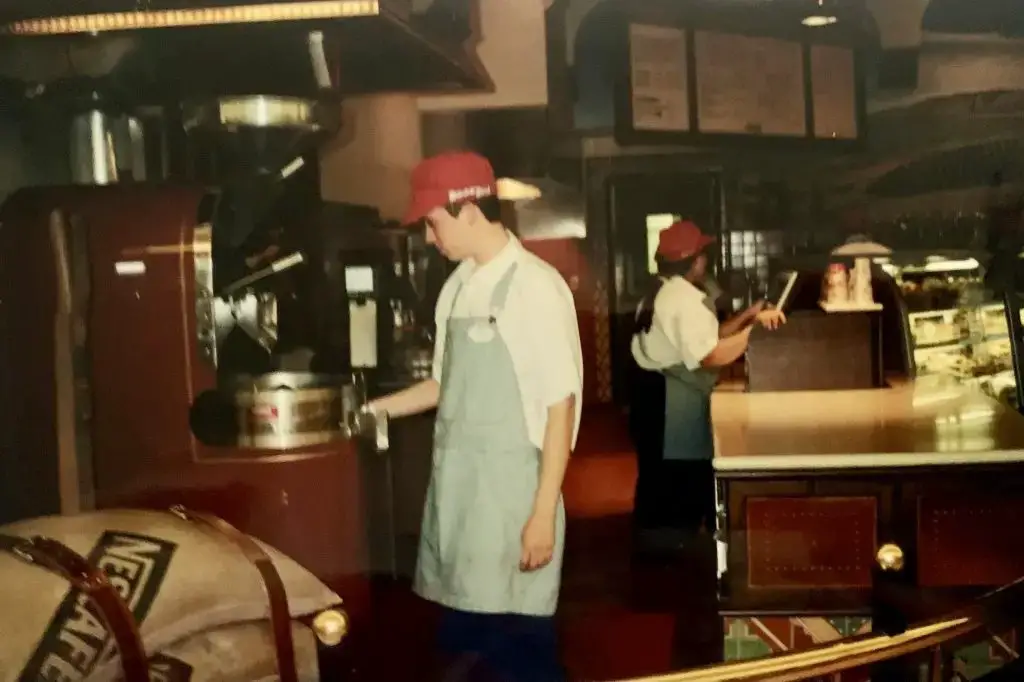
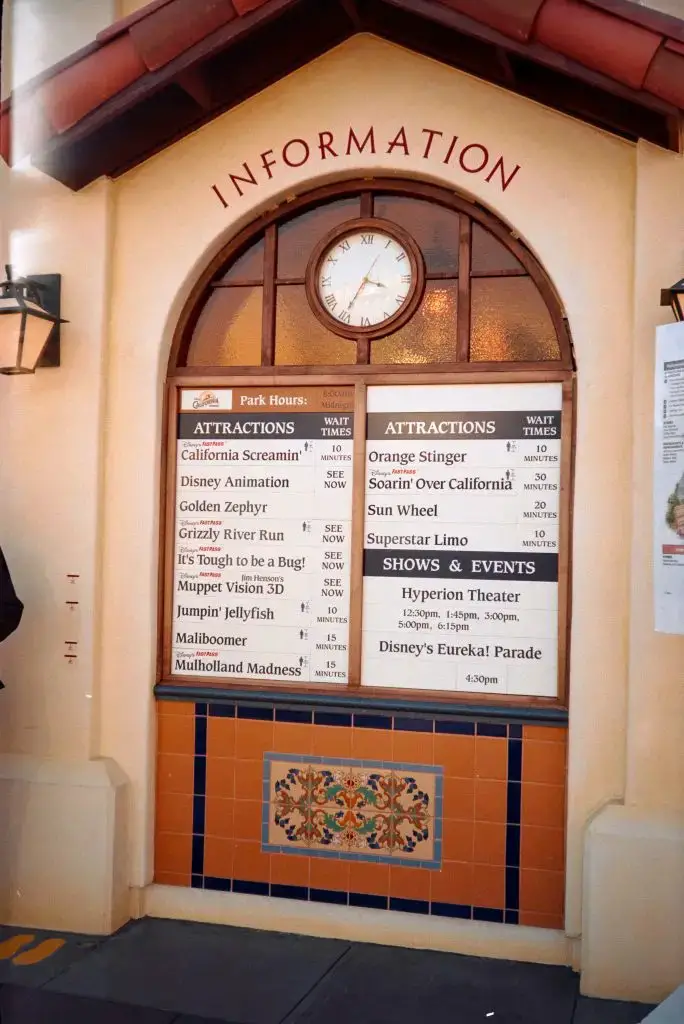
The most memorable aspect of the bakery for most guests was the wafting oder of roasting coffee that filled the air. According to stories that circulated at the time, the scent was assumed to be as alluring as that of brewing coffee. It was something of a surprise when it was discovered that roasting coffee is in reality rather pungent. The train, arranged in a gentle curve, was fronted by an outdoor pergola and an information tower, inspired by San Diego’s Santa Fe train station. Tables and chairs provided the bulk of the seating for the food venues. To the right were two paths leading to the Golden State section of the park. Because there were no clear visual icons to lead guests in that direction, many chose to make a left hand turn into the Hollywood Pictures Backlot.
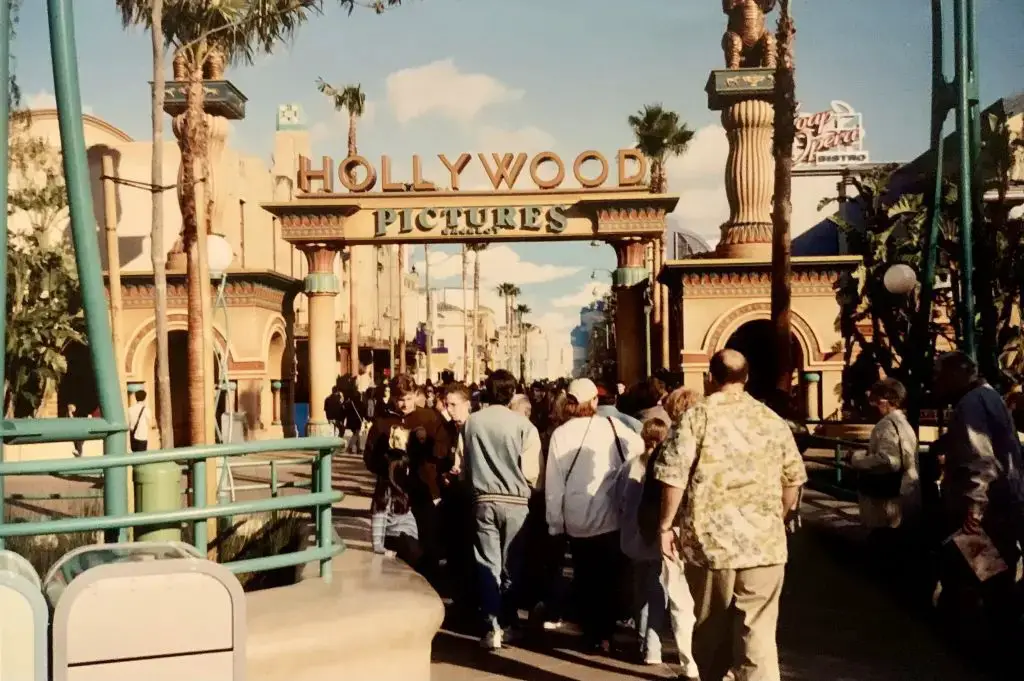
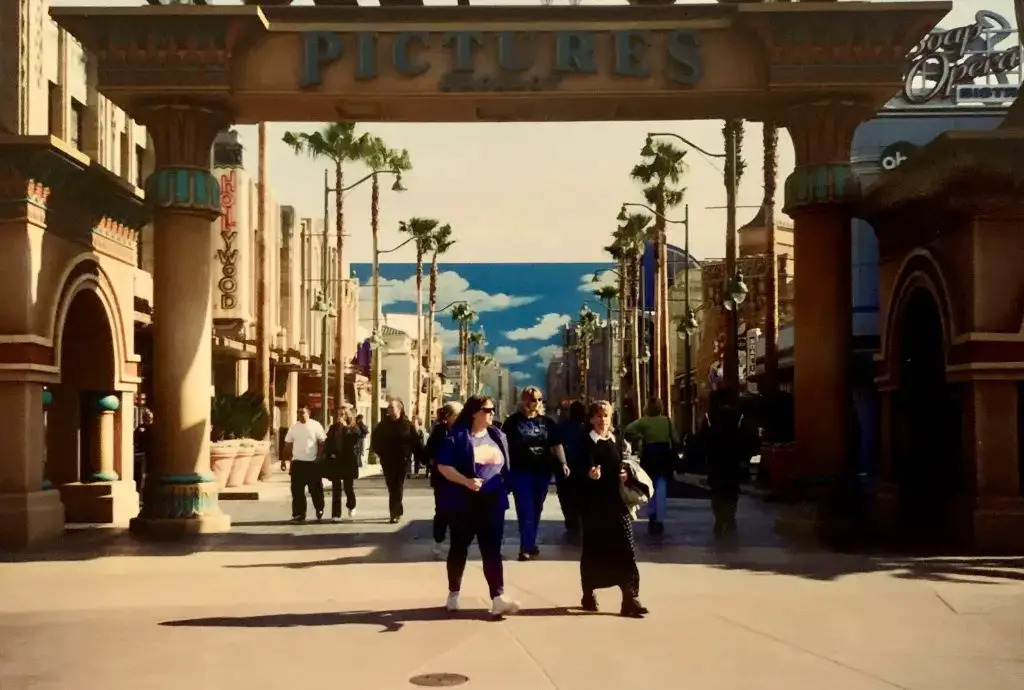
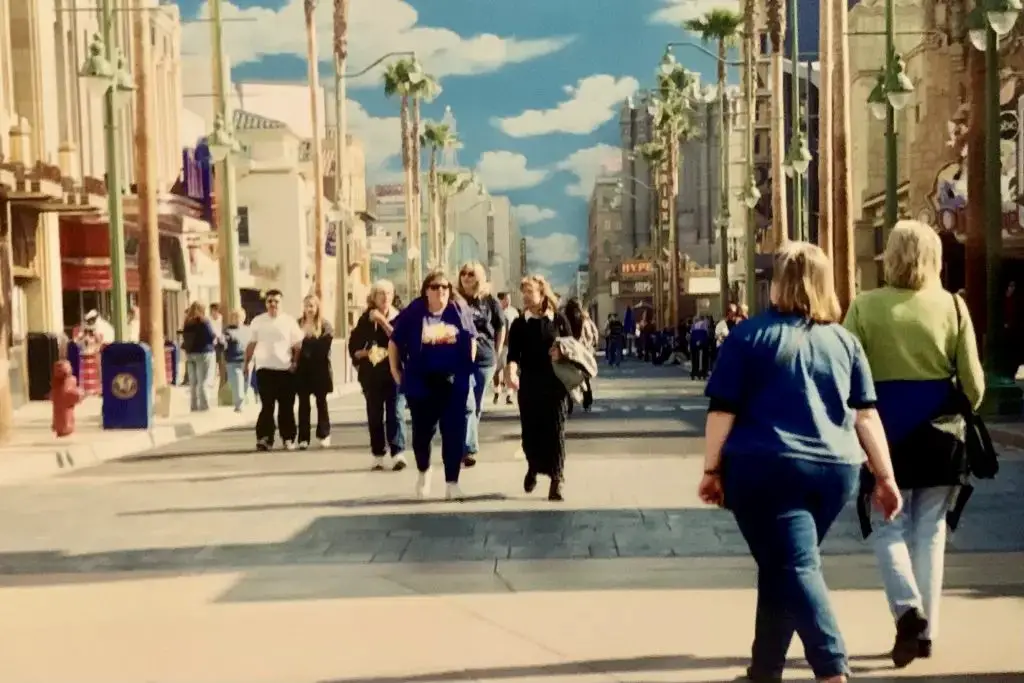
Marking the entrance to the Backlot were a pair of life sized, gilded elephants, mounted on walk-through bases that supported a marquee sign. The street itself was lined with a series of facades representing structures from the golden age of Hollywood. Behind them were soundstages, storage areas, and shops. On opening day there were four major attractions in the Hollywood Pictures Backlot.
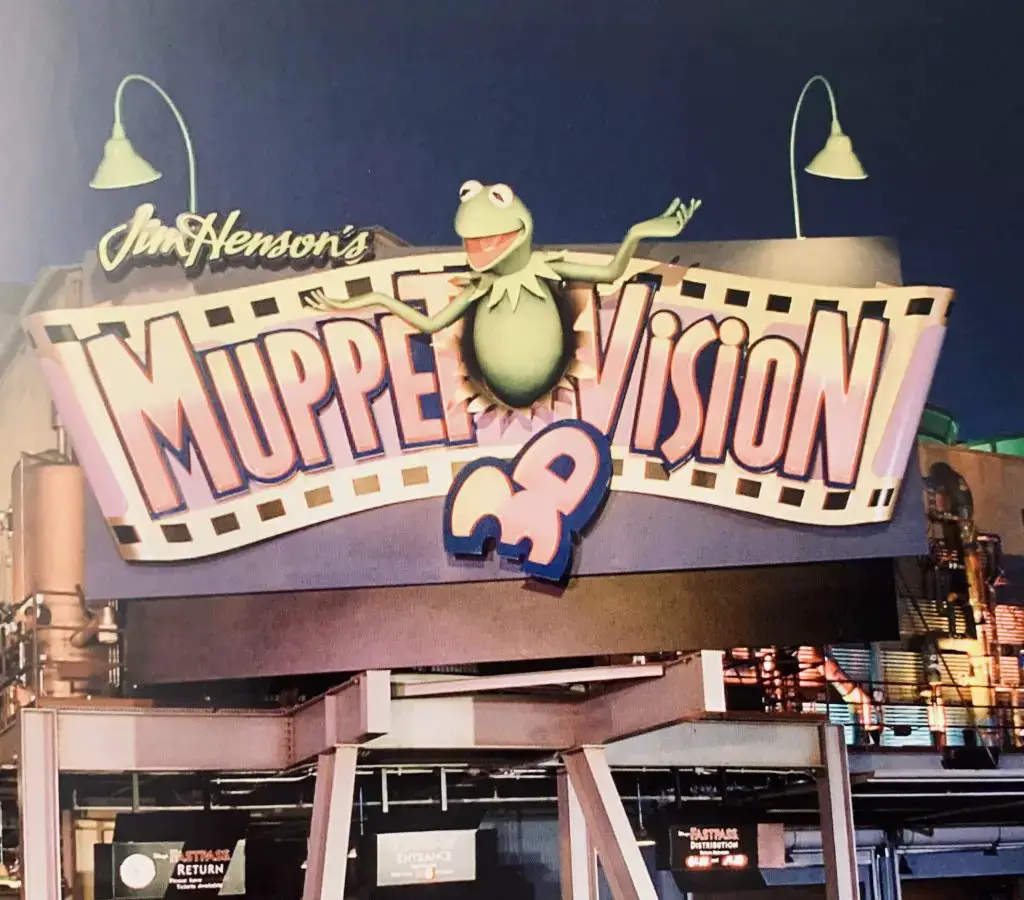
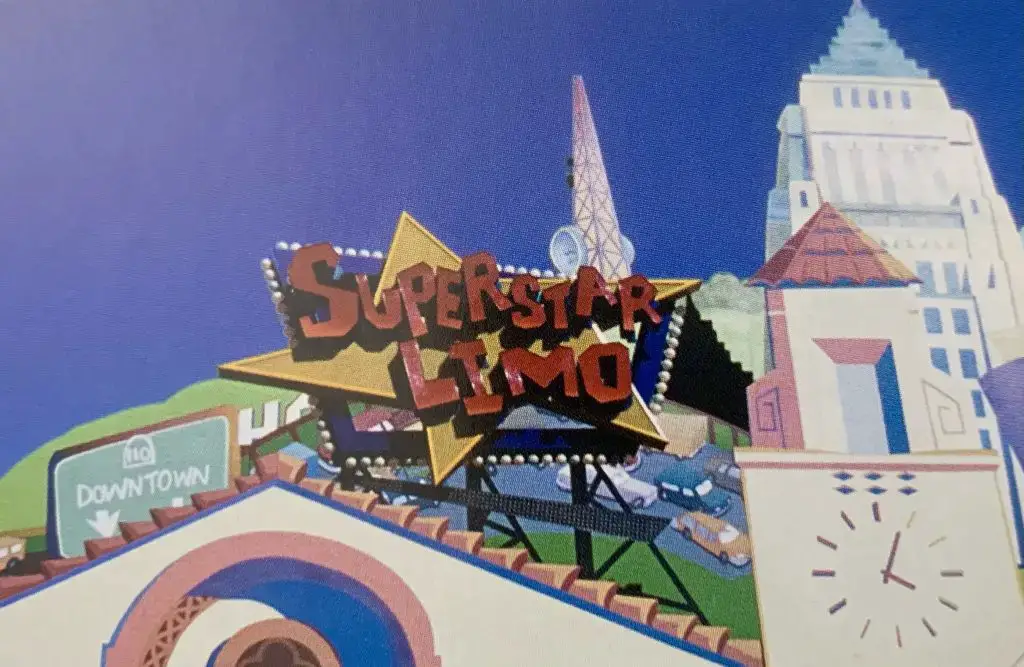
One of them, Jim Henson’s Muppet Vision 3-D, was a”cloned” attraction from the Disney-MGM Studios in Florida. Located on the same side of the Boulevard was the SuperStar Limo dark ride. Passing through a cartoon facade representing present-day tinseltown, guests found themselves “arriving” at “LA Airport.” Video screens urged them to get to ground transportation, where a very special message was awaiting them. Boarding special stretch limos, an agent appeared on screen with the thrilling news that you were headed to a Hollywood premiere. But first, there was a trip through Bel Air, Beverly Hills, and Malibu. The big surprise— you were the star arriving for your own premiere. The attraction featured stylized “human” puppets on screens, as well as Audio-Animatronic figures of such celebrities as Jackie Chan, Cindy Crawford, Drew Carrey, and Whoopi Goldberg.
On the opposite side of Hollywood Boulevard was the Disney Animation building. Four attractions were arranged around the dramatic Courtyard Gallery, a cavernous space filled with images and sounds of classic and contemporary Disney animation. To the right of the entrance was a 230 seat theater offering continuous showings of Back to Neverland. The humorous film, produced for the Disney-MGM Studios tour, featured Walter Cronkite and Robin Williams, explaining how an animated film is made. To the left was Drawn to animation. An over-scaled animator’s office was the setting for this show, that revealed how Disney developed animated characters. Mushu the dragon was the subject of the presentation. Guests exited Drawn to Animation through the Art of Animation Gallery, the third attraction in the building. The Gallery offered a seasonally changing exhibit of Disney animation art.
The fourth, and largest, attraction in Disney Animation was The Sorcerer’s Workshop. Inside this area could be found the Magic Mirror Realm, with a variety of early animation devices, the Beast’s Library with enchanted books and a “personality test” that revealed which Disney hero or villain a guest resembled most, and Ursula’s Grotto, where guests could replace the voices of Disney characters, whether acting or singing.
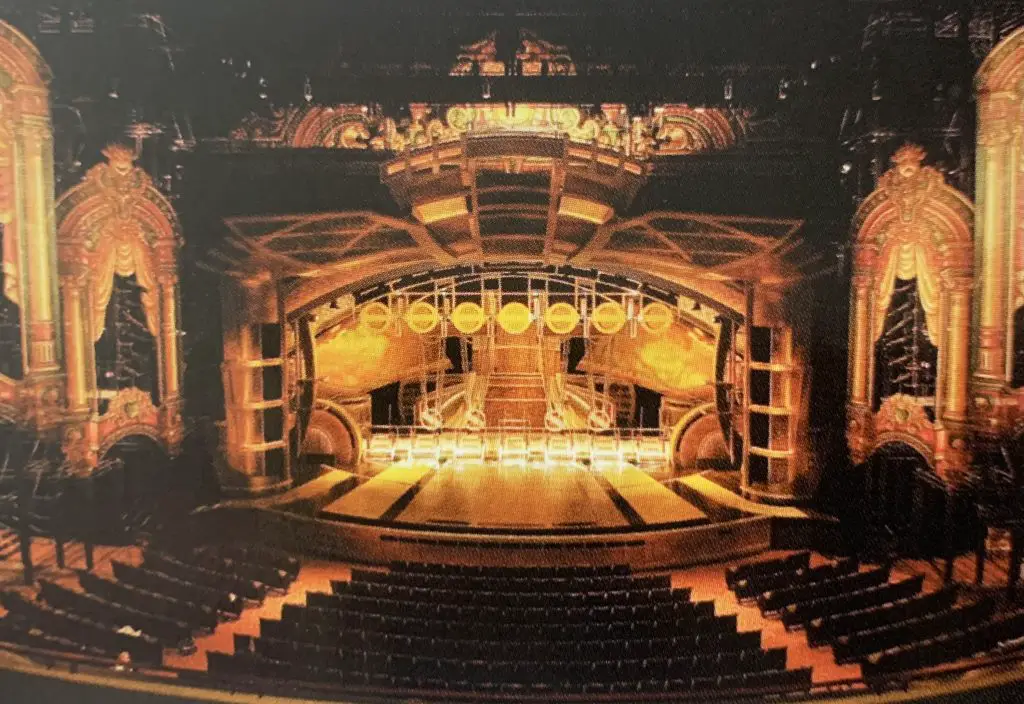
Anchoring the end of Hollywood Boulevard was the Hyperion Theater. With 2,000 seats, it was the largest building in Disney’s California Adventure. Most of the building was masked with a series of forced perspective false fronts that visually extended Hollywood Boulevard several blocks. To the right was the main entrance, designed to resemble the Los Angeles Theater movie palace in downtown LA. The theater itself was themed to resemble the interior of asoundstage, with scenic elements denoting the doors and proscenium. It was (and remains) a fully equipped, high caliber professional stage.
The inaugural show was Disney’s Steps in Time. Performed by a cast of four singers and thirty dancers, the 25 minute production was a glittering Hollywood-style salute to Disney’s legacy of film music. Selections from seven memorable films were featured in highly stylized presentations that combined elegant sets, modern dances, and extraordinary vocalists. The show was intended to be routinely updated as new animated features were released. This was not, however, the show that greeted guests on opening day. During numerous previews Steps in Time received very mixed reviews. A decision was made to rework it virtually overnight. For opening day and thereafter, the show featured two singers and the dance troupe, as well as a hastily contrived storyline about a sulky young man and a Fairy-Godmother-in-Training who take the audience on a musical odyssey through the Disney songbook, culminating in a grand finale featuring the original title song.
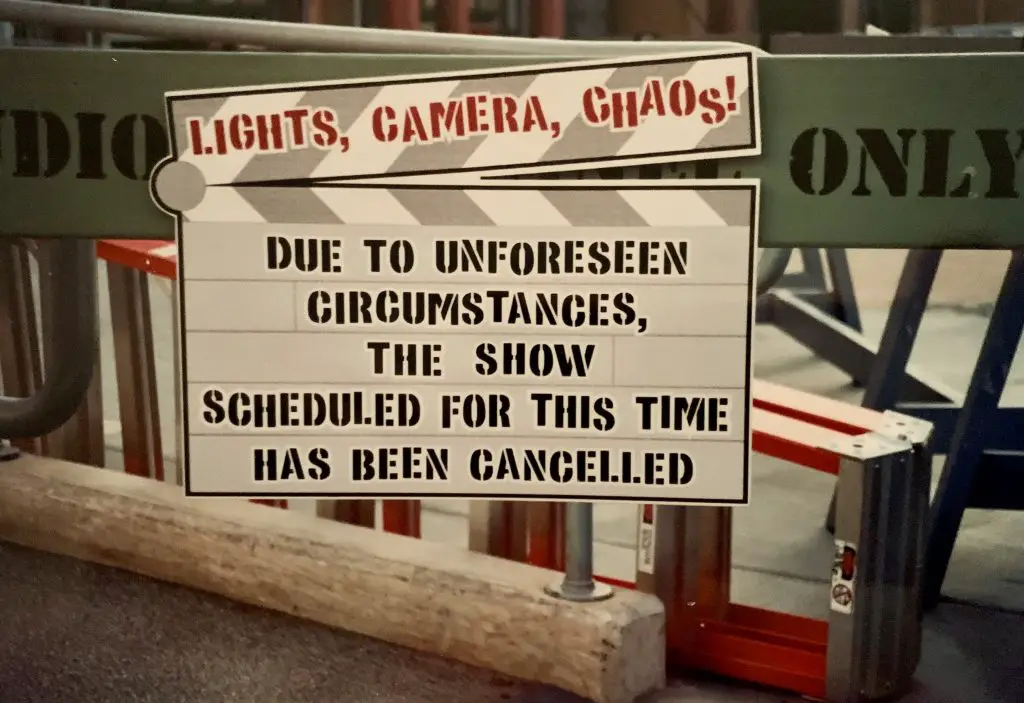
There was another live show that performed daily at the Hollywood Pictures Backlot, in a small venue almost hidden away behind the false fronts on the north side of the boulevard. This backlot stage was the home of Lights, Camera, Chaos. It was a wordless dance performance, with an ensemble dressed to represent the crew working an outdoor production. As their haughty director tried to order them about, they would grab ladders, tools and equipment and dance circles around him. The seating, a random assortment of park benches, was unshaded, and the venue so obscure that the show closed abruptly after a very short run.
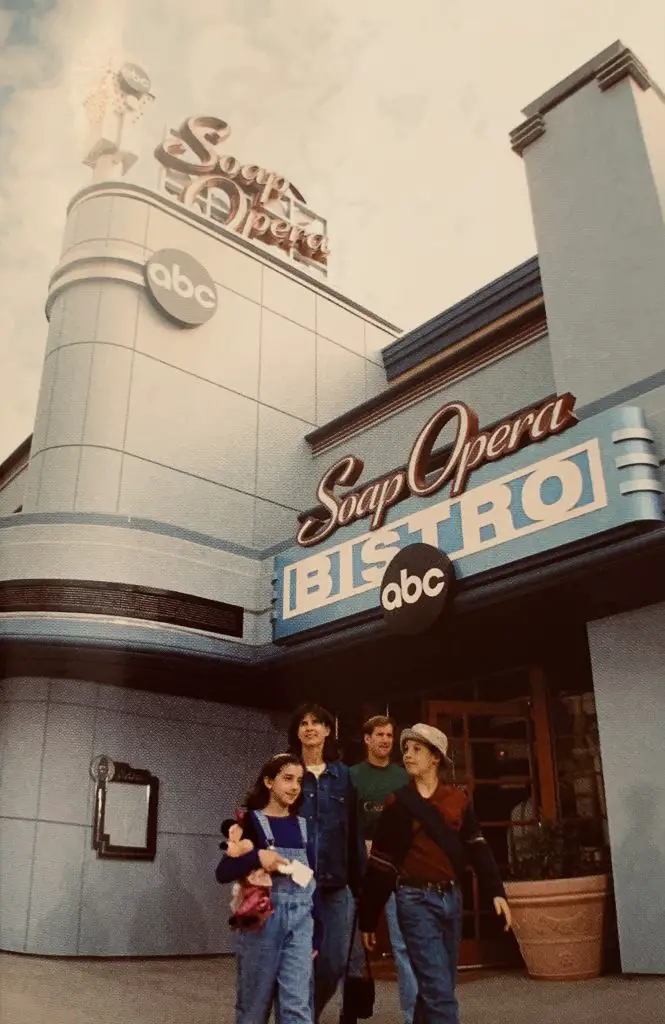
Guests exploring the Hollywood Pictures Backlot would also find four shops, two restaurants, and five snack stands. The largest shop was Off the Page, attached to Disney Animation. Inside guests could find art, souvenirs, and high end collectibles, all inspired by Disney animation. Across the street was Gone Hollywood, a shop housed in a replica of Bullock’s Wilshire on the Miracle Mile. The attraction here was merchandise drawn from Hollywood itself, including a large selection of items autographed by the stars. Rizzo’s Prop and Pawn Shop was a free standing location offering Muppet memorabilia. The ABC SoapLink, featuring a wide variety of souvenirs from ABC-TV daytime dramas, was attached to the ABC Soap Opera Bistro.
The Bistro, housed in a soundstage, invited guests to dine in one of five themed environments derived from the daytime dramas General Hospital, All My Children, and One Life to Live. Servers and wait staff were “in character,” and guests were encouraged to join in on the fun. At the far end of the Backlot was Hollywood and Dine, another soundstage. This food court was an homage to beloved Los Angeles restaurants and nightclubs of the past. Among the themed dining areas and food stations could be found tributes to the Mocambo, Trader Vicks, Perrinos, Schwab’s Delicatessen, the Brown Derby, and others.
For quick snacks guests could step up to Award Wieners for a themed hotdog, or get a smoothie or coffee drink at Schmoozies. Rounding out the informal options was Between Takes, a catering truck offering nachos, the Fairfax Market with fruit, vegetables and nuts, or Pop-arazzi Popcorn.
The largest of Disney’s California Adventure’s three themed lands was Golden State. As is true of California itself, Golden State took in a wide variety of geographical regions. There were two entrances to Golden State from Sunshine Plaza, one to the far right (west) and one just to the right of the Sun Icon and wave fountain, more to the south.
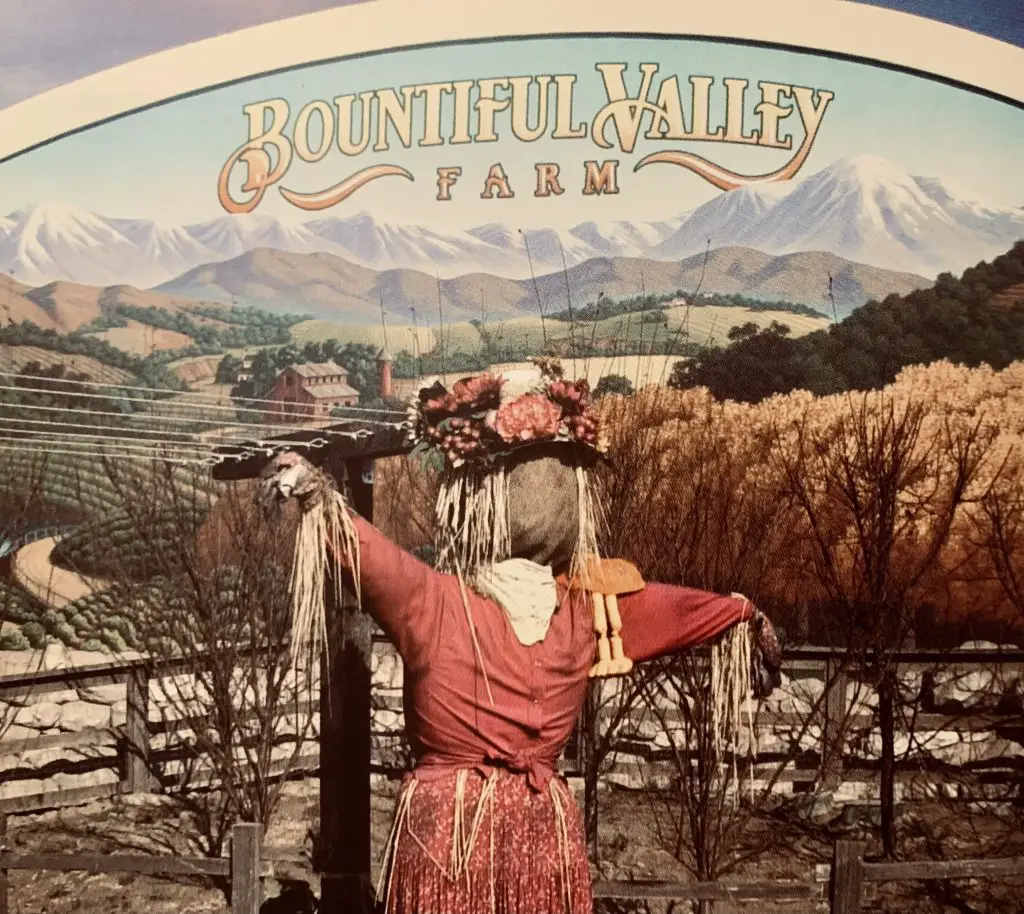
Entering from the south, one passed between the Bountiful Valley Farm on the left and the thundering waterfalls of Grizzly Peak to the right. The two and a half acre farm celebrated California’s agricultural heritage. Guests could admire growing crops of seasonal favorites, climb on tractors, cool off in the Irrigation Station, grab a tricked out milkshake at Sam Andreas Shakes, or get fresh food to go at the Bountiful Valley Farmers Market. Santa Rosa Seed and Supply offered unique gardening souvenirs, and kids could find farm toys at the Caterpillar Cart. The biggest feature at the Farm was the stage presentation It’s Tough to Be a Bug, which had been entertaining guests at Disney’s Animal Kingdom in Florida.
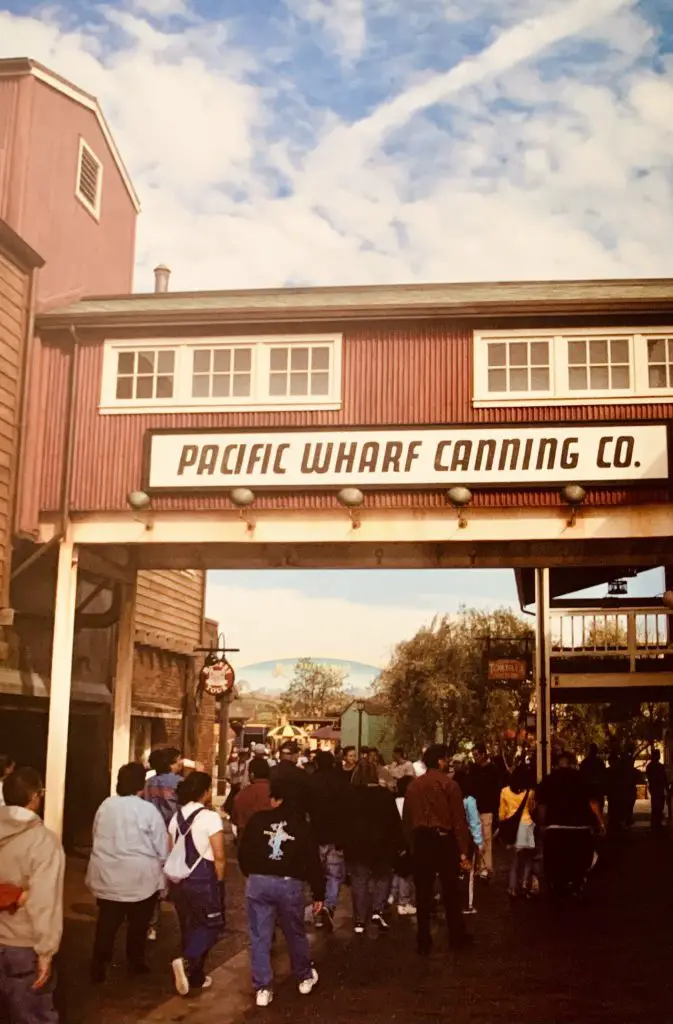
Just past the Bountiful Valley Farm was Pacific Wharf. Inspired by Monterey’s Cannery Row, the wharf was a combination entertainment and dining area, featuring “work-place attractions.” The Mission Tortilla Factory allowed guests to watch tortillas being made, and take away a hot, fresh sample. Cocina Cucamonga was located in the same building. Boudin Bakery had an extensive walk through tour, hosted by Rosie O’Donnel and Colin Mochrie (via overhead monitors). After seeing all that hot, fresh sourdough bread, guests could partake of sandwiches and salads at the Pacific Wharf Cafe. The largest venue was the Lucky Fortune Cookery, at the end of the Wharf area. It served Pacific Rim favorites including egg rolls, noodles and rice bowls. The featured fortune cookies were turned out in a display kitchen, and could be customized with a variety of treats. Guests could slake their thirst at Rita’s Baja Blenders, or with a Karl Strauss handcrafted beer from the Pacific Wharf Distribution Company delivery truck.
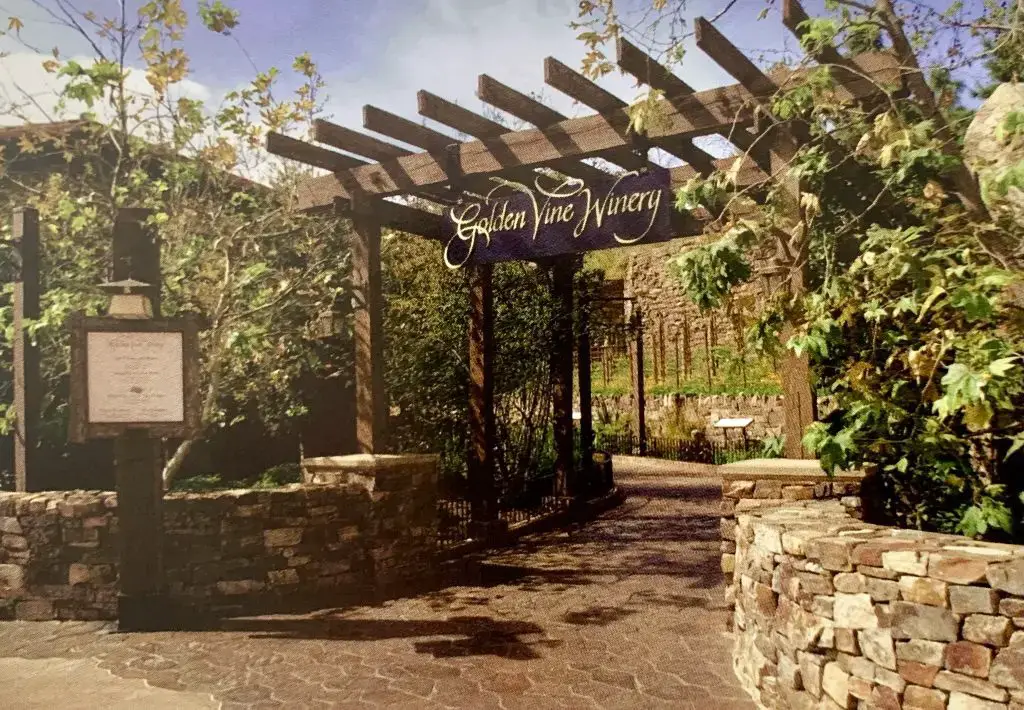
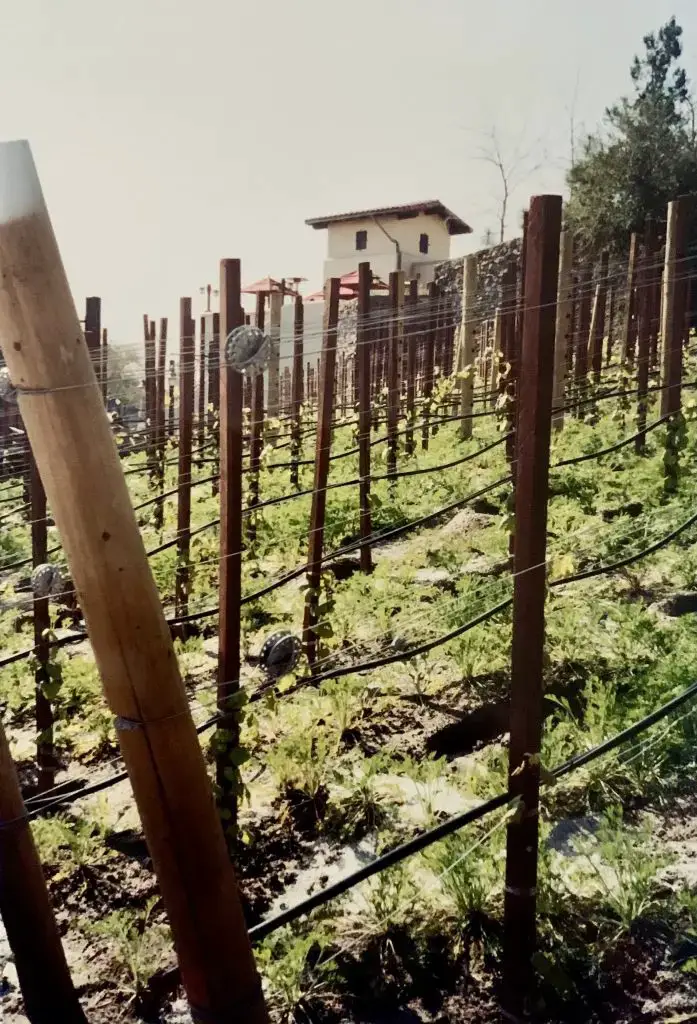
Tucked into the side of Grizzly Peak, opposite the Bountiful Valley Farm and Pacific Wharf was the Golden Vine Winery, hosted by Robert Mondavi. A striking feature of the winery was the vineyard, with rows of ripening grape vines and rose bushes. A rustic cask room housed Seasons of the Vine, an informative presentation narrated by Jeremy Irons. The biggest attraction here was, of course, the wine. A broad patio fronted a mission-style building where guests could sample wines, grab a snack at the bistro, dine al fresco at the Golden Vine Terrace, or enjoy fine dining in the Vineyard Room.
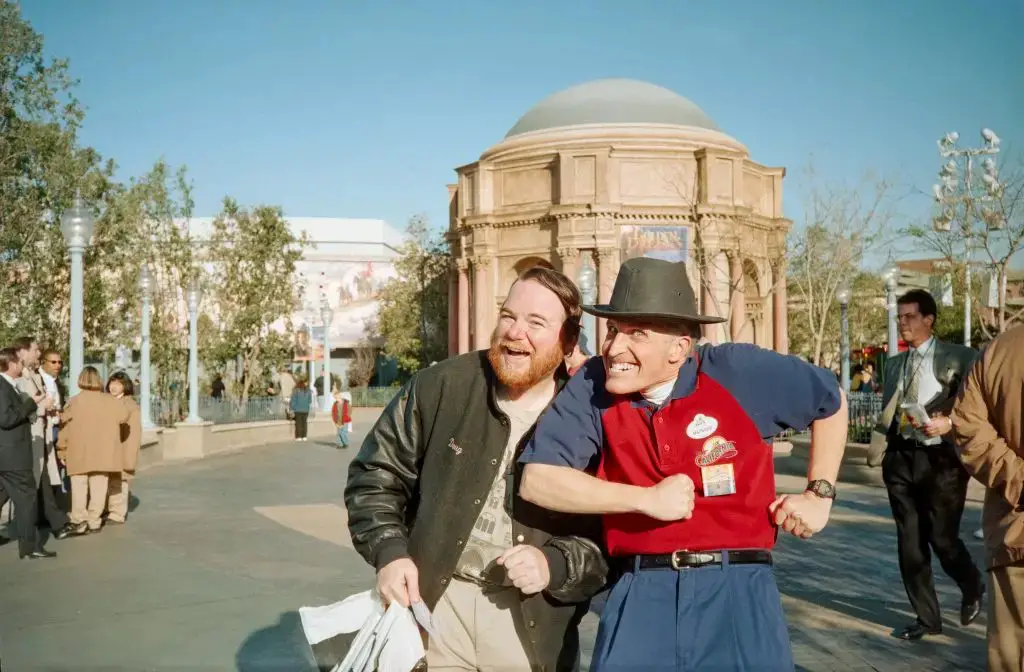
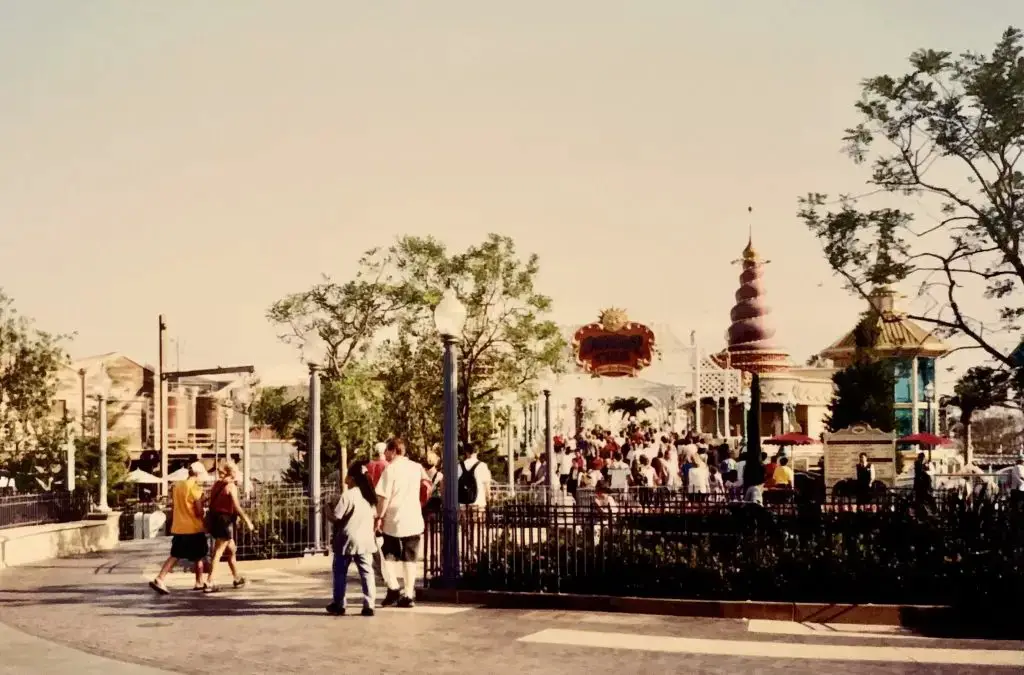
Continuing on past the winery, Golden State next took in the Bay Area. This short block was dominated by a 45 foot tall replica of the rotunda of San Francisco’s Palace of Fine Arts. It served as the entrance to California Adventure’s signature attraction, Golden Dreams. A film presentation, it was directed by Angieszka Holland, a native of Poland. It starred Whoopi Goldberg as Califia, a legendary queen first described in a Spanish novel in 1510. With a 22 minute running time, the story told of people who, inspired by Califia, followed their dreams to California. These included Spanish missionaries, Chinese laborers, Japanese picture brides, dust bowl farmers, and European filmmakers. Upon exiting the theater guests could head up the street, admiring a set of detailed facades of San Francisco row houses. These housed bathrooms to the left (west) and future expansion to the right (east). Directly across from Golden Dreams was the Golden State Amphitheater, facing Paradise Bay.
Although the entertainment here was not on a schedule, during the park’s opening it was the home of La Feet, a dance troupe that performed on giant drums that doubled as trampolines. There were other “spontaneous” entertainers appearing throughout California Adventure. Three Bags Full was a company of three very large bags, in primary colors, that wordlessly posed in a variety of configurations. Da Vine was a walking plant with spindly appendages. It would quietly wrap itself around a nearby lamppost or tree, moving slowly to surprise its next unsuspecting guest. These unusual performances were part of a larger program to set California Adventure apart from Disneyland across the esplanade. The only Disney characters to appear (and very infrequently) were Mickey and Minnie. But they were dressed casually, as we were to understand they were “on vacation.” Over at the Backlot you could meet the stars of Disney’s newest feature: Kuzco (as llama), Yzma, and Kronk from The Emperor’s New Groove. The lack of traditional Disney characters was an early controversy for this newest Disney theme park.
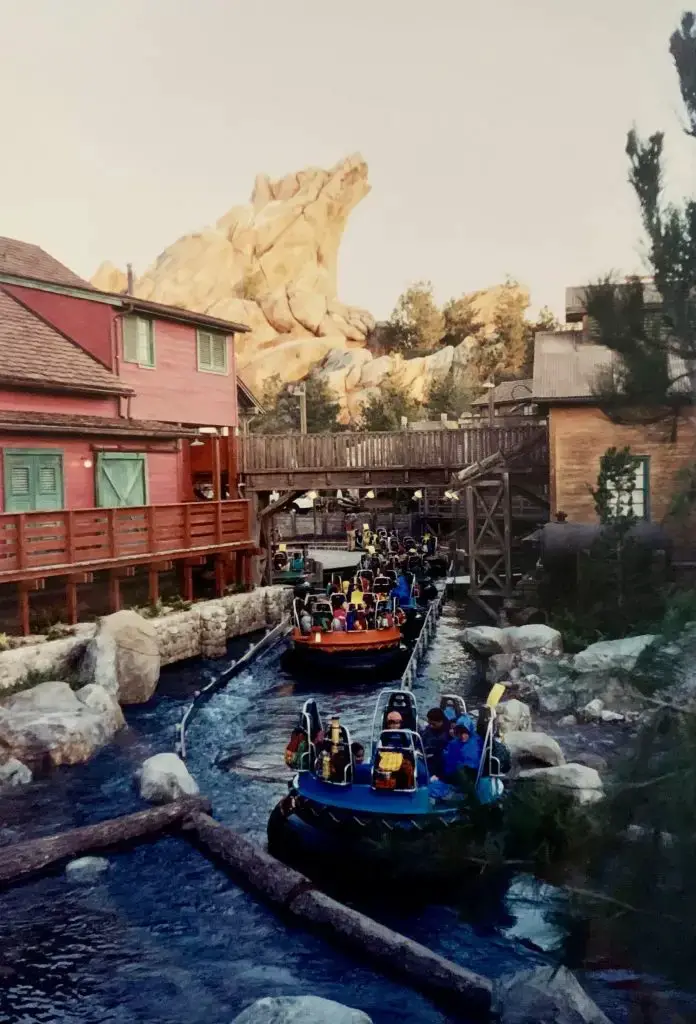
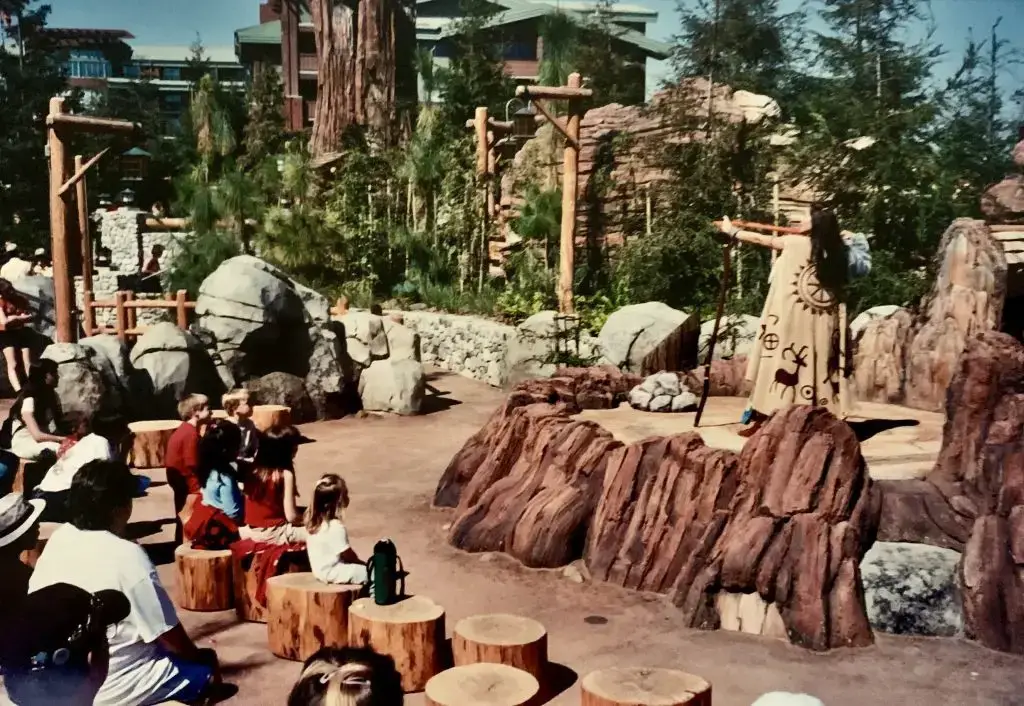
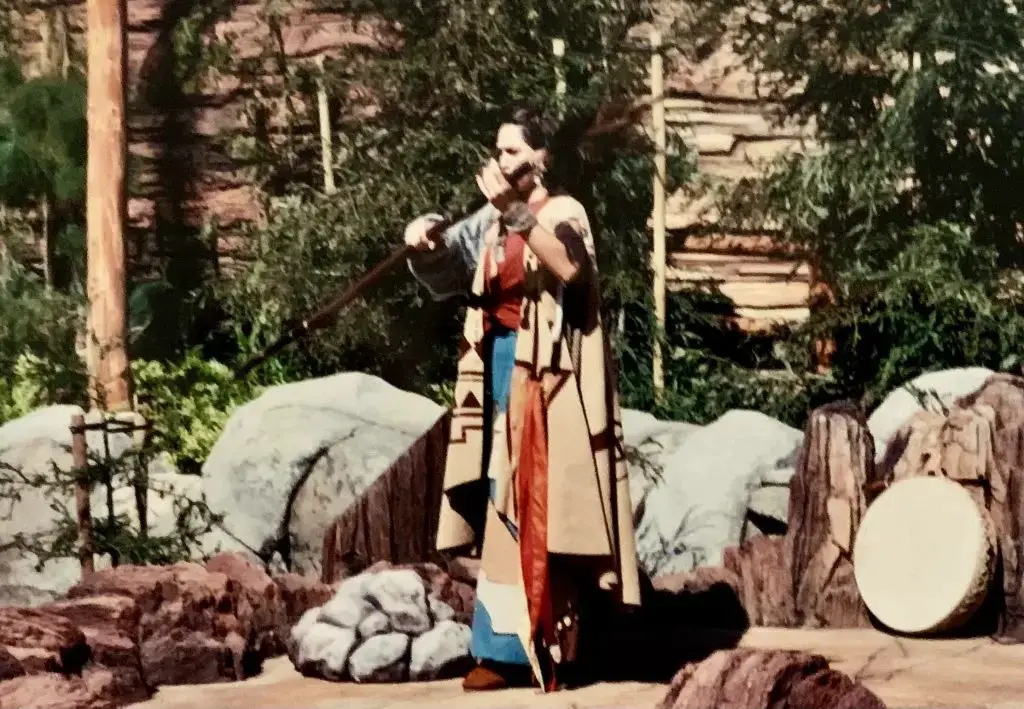
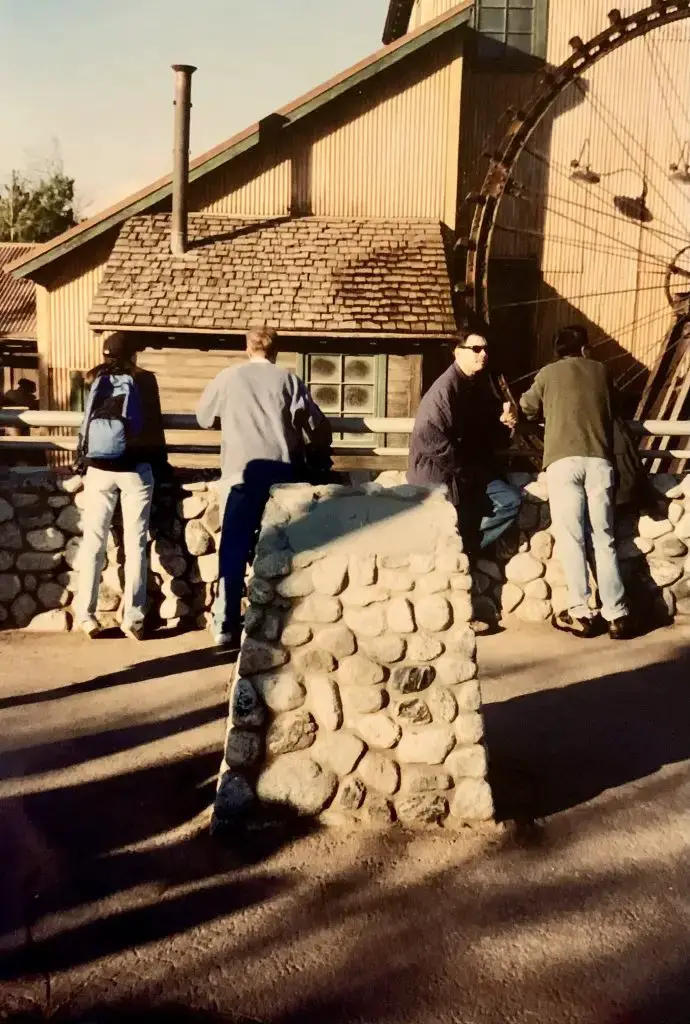
All that aside, there are still two more themed areas yet to explore in The Golden State. The Grizzly Peak Recreation Area dominated the whole park with its granite mountain, topping out at 110 feet. The mountain housed a thrilling river rafting adventure, Grizzly River Run (or GRR for short). For guests seeking a less thrilling adventure, there was the extensive Redwood Creek Challenge Trail, a meticulously themed play area with three towers, net climbing, cable slides, and swaying bridges. Tucked into a quiet corner was the Ahwanee Camp Circle, where guests could enjoy authentic Miwok legends from a native American storyteller, or ghost stories and tall tales from a wacky Grizzly Guide. Guests looking for adventure gear or wilderness supplies could browse the Rushin’ River Outfitters shop.
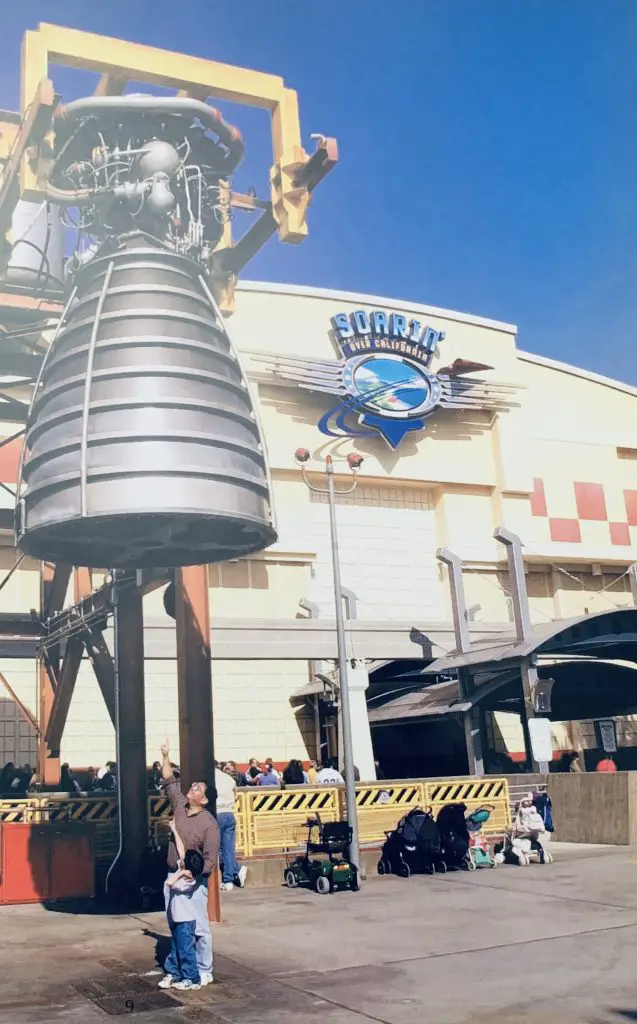
Finally, there was Condor Flats. Resembling an abandoned airstrip in the high desert, it held California Adventure’s most popular attraction, Soarin’ Over California. Guests were secured in rows of seats that were pulled up in front of an 80 foot high bowl shaped screen that immersed them in the sights, sounds, and even smells of the Golden State. Souvenirs were sparse for Soarin’. Only a single pin and a propeller beanie were offered at Fly ’n Buy, located across from the attraction. Also popular was Taste Pilots’ Grill, which offered gourmet burgers and ribs. The interior represented an engine testing facility, where we were to understand that the menu items were being grilled over jet engines. For a more traditionally prepared snack, there was the Earborne Popcorn stand.
The third major realm at Disney’s California Adventure was not directly accessible from Sunshine Plaza. To get to Paradise Pier guests had to walk through Golden State, from either direction. The more formal entrance was located at the juncture of the Pacific Wharf, the Golden Dreams Theater, and the Golden State Amphitheater. This was a concrete bridge leading to a pier with fanciful, stylized architecture based on California’s classic seaside amusement piers.
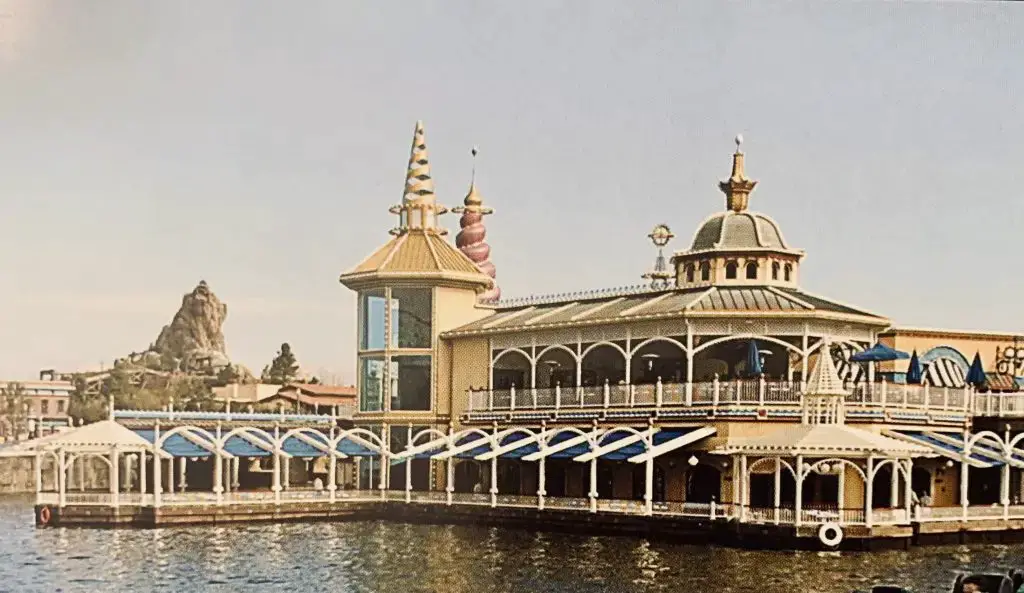
To the right was Avalon Cove, sponsored by Wolfgang Puck. This elegant, reservation-only restaurant featured Chef Puck’s signature cuisine, emphasizing fresh foods from various regions of California. The Cove Bar on the upper level was an immediate hit. The downstairs dining room and outdoor terrace offered views of the pier. The entire building was inspired by the Avalon Casino on Catalina Island. Opposite the Cove, on the left, was Treasures in Paradise. Here guests could browse for seaside themed souvenirs, amidst memorabilia from various California amusement parks of the past.
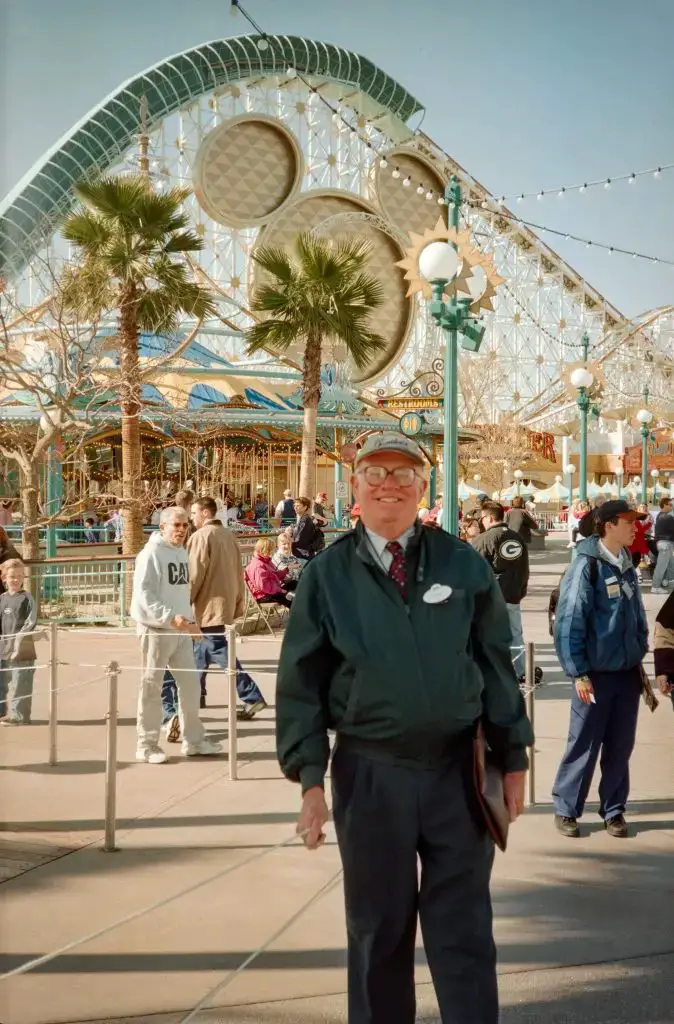
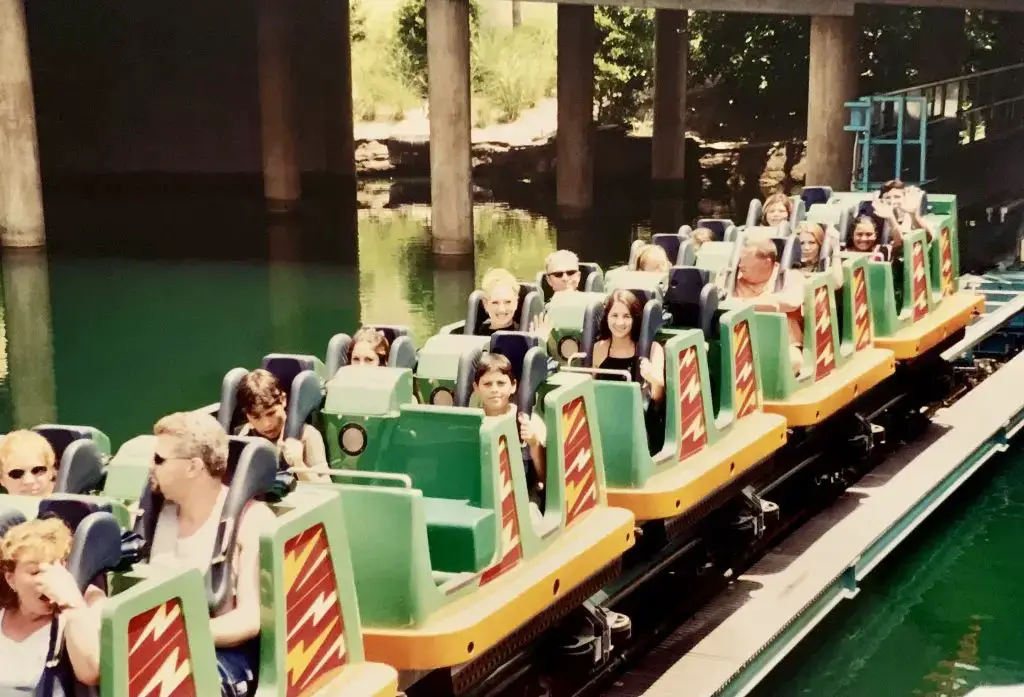
The Pier included a classic wooden boardwalk, that curved down and around to the major amusements, stretching along the south side of Paradise Bay. Halfway down on the left was Catch a Flave, a soft serve ice cream stand. The first attraction approaching from this direction was the California Screamin’ roller coaster. Designed to resemble a classic wooden coaster, this was all steel, 5,800,000 pounds to be precise. 306 linear motors launched guests from 0 to 55mph in 4.7 seconds. The 6,072 feet of track featured the first 360 degree loop in a Disney theme park. Along the way, 108 ride speakers played an original score composed for California Screamin’.
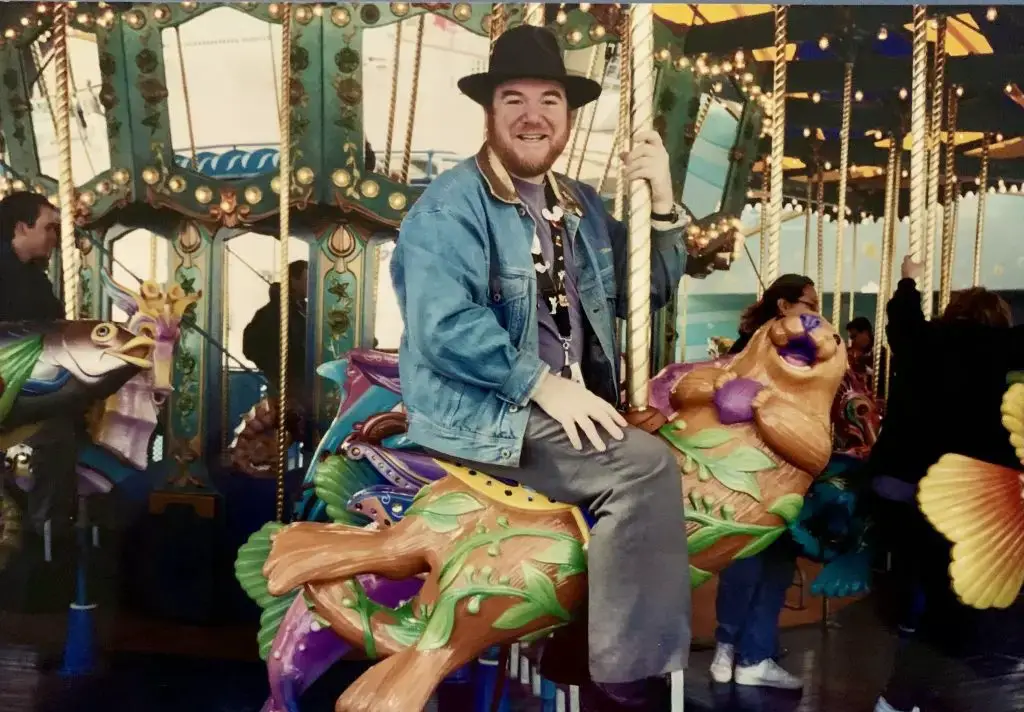
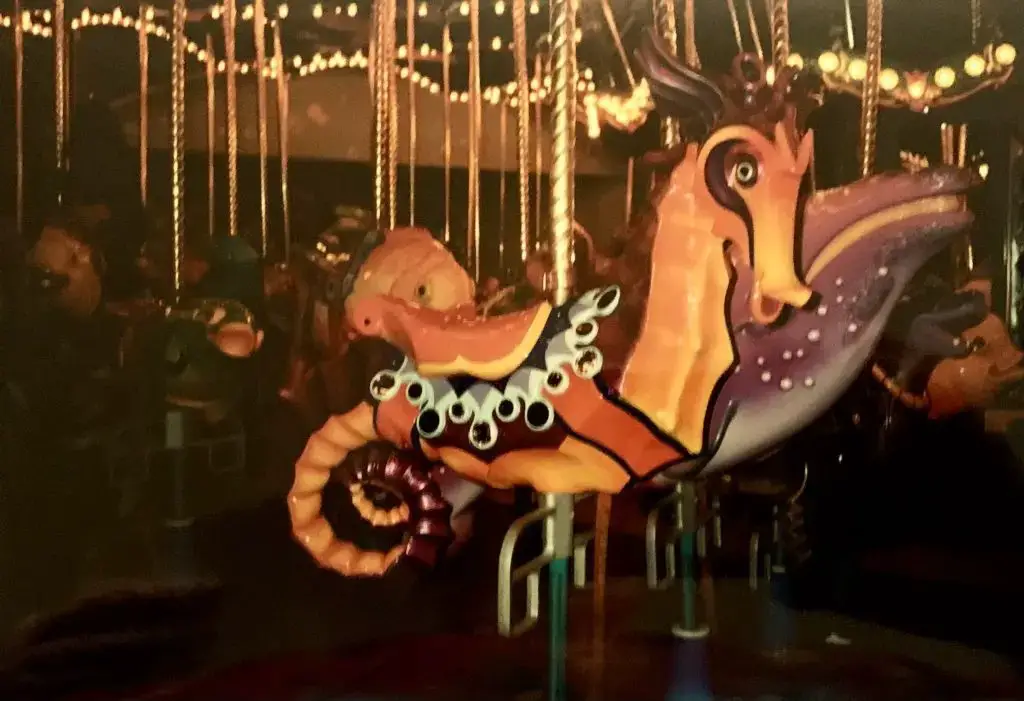
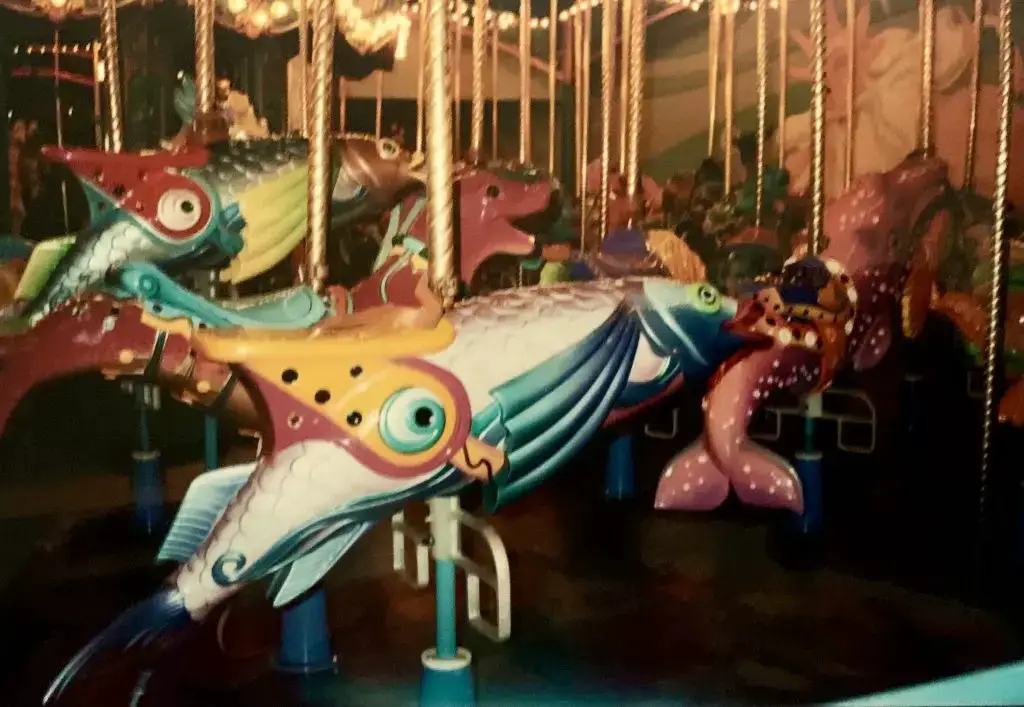
Three more attractions could be found along the boardwalk. King Triton’s Carousel attracted guests young and old with a gallery of under-the-sea themed animals. The music for the Carousel, and the whole Pier area, was a unique arrangement of classic surfer tunes, scored and performed on a classic band organ. The Maliboomer featured three steel towers, which sent guests hurtling to the top, and then back down in a series of drops. Theming suggested that this was a classic strongman’s sledgehammer test. There was even the sound of a bell ringing as you hit the top.
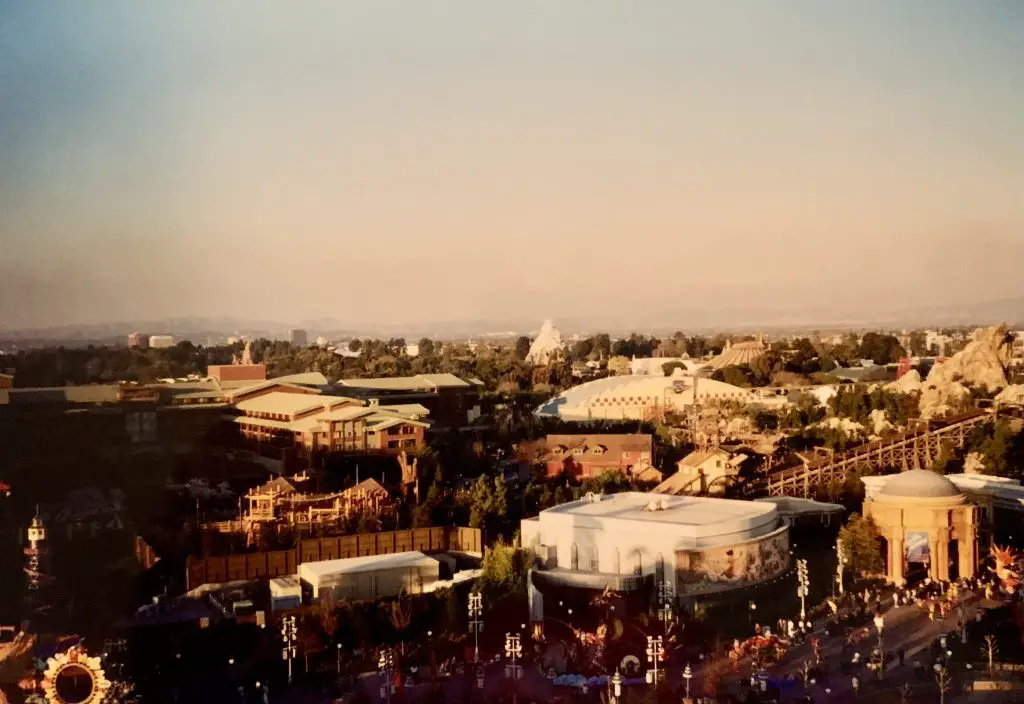
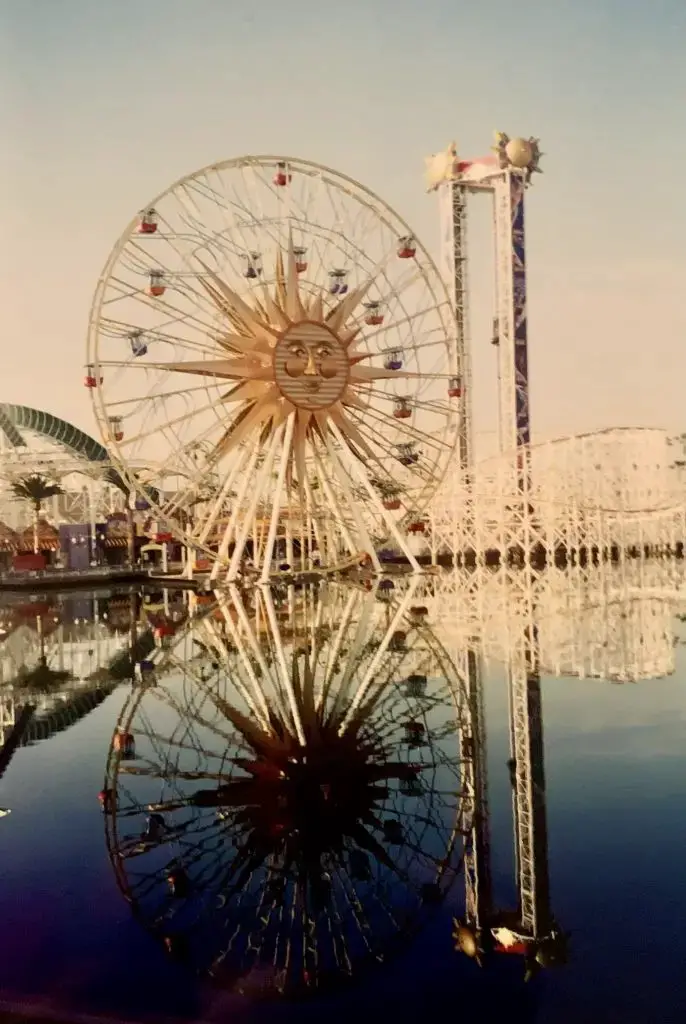
Dominating the Pier and the Bay was the Sun Wheel. This immense ferris wheel offered two distinct experiences. Eight fixed cars carried guests 160 feet in the air, and below the water level of the bay at the base. Sixteen other cars traveled on interior tracks, offering a heart pounding experience. Only two similar wheels existed, one at Coney Island and the other in Japan.
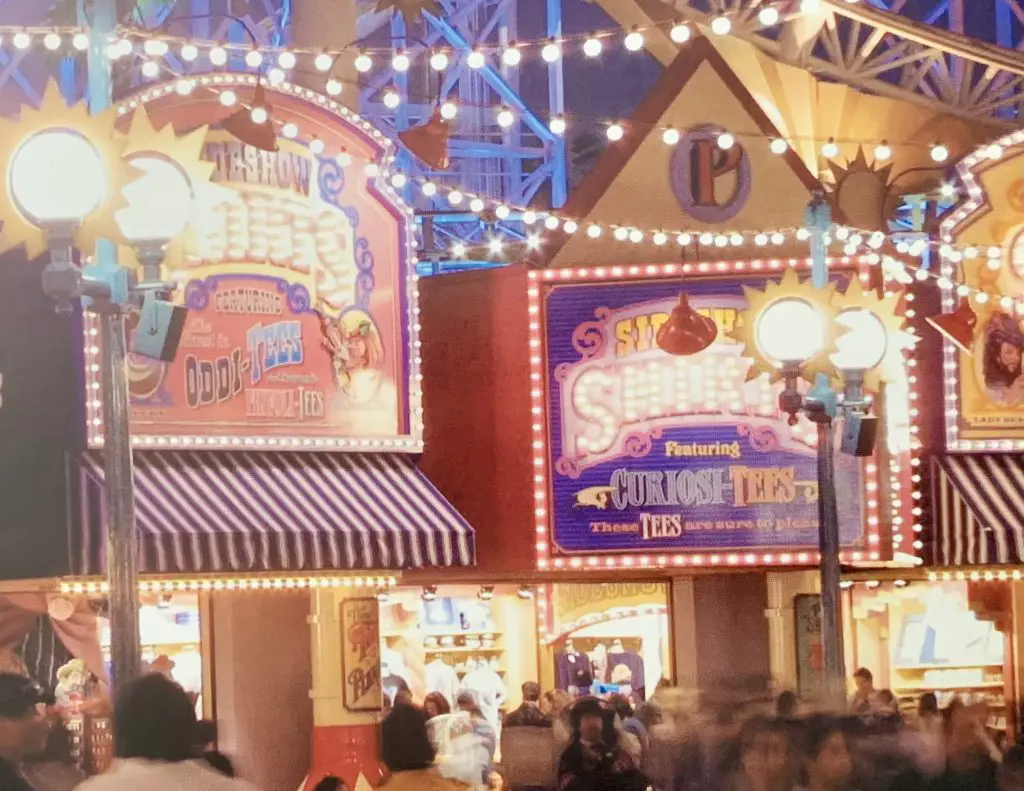
The boardwalk also featured a midway with games of chance, shops, and eateries. The inaugural games were New Haul Fishery, Angels in the Outfield, Cowhenga Pass, Dolphin Derby, and Boardwalk Bowl. Shoppers were invited to browse Man Hat ’n Beach, Sideshow Shirts, and Point Mugu Tattoo (they were temporary!). You could make some memories at the Pacific Ocean Pictures photo parlor, or the California Scream Cam (for riders of California Screamin’). Aside from Catch a Flave, snacks on the pier were served at Malibu-Ritos and Boardwalk Betsy’s Strips, Dips, ’n Chips.
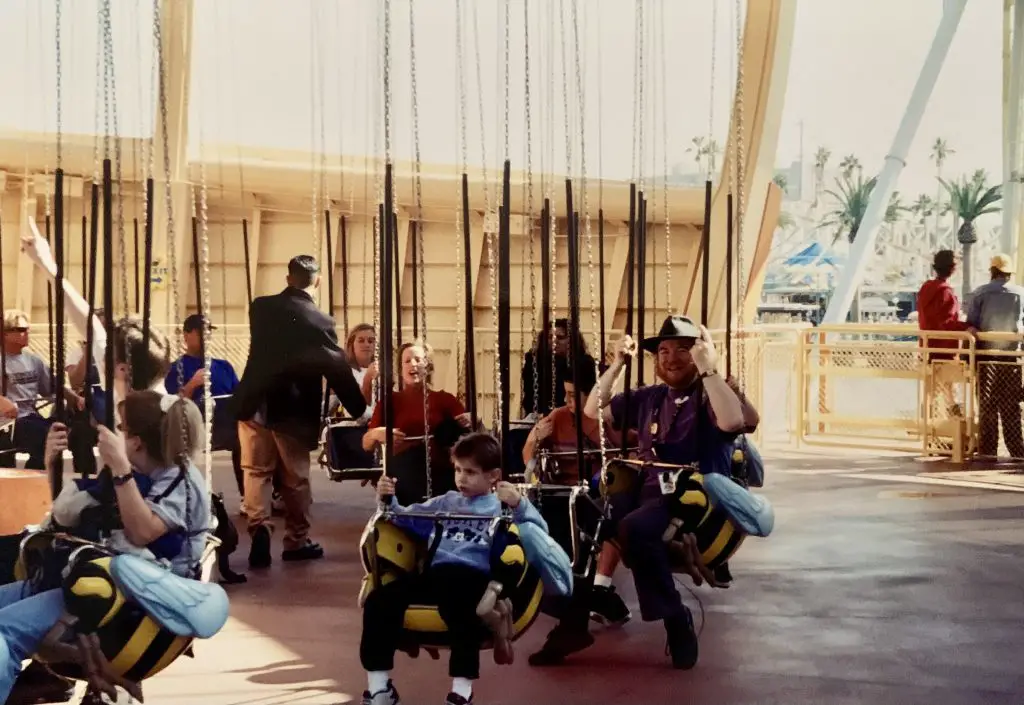
The final curve of the California Screamin’ track, with the Maliboomer nestled inside, marked the end of the boardwalk, but not the end of Paradise Pier. The next section, at the west end of Paradise Bay, was a celebration of “California Crazy” architecture. The first example was the Orange Stinger, a classic swing ride housed inside a giant, spiral sliced orange. Seats were decorated to resemble bumble bees, forming a flying, buzzing swarm surrounded by glimpses of Paradise Bay as the scent of orange blossoms filled the air. Next to the Stinger was the S.Srustworthy (formerly Trustworthy, we were to understand), a beached fireboat that afforded a lot of water play for kids.
Continuing around the beachfront one would find Jumpin’ Jellyfish (a junior version of the Maliboomer) and the Golden Zephyr, whose stainless steel spaceships circled a bright orange tower. On the opposite side of the road were a series of dining and shopping options. Pizza Oom Mow Mow sold individual pizzas shaped like surf boards. Burger Invasion was a fully staffed and equipped McDonalds designed to resemble a flying saucer shaped hamburger.
Further down the path was the Corndog Castle, a tiny venue with a giant billboard that proclaimed, “Where Corndogs Rule!” Furthering the California Crazy theme was Dinosaur Jack’s Sunglass Shack, which was a shack, shaped like a dinosaur, where they sold sunglasses. The last stop before rejoining Golden State was Souvenir 66, a quintessential roadside souvenir stand.
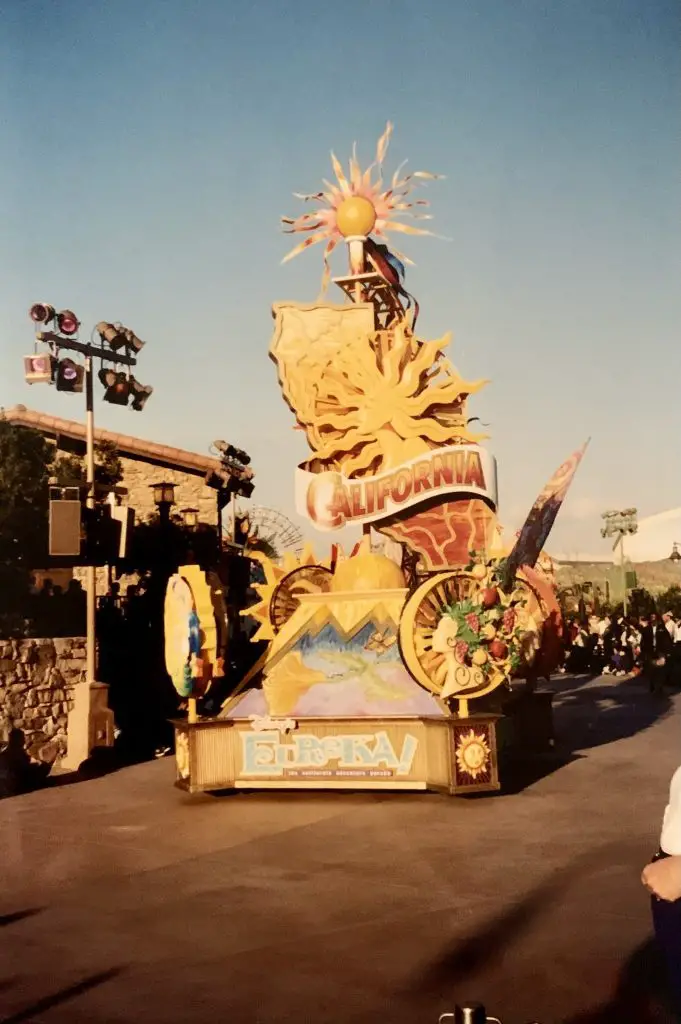
No description of Disney’s California Adventures opening would be complete without its signature parade, Eureka! Over 80 performers celebrated the legacy, diversity, and fun of California in six major sections. The opening unit featured a massive, golden sculpture of the Golden State.
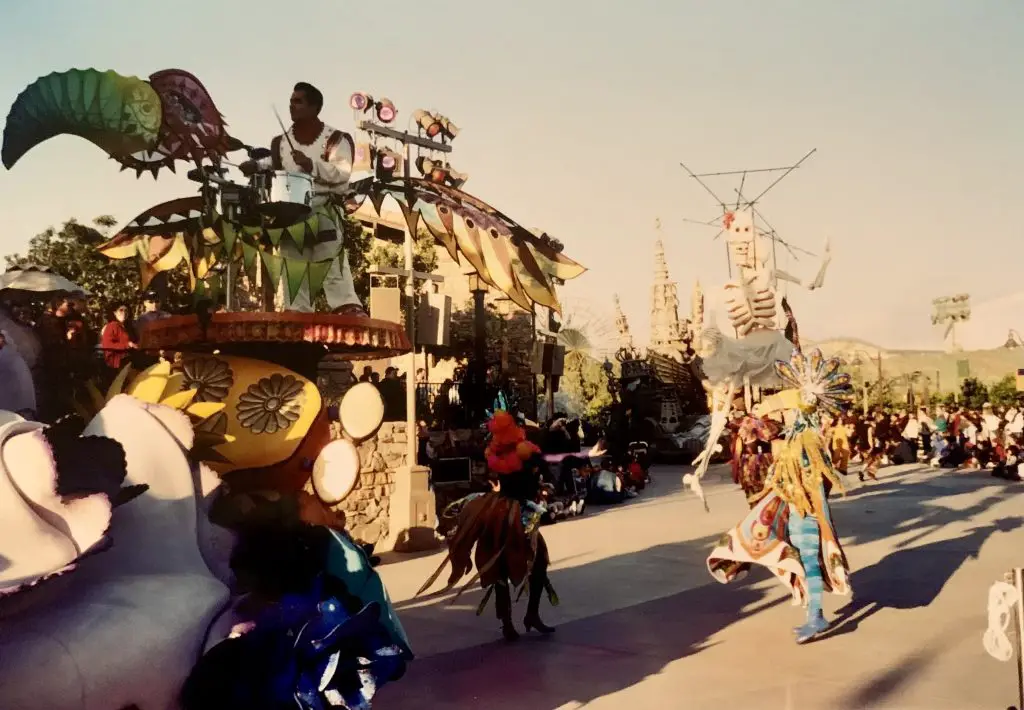
Following this was Old Town, California. The spirit of the parade was embodied in Eureka, a female statue that appeared in each unit. Here she was a classic Folklorico Dancer, adorned with a fanciful bird headdress. Dancers and puppeteers accompanied the unit, representing Latino culture with drummers and Day of the Dead figures.
Next up was City of Angels, an urban street celebration. Here Eureka was a golden angel, presenting a fanciful version of the Watts Towers, accompanied by bungee jumpers, hip hop dancers, and pop art scenery. Beach cruiser bikes pulled the next unit, Pacific Beach, into view. Eureka was here a bathing beauty, reclining in her sand sculpted convertible. Beach types, from trendy day trippers to the performers at Venice Beach performed. Roller bladers skimmed over a roller coaster as colorful kites filled the sky above with fish and other marine life.
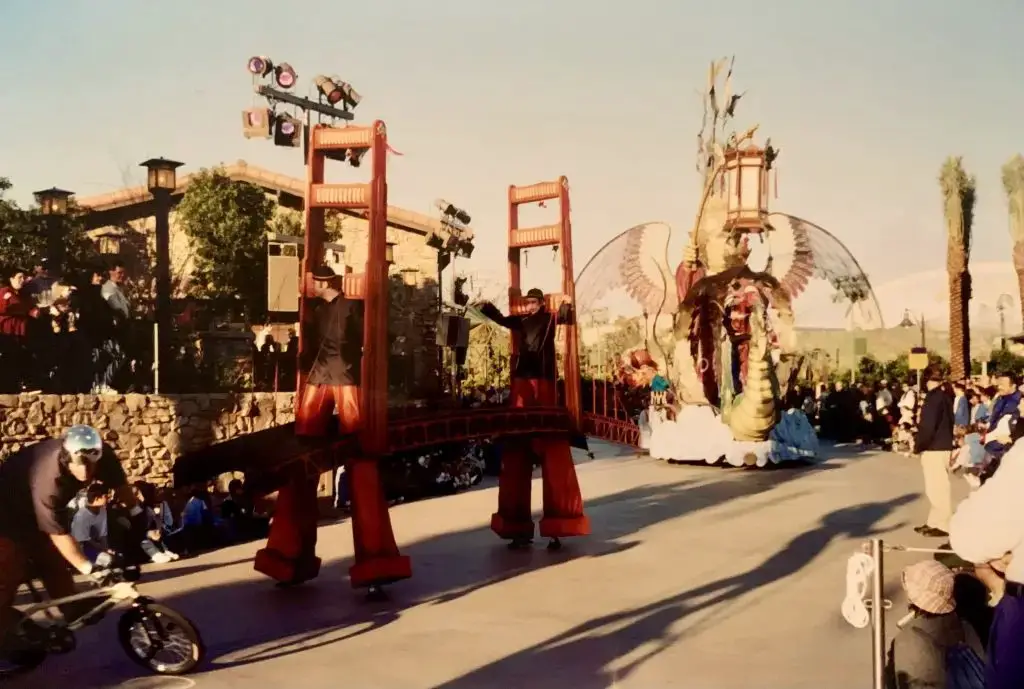
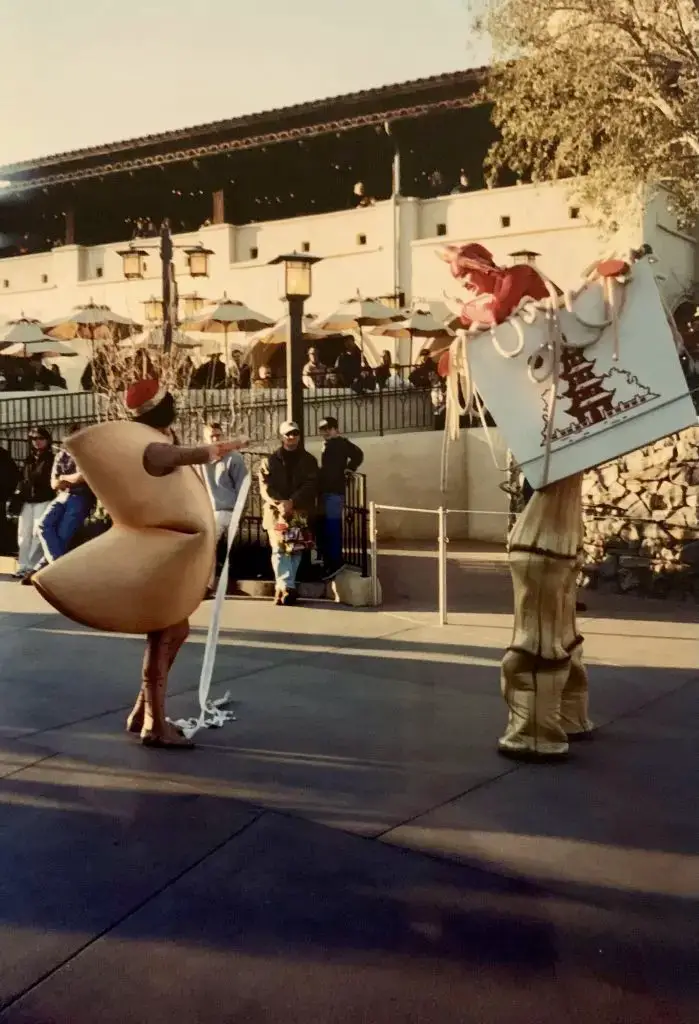
Eureka next appeared in a firebird headdress, a Phoenix flanked by giant lion drums. The Chinatown San Francisco unit included a stilt walking Golden Gate Bridge and Chinese takeout, complete with fortune cookie. A cable car, Chinese lanterns, and ribbon dancers supported a female aerialist, performing inside a golden hoop suspended from the jade tail of the Phoenix.
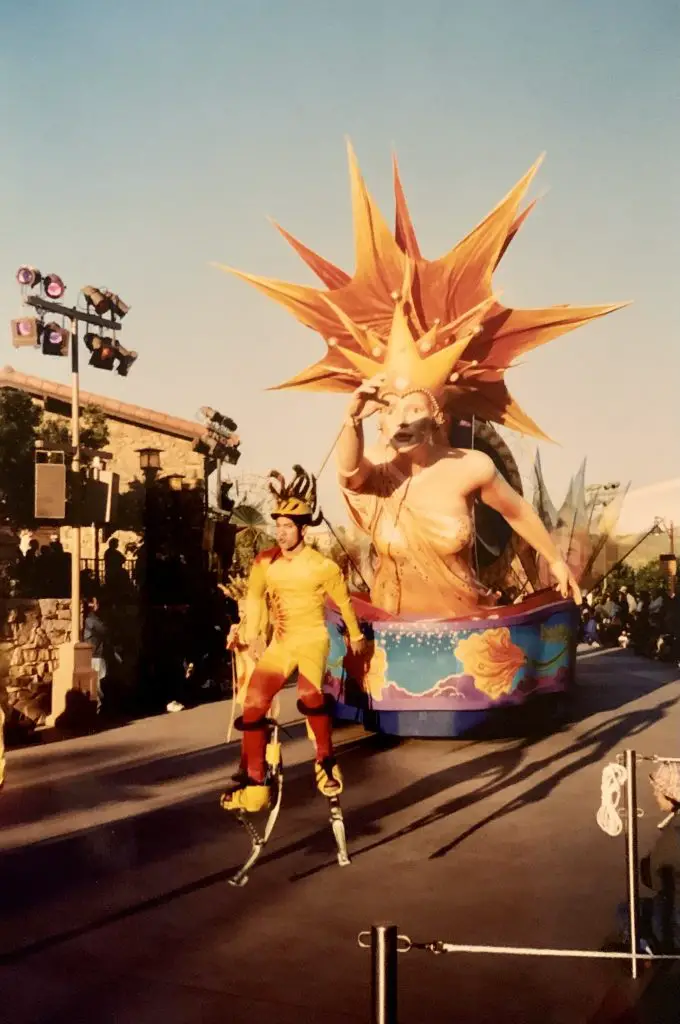
For the parade’s finale, Eureka appeared as the Spirit of the Golden Dream. The shimmering float embodied California as a brilliant melting pot of many cultures. Jumping stilt acrobats accompanied by dancers entertained the crowds. A glittering sundial gyroscope provided thefinal icon of the Eureka parade.
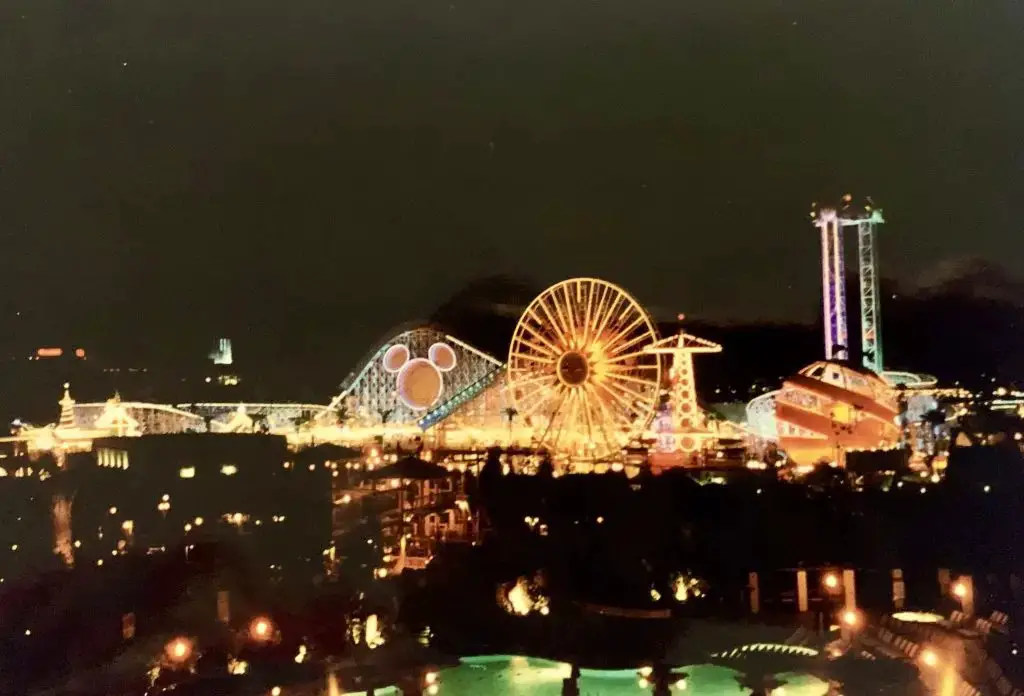
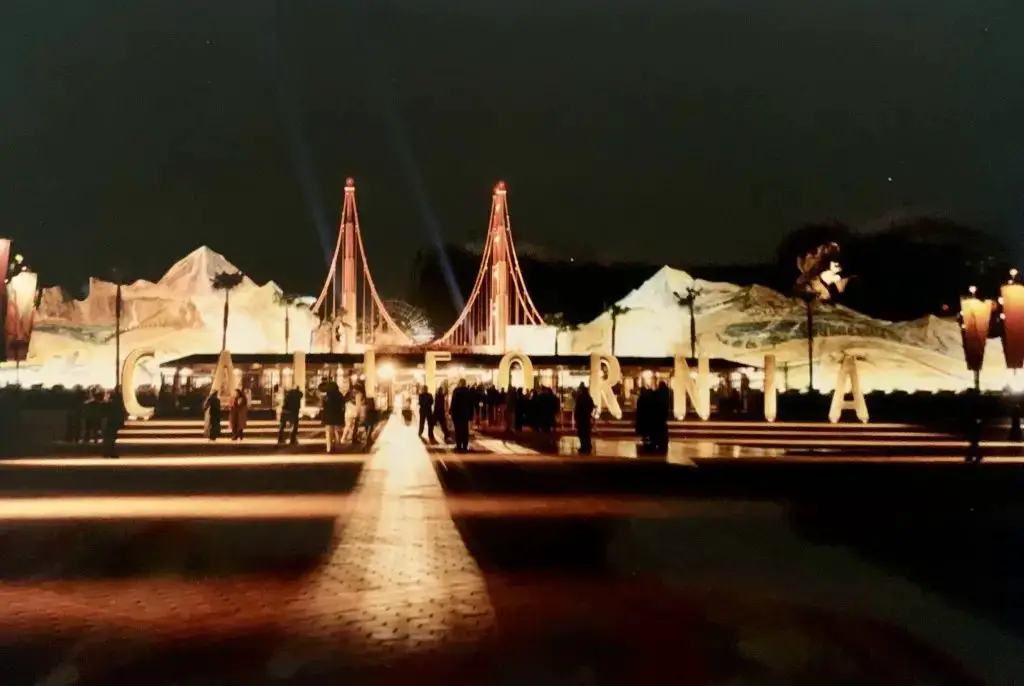
This was Disney’s California Adventure as it appeared on its opening day, and for most of its first summer season. Changes and additions were made, mostly in response to the fact that the park did not ignite the level of enthusiasm that Disney was expecting. Opening day crowds were light, and wait times were short for even well received attractions. This was pretty much the case through the fall. Events of September 11, 2001 brought further complications, as many Americans declined to travel, and added security nationwide created new complications, even for a carefree vacation in a fun new state of Disney magic.
[Author’s note: This is an effort to provide as accurate a description of Disney’s California Adventure on its opening day as possible. Facts were verified using the Feb. 2001 Media Sourcebook originally provided by the Disneyland Resort Press and Publicity. Any judgements or opinions are those of the author, based on a series of preview visits, in addition to opening day. All photos are either my own or derived from Disneyland Resort publicity sources.]