Up next in 10

Short Circuit Group Interview with Directors of Maddie & the Test and Life Drawings
Mar 13, 2026

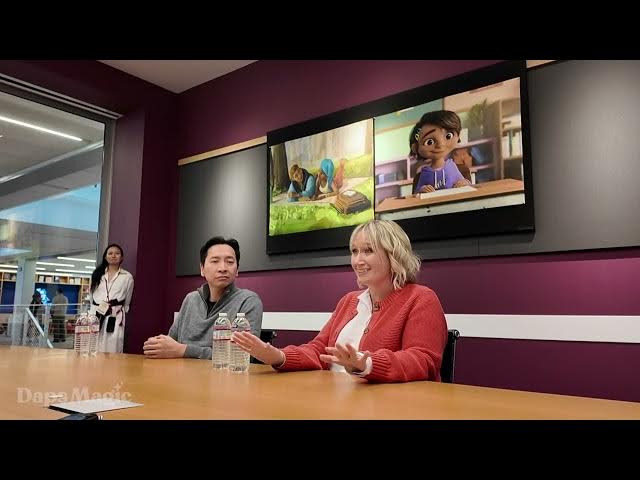
In a group interview at the Walt Disney Animation Studios, Short Circuit Directors talk about their films. Larry Wu discusses "Life Drawings," and Heather Russell shares about "Maddie & the Test."
Don't miss Daps Magic's official weekly YouTube show Geeks Corner here: https://www.youtube.com/playlist?list=PLAF91C7183BAB676B
Visit Daps Magic: https://DapsMagic.com
Daps Magic HQ: https://DapsMagic.com/DapsHQ
Daps Magic was created by a very special group of Disney Fans who had a dream for a place on the internet where people, young and old, could share their love of Walt Disney and his legacy in a safe and fun atmosphere.
Show More Show Less View Video Transcript
0:04
Yeah. Hi everyone. Thank you for coming.
0:08
>> Congratulations. Um I I know that these
0:12
short circuit programs are kind of
0:14
continuously going. You mentioned
0:15
there's been over 20. Uh we obviously
0:17
haven't had that many released. So I'm
0:19
curious if you tell us about like
0:20
getting the news that your shorts are
0:22
going to be released outside the studio
0:24
um for the public. What that's helpful.
0:25
>> Yeah. You want to take that one? You
0:27
want me to?
0:29
>> Okay. Um uh I uh was picked uh during uh
0:34
the pandemic and uh my leader who's
0:37
actually in my day job who's actually
0:40
the executive producer of this program
0:42
um called me at home one day and um told
0:45
me that I had been selected which was
0:47
really fun. And then uh we finished the
0:49
projects and probably a month ago I
0:52
think we were confirmed that they would
0:55
be released into the world which is so
0:57
exciting. Um, and I think I was stuck. I
0:59
was shocked. I was stunned. Like I
1:02
didn't believe it. You know what I mean?
1:03
Like you you create this thing and
1:05
you're so excited about it and then you
1:07
have this moment where it's finally
1:08
going out into the world and seeing it
1:09
on the big screen with you all today was
1:11
really um just really special. I was
1:13
telling Larry I was trying hard not to
1:15
sob in the theater. Um but yeah, you
1:18
want to share your
1:19
>> Yeah, I'm I'm also very excited.
1:21
Obviously it's the it's the first
1:22
project that's out there that that is
1:26
like my idea.
1:27
And um like I'm excited to tell friends
1:30
and family and other people like just go
1:32
cash on the Disney Plus, you know, they
1:34
don't have to do anything other than
1:37
that. It's exciting.
1:43
What's the
1:45
in my experience with the uh
1:47
experimental shorts,
1:50
there's always something that you hope
1:53
the studio hopes to dig into, not just
1:57
for people to get an opportunity to take
1:59
on different roles
2:02
as far as filming a film and more senior
2:05
roles within a short film. Um, was there
2:08
anything in particular in each of your
2:11
films that you guys were looking to dig
2:14
into that the studio is looking to
2:15
experiment with from technological
2:17
standpoint from a how your team, you
2:20
know, how you were managing a team. What
2:23
what in addition to just you getting to
2:25
tell a story?
2:26
>> Yeah.
2:26
>> Was there was there something else on
2:29
each of these productions that you were
2:31
hoping to achieve with the production
2:32
and that kind of was part of a a larger
2:36
plan within the studio? I don't think I
2:39
don't think there was larger plans. Um I
2:42
think it was up to the individual
2:44
filmmakers to test stuff that they felt
2:46
like it was for their individual
2:49
projects. So nothing outside of those um
2:54
was like told asked of us to to
2:57
experiment.
3:00
So it was Yeah. Right.
3:02
>> Yeah. I I think there were things that
3:05
we each experimented with in the the
3:07
framework of our shorts. Um and Larry,
3:10
you have the story a little bit about
3:12
how because you had a little more time.
3:14
>> So I I had some time but um and when I
3:18
first pitched it, I wasn't sure how I
3:20
was going to or we were going to do it
3:22
some of the stages in life. But I I had
3:27
to pause my project a couple times
3:29
because I was in leadership position. So
3:31
I had to like finish features. So in
3:34
those in that time other projects were
3:37
able to develop uh newer tool sets that
3:40
I could use for my short. And so um in a
3:44
way it was like the other way around
3:45
like but nothing from those uh bigger
3:49
projects asked this asked us to like
3:52
help develop stuff with it. It was up to
3:55
us to decide.
3:56
>> Yeah, it's a very autonomous program
3:58
which I think is really exciting. I for
4:00
me it was about giving because I had the
4:02
chance to do something I don't normally
4:04
do here at the studio. I was really
4:05
intentional about giving other people a
4:07
chance to stretch outside of um what
4:10
would be their kind of home discipline.
4:12
Right. We're very um each individual
4:14
here is so talented and they've like
4:16
really studied that specific aspect of
4:19
work whether it's an animator or an
4:21
effects animator etc. Um, so we on my
4:24
short tried to give other people a
4:26
chance to go from say 2D animation into
4:28
storyboarding or uh our uh music manager
4:32
at here at the studio who manages all
4:33
the music and all the productions
4:35
actually compose the music for both of
4:37
our shorts. Um, which is something she
4:38
had never done here before. So that was
4:40
for me that was the biggest thing was
4:42
giving as many other people as I could
4:44
the opportunity to stretch outside of
4:46
kind of what their day job was. That's I
4:48
mean but that's significant with regards
4:50
to
4:52
allowing folks you know within the
4:54
studio who are who are focused on one
4:57
particular area
4:58
>> Yeah.
4:58
>> to get an opportunity.
4:59
>> Yeah. And that's part of the
5:01
experimental part of this project is or
5:03
these projects is that you can do that
5:05
because there's a lot more flexibility
5:07
and leeway in the way that you're making
5:08
them. So,
5:09
>> and if we if we did come up with
5:11
something um experimental and works
5:15
really well, then other projects
5:17
projects too. So, it's like a bit
5:19
extreme effort.
5:22
>> How long did it take um because it's
5:24
such a fit in amongst the rest of the
5:27
things that you're doing just for each
5:28
of you? How long was the process for you
5:30
from getting the acceptance to us, you
5:33
know, essentially seeing it?
5:35
>> Yeah, I'll go first. Yeah, I think it
5:37
was definitely longer than either of us
5:39
had hoped. Um I don't know exactly how
5:41
long, but it was it was several years.
5:43
Um but it was I think Larry has talked
5:46
about this a lot. Um we both were very
5:49
patient and it gave us time to like
5:51
really think about certain decisions
5:53
that we wanted to make. So there was
5:54
that benefit that we were both learning
5:58
um as directors in this process. So it
6:00
gave us a little extra time to learn
6:02
which is cool.
6:03
>> Yeah. For me it was because I had a I
6:06
had a leadership role like I said so
6:08
that took a lot of my time.
6:12
Um, I want to ask about sound design and
6:15
music.
6:16
>> Two areas that are often given short
6:18
trips on films, let alone short films
6:21
and something that I you can always
6:27
pays attention to that and it's so
6:28
important in when you watch a film, you
6:32
sense how important it is, but you don't
6:34
realize it and it's until it's not
6:36
there. Anyways, can you talk a little
6:38
bit about how the sound design,
6:42
your attention to sound design and the
6:44
music as well?
6:45
>> Yeah.
6:46
>> Yeah, I can start.
6:47
>> Yep.
6:48
>> So, from from my very initial uh board
6:51
on these boards, I had the story, I had
6:53
the style and the third line was the
6:56
music and I had a very intentional like
6:59
each stage of light had a different
7:01
sound to it. uh like starting with like
7:03
like a toy piano ending with toy piano
7:06
and like rock music, orchestra, jazz
7:09
maybe during the college years or
7:11
something like that which at the time it
7:13
was way too ambitious for a three minute
7:15
show. Um but it was in my head like this
7:19
is how I wanted to sound because I knew
7:20
I didn't have dialogue in mind. And then
7:24
for the sound effects, um, you know, I
7:27
really because of the mediums, the
7:29
different types of canvases, it was
7:32
important to capture the the sound that
7:35
those instruments make, those brushes.
7:38
So like you said, yeah, even even that
7:41
sound effect was very important for me
7:44
at the very beginning. It was like the
7:46
voice of my short.
7:49
>> Yeah. And I come from a family of
7:52
musicians. So for me, um, I had shared
7:56
with Lauren Herald who composed the
7:58
music very early on that I had, um, kind
8:01
of a crazy idea. I wanted two different
8:03
lines of music. One for name Maddie, the
8:06
little purple character on the paper,
8:09
um, who had a kind of a jazz line to
8:11
her, very improvisational, sort of in
8:13
tune with the character. and one that
8:17
was more for Maddie, the main character,
8:18
which was a like more orchestral kind of
8:20
cinematic music and figure that out and
8:24
like make it work. Um, and then we had
8:26
all of this amazing animation from Mark
8:28
Hen on the paper which sort of lent
8:31
itself to her composition, but Lauren
8:33
said it sort of set stepped outside of
8:35
her comfort zone, composed the music for
8:37
us, and then actually directed the
8:39
musicians. We had live musicians come
8:41
and play on these on both projects
8:43
actually. Um, and so she was able to
8:45
direct them and her intentionality with
8:49
where things were like marked with a a
8:52
sound effect that was musical or um
8:55
where we hit a a specific note uh based
8:58
on what was happening with the emotion
8:59
of the story was so on point. Like I I
9:02
think we both just really trusted Lauren
9:04
with that because she was so skilled at
9:08
doing it because of the the kind of day
9:09
job that she has. Um and then for me
9:12
it's also there's as important um the
9:15
music becomes more important when
9:17
there's also silence.
9:19
So there was that really important
9:21
moment of like you're just hearing
9:23
Maddie breathe and we don't want to hear
9:25
anything else. And so there was that was
9:27
part of our um partnership with David
9:29
Flur who did the sound design um and was
9:32
in the like final like mixing suite with
9:34
us who I don't know if you guys know who
9:36
he is but he's really talented has been
9:38
doing this for a very long time. Um and
9:41
I he we got into the sound suite and I
9:43
said David tell me what you want to like
9:45
I have some thoughts but I want to hear
9:46
your thoughts because you're the expert
9:48
in this space. That was really cool. And
9:51
for me it was how do we create the like
9:52
cacophony of sound that mirrors the like
9:55
arc of the story too.
9:58
>> Yeah, Lauren took my made ambitious idea
10:02
and I felt like it really made it work
10:04
much better than if it if we had done
10:07
that.
10:09
Yeah. And the silence when the when the
10:12
brush brush drops and goes to black.
10:16
um some sound designers or others like
10:19
was messing around with like trying to
10:21
keep a note through that or something
10:23
and then at the end I was like no just
10:25
just sense but yeah
10:29
so you work on these as time allows in
10:32
the midst of your your regular jobs and
10:33
pipelines of a full film you're exposed
10:36
in this role to like the full animation
10:38
pipeline from start to finish of a
10:40
project. Uh, was there anything that you
10:43
learned doing the shorts that you felt
10:45
like, oh, I could take this back to my
10:46
job and now I better understand like how
10:49
affects other people or or the pipeline
10:53
in general or anything like that?
10:55
>> Yeah. Uh, for me, I've always been a
10:58
strong believer that like the more you
11:00
know of the whole process, the better
11:01
you'll be at what you do. And um I've
11:04
been a a leadership in leadership
11:07
positions for a while and I could see
11:09
that and I you know I can see that in
11:12
practice like people who know more are
11:15
just better and I think this was a good
11:17
opportunity for me to learn like beyond
11:20
the production and uh learn more about
11:23
pre-production and post-production and
11:25
now I have like more complete picture
11:27
fiction.
11:28
>> Sure.
11:30
>> And my my role here at the studio I'm a
11:32
department manager. So, I'm described
11:34
myself as kind of like a home room
11:36
teacher for artists. Um, right. Like I I
11:39
support the department. Um, and I have
11:41
story. What's that?
11:42
>> We need it.
11:42
>> We do need it. Yeah. Um, I support uh
11:45
the story department and the look
11:46
development department. Look development
11:48
does things like textures and skin
11:50
shading and hair and, you know, all the
11:52
grooming. So, they're kind of creating
11:54
the textural aspects of all of our
11:56
films. So, those are the two teams that
11:58
I support. And for me, it was about
12:00
getting to learn about all the other
12:03
departments because there's so much
12:06
knowledge and skill and talent in every
12:10
single one of our departments from the
12:11
like really artistic departments to the
12:13
very technical ones that all together
12:16
like brings these beautiful animated
12:18
films to life. So I I took the approach
12:21
of knowing that I didn't know a lot and
12:24
so I went and did a deep dive before I
12:25
would get to kind of each department
12:27
which is another benefit of having a
12:29
little bit more time uh because I was
12:31
able to deep dive. I would go and watch
12:32
like dailies or rounds or reviews like
12:35
kind of the normal flow of our
12:37
productions in those departments for
12:38
other projects so that I could learn and
12:41
grow and know what questions to ask,
12:43
what to ask for those individuals. Um,
12:46
and and just how to be a better partner
12:48
to them. Um, so yeah, I I there's so
12:51
much that I learned. I I couldn't I
12:54
couldn't answer that question because
12:56
it's it's it's vast. But in my role at
12:59
the studio, what that's given me is a
13:01
deeper appreciation for how much talent
13:04
and how deep the talent is in each
13:06
discipline. Um, which is really useful
13:08
for me.
13:11
>> I want to ask about with regards to
13:13
neurode divergence, you know, I it's
13:15
it's amazing to watch the short and see
13:18
dyslexia represented the way that it is.
13:21
And I know that in previous Disney
13:23
films, most of that is coded characters
13:25
or you know, the community identifies
13:27
with characters that maybe just feel
13:29
dyslexic or neurody divergent, but they
13:31
aren't written that way. Do you hope
13:33
that doing Maddie, you know, inspires
13:36
Disney to create a a neurode divergent
13:40
lead or princess or or something that
13:43
this will go beyond just just the short?
13:46
>> That's such a great question. I I'm just
13:49
excited that we're able to put Maddie
13:52
and a test out there in the world. Um I
13:54
didn't get to say a little bit more
13:56
about this, but my um my niece uh at the
14:00
time she was 12 when the idea came to
14:02
me. Um we were in the car with my oldest
14:05
child. I have three kids and we were
14:07
talking about our favorite things. So
14:09
like, you know, favorite movie, favorite
14:11
restaurant, favorite food. And my kiddo
14:14
asks my niece, "What's your favorite
14:16
book?" And she got really quiet and
14:20
didn't say anything for a minute. And I
14:21
I knew that she was dyslexic at the
14:23
time, but my child didn't. And she said,
14:26
"I don't have a favorite book. I don't
14:29
read well." And that sparked a whole
14:32
series of questions from my child, who's
14:34
very curious, by the way. Um, and it was
14:37
really incredible to me to watch her
14:41
describe what dyslexia feels like for
14:43
her. It's a spectrum. So, it's there's
14:44
so many different experiences and this
14:47
was one experience that we tried to
14:48
represent on film. But for her to
14:51
describe it in the way that she did and
14:53
at the very end say, "But it's okay, you
14:56
know, I'm okay." And this like grace and
14:58
strength that she had, I was like, man,
15:01
if the world could see what Amelia is,
15:05
we'd all be better off.
15:06
>> Yeah. So,
15:07
>> do you think it strengthened your your
15:09
allyship to the the dyslexic neurody
15:13
divergent community
15:14
>> of Yeah, absolutely. I I spent a lot of
15:18
time researching um I have another
15:21
niece, Molly, who also is dyslexic. Um
15:24
and through the course of doing the
15:26
short, I found out um my father, my
15:29
sister are also dyslexic. I mean, it
15:31
tends to run in families.
15:32
>> Most people don't know that. Yeah.
15:34
>> Um uh I I'm not an expert, but I I know
15:36
that about my family. So, I found that
15:38
out through the course of um doing
15:40
research and trying to understand. So
15:42
yeah, absolutely. We actually spoke with
15:44
Maryanne Wolf um who at the time that we
15:47
spoke with her was at USC in the center
15:49
for dyslexic research. Um but it I read
15:51
every book that she wrote. So it was a
15:53
lot of learning on my part and uh we
15:56
also had a chance to connect with like
15:58
uh organizations like respectability and
16:01
um uh understood.org forward uh as and
16:04
through the process of of making the
16:06
project which was yes I I feel like I
16:08
learned so much and I and I am a huge
16:10
advocate and have since um learned that
16:14
my own child is neurode divergent uh in
16:16
different ways but it opened up my brain
16:19
to what are those possibilities
16:20
>> we need more we need more allies so I'm
16:23
so glad
16:24
>> I'm here for it
16:25
>> I'm here for it
16:30
>> a little bit about some of the artistic
16:32
cho
16:33
um like electronics which he goes
16:36
through so many different um different
16:40
types of artes
16:44
that you
16:46
as
16:53
um yeah so the early stages is obviously
16:56
for most younger people you start with
16:58
crayons and then going through this
17:00
grade school and you just have ruled
17:03
paper available in pencils. And so that
17:06
was kind of the inspiration for that.
17:08
But once once uh he graduates from
17:10
college and u tries to get gallery work
17:15
um you know I I have a lot of friends
17:17
and myself included we we tried some
17:20
gallery try to make a living obviously
17:22
it's really hard and the IKEA kind of or
17:29
instruction manual I say instruction
17:30
manual that was a representation of uh
17:34
kind of your working working life stage.
17:37
And
17:40
it it was the longest section the
17:42
longest section one style because I feel
17:45
like that is how that's how I feel like
17:47
your work life is your longest stage of
17:49
your life until maybe start family or
17:52
something else
17:54
and then and then going back to what you
17:56
love which is the painting of them and
17:59
and then at the end it's obviously the
18:02
daughter is drunk now starting her stage
18:04
her
18:08
Now, both of your shorts um share kind
18:10
of handdrawn animation in them, which
18:12
is, you know, in the DNA of Disney
18:15
Animation Studios. Uh what was it like
18:17
getting to uh use the medium that really
18:20
kind of is is in meshed in this place's
18:23
history uh in your shorts, which are
18:26
often just CG nowadays.
18:28
>> Yeah.
18:29
>> Yeah. I I mean, I talked about my
18:32
experience working with Mark Ken. I mean
18:34
that's that really is like such the
18:36
experience of a lifetime. Um but it was
18:39
there was a creative choice of why we
18:40
did that because there was so much about
18:43
on the paper that we wanted to create
18:46
that uh a sense of the dynamism and some
18:49
of the comedic you know joy that you get
18:52
from handdrawn animation. Um that it
18:56
just lent itself to that medium and
18:58
that's why we chose to go down that path
19:00
of having all the handdrawn animation on
19:02
the paper. uh and then the CG around it
19:04
which was technically very challenging.
19:06
I mean it has happened in some of our
19:09
other films but technically every time
19:10
you do it it's a little different and a
19:12
little bit more of a challenge. Um but
19:14
it was exciting to have again to have
19:16
someone like Mark Hen who um just he's
19:20
done everything. Um I I I um I saw
19:25
Aladdin 13 times in the movie theater
19:27
when I was younger. Um and so my goal
19:29
was always to work here too. Um, and
19:32
when I got to work with the gentleman
19:34
who uh animated Jasmine, it's Yeah, it's
19:37
really special.
19:39
>> Yeah, it was really um exciting for me,
19:41
too. I think it mirrors my the theme of
19:44
my short, which is I got the the two
19:47
younger uh 2D artists, and artists here.
19:51
It's almost like that generation handing
19:53
off the crayons to the two that worked
19:56
on my show. Um, and it's very exciting.
19:59
I talk about the the first time that
20:02
Tyler Tyler was one of them did a test
20:05
for for life drawings. I almost like I
20:09
don't cry much so I almost cry but I
20:12
>> can attest to that. I've known Larry for
20:14
a long time
20:17
>> and um I was like wow and I' I've been
20:20
here for a while and it's it's been
20:21
mostly CG. Um, so that's very exciting
20:24
because like like the other two, Hyram
20:27
and Mountain, I I always wanted to be
20:29
animator growing up. Um,
20:33
but yeah, that was very exciting.
20:36
>> Got time for a couple more questions.
20:38
>> So throughout the process, was there
20:40
anything that really jumped out and
20:41
surprised you that you didn't expect
20:43
going into it that you walked out going,
20:45
I'm really glad this happened or I
20:48
learned this or whatever it would be?
20:53
I I'll go first. I have a I have a
20:55
couple of things. The first one that
20:56
comes to mind is when you're making an
20:59
animated film, and you all kind of are
21:02
fans of the of the medium, I think, so
21:04
you understand this. Um, decisions you
21:06
make very early on,
21:09
impact decisions you make very late in
21:12
the project. And I did not understand
21:15
that deeply until I got into it. And
21:18
then I was sort of like I wouldn't say
21:20
stuck with those decisions, but I would
21:22
say like
21:23
>> they were a thing that I it was a
21:25
sandbox I had to play in then as a
21:26
result of those decisions. And so that
21:28
was something that I learned is those
21:31
decisions are very critical and very
21:33
important because you will be dealing
21:34
with those decisions later. So that
21:36
that's one thing in terms of like
21:38
surprises. I I think I just the thing
21:42
that was the most surprising is that a
21:44
lot of artists that work on these short
21:45
circuit projects are volunteers like
21:47
they want to work on it. Um and everyone
21:50
that came and worked on the short was
21:52
passionate about this topic and excited
21:55
about this topic and because of that
21:58
they poured so much more into the short
22:01
itself which is what you wind up seeing
22:03
on the screen. So that's me. I it was I
22:06
guess it was surprising just because it
22:07
was directed at something that I created
22:10
which was really exciting.
22:13
>> Yeah. For me um every every person that
22:16
jumped on from artist to to managers
22:20
once they realized what uh what I'm
22:22
trying to say they like they volunteered
22:26
ideas and they're they're all great
22:29
ideas. Not all I couldn't fit all of it
22:32
and not all of it kind of worked. But
22:34
the fact that they were they were able
22:36
to or they were willing to like share
22:38
their thoughts um about it was uh it was
22:42
a huge surprise but also like a huge it
22:45
really made my show better because I I
22:47
use a lot of their ideas. Um, and then
22:50
this one time Howard brought uh Bernie
22:53
into into the story room, Bernie
22:55
Matthews, and I had that mark him on. I
23:00
didn't know how to talk. Um, but he he I
23:03
pitched it. I didn't have a cut yet, so
23:06
I just pitched it with a stick on the on
23:08
the board and he just said a few words
23:10
and it had a really huge impact
23:14
on the rest of my development. But yeah,
23:17
it's great. probably love the pitch with
23:20
the stick. That was his favorite.
23:22
>> Yeah.
23:23
>> Well, sort of on that note, um I know
23:25
with the short circuit program, there's
23:26
kind of a a mentorship um component to
23:30
it where like people who have either
23:31
been through the program or who have
23:32
been in the industry before available to
23:35
you. I was wondering if you could talk a
23:38
little bit about um the the mentorship
23:40
that you received while
23:43
>> Yeah, I'll jump in first. The first
23:45
thing that happened when we were
23:46
selected into the program was there was
23:48
a round table with all of the prior
23:51
short circuit directors at least for for
23:53
my group there was. And um it was
23:55
literally like an hour and a half of
23:57
advice. Uh and I wrote every piece of it
23:59
down. I still have it in a notebook. Um
24:01
it was a lot and it was overwhelming but
24:04
it was really helpful. My specific
24:06
mentor was Trent Corey who directed the
24:09
short circuit film Drop. Um he's since
24:11
directed uh Once Upon a Snowman, Once
24:14
Upon a Studio, and is working on a
24:16
feature film right now. Um and so that
24:19
was just a really special relationship.
24:21
Trent is a lovely human being. Um but
24:24
also was willing to kind of dive in and
24:25
get uh get uh his hands dirty in the
24:28
drawings with me. So some of the earlier
24:30
versions of the character named Maddie,
24:32
the little purple character, actually
24:33
came from Trent, like playing with the
24:36
squash and stretch of the character. Um,
24:38
so not only was he there supporting me
24:40
as a director, but he was kind of
24:42
helping me find those visual aspects of
24:45
the film, which was really cool. And
24:46
we're still we still connect on the
24:48
regular pieces.
24:51
Uh for me my mentor was Don Hall and
24:55
I've worked with him uh almost always
24:58
practicing and he was very like
25:03
uh just let me do my thing and once in a
25:05
while he'll he'll kind of like steer me
25:08
in the right direction and I don't know
25:11
I I feel like he thought I was probably
25:13
pretty self-sufficient sufficient enough
25:15
so he kind of let
25:18
let me do my thing until I have
25:19
questions.
25:21
It's great.
25:24
>> Guys, but it's been great. Thank you.
25:26
>> Thanks.
#Comics & Animation
#Movies
#Animated Films