Up next in 10

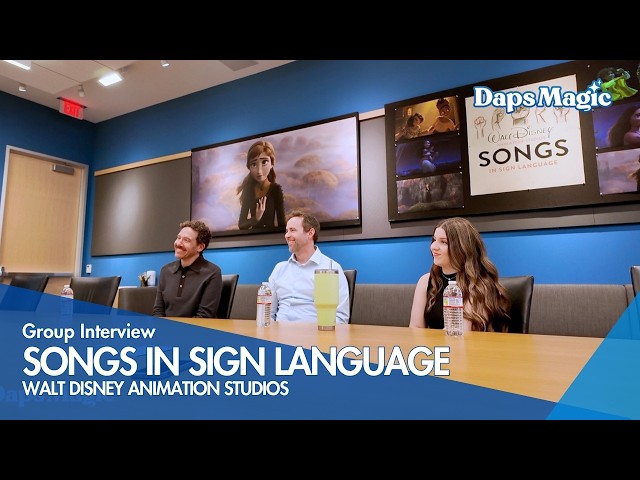
Disney’s storytelling is reaching a brand new audience in a beautiful, groundbreaking way. In this special interview, we sit down with the creative team behind Disney’s recent animated shorts featuring American Sign Language (ASL).
We’re diving deep into what it takes to move beyond "interpreting" and into creating a brand new art form. From the delicate process of animating facial expressions and hand gestures to the importance of authentic, lived-in representation, this conversation highlights how Disney is taking down communication barriers and creating a more inclusive future for deaf and disabled children—and fans of all ages.
Inside This Conversation ⏱️
00:00 - Why this project is an "art form," not just an interpretation
03:03 - The "slow burn" production: Getting the ASL authentic and correct
07:51 - Why this is fundamentally different from a signer in the corner of a screen
09:04 - The impact on the next generation of deaf and disabled children
10:32 - The "restraint" of animation: When not to sign
17:54 - Adapting the animation: Why the faces had to change
21:36 - The power of "Disney's seal of approval" for ASL
23:20 - The team's favorite moments from the songs
Stay Connected with the Community 🏰
Official Website: https://dapsmagic.com
Daps HQ (Patreon): https://dapshq.com – Join for exclusive secrets and the After Geeks Corner show!
Geeks Corner Live: https://geekscorner.live – Every Tuesday at 8:30 PM PT.
Listen to the Podcast 🎙️
Disney and Positive Stuff: https://podcasts.apple.com/us/podcast/daps-magic-disney-and-positive-stuff/id1738120847
Support the Magic & Shop 🛍️
Join our CHOC Walk Team: https://chocwalk.org/dapsmagic
Daps Magic Shop: https://dapsmagic.com/shop
Book Your Next Disney Trip: https://mouseways.com/dapsmagic
Follow Us Everywhere 📱
Instagram: https://instagram.com/dapsmagic
X (Twitter): https://twitter.com/daps_magic
Facebook: https://facebook.com/dapsmagic
Threads: https://threads.net/@dapsmagic
About Daps Magic
Daps Magic is a family-friendly community that has been celebrating Disney and geek culture since 2004. Founded by Mr. Daps, we focus on optimistic reporting, "Disney and positive stuff," and providing a safe place for fans to geek out together.
Keep Kind. Share Magic. ✨
#Disney #ASL #DeafWest #Animation #DisneyMagic #Representation #DapsMagic #Accessibility #InclusiveDesign
Show More Show Less View Video Transcript
0:05
I'll uh I'll start if nobody else has a
0:07
question. Um obviously with the the
0:10
concept of this program, um do you
0:13
foresee this going beyond just shorts
0:17
like adaptations of songs? Uh, do you
0:19
foresee this as like almost like the way
0:21
that Disney dubs all their films and has
0:24
um text localized that there could
0:26
potentially in the future be ASL
0:29
versions of like a full complete feature
0:31
film?
0:32
>> Yeah, it's a great question. I I I can't
0:34
comment comment on any future projects.
0:37
For me, I'm just enjoying living in the
0:40
moment right now of just what this is,
0:42
right? And just how significant it is.
0:46
I mean to go further with that, you
0:48
know, I I brought it up at the previous
0:51
breakout room. I mean, most deaf and
0:53
disabled people watch Disney and those
0:57
characters are coded for them as opposed
0:59
to literal. Uh, do you hope that this
1:02
does inspire Disney to create deaf and
1:05
disabled heroins, leading characters,
1:08
uh, furthering that conversation of I
1:12
mean, you your shorts prove that you can
1:14
include ASL in these stories.
1:16
>> Yeah. Honestly, I think I hope it
1:18
inspires everyone, not just Disney,
1:21
right? I think that there's so many
1:22
opportunities and mediums out there to
1:24
to explore this where we can represent
1:27
and connect with, you know, all over the
1:31
world in different ways. So, absolutely.
1:36
>> I want to add to that. I think it's not
1:37
only about representation, but it's also
1:39
about the art form itself. We're
1:41
creating a new form of art. uh bring to
1:44
the table uh this level of art that
1:47
we've seen in Moana or Ila Merde and
1:51
this is something that's different but
1:53
the same but it's like looking at a
1:56
different side of the same prison and so
1:58
that's what's really exciting about this
2:00
not just that it's checking off boxes
2:03
but that it in fact is a new art form
2:06
we've seen in these short films the
2:08
power of those short films because of
2:10
the personal experience expressed by the
2:13
directors in those projects. That's true
2:15
in this case.
2:17
>> Yeah. Can I jump on that too?
2:20
>> I think this show is significant. It's
2:22
also just beautiful. Yeah.
2:23
>> Right. I just sign language is gorgeous
2:26
and just being able to do that within
2:28
animation.
2:30
Wonderful.
2:34
>> This is unique. This this represents
2:37
aside from all the obvious things, this
2:40
is a huge effort on behalf of Disney
2:42
with regards to redoing, you know,
2:45
redoing segments from feature films.
2:48
>> Um, how long did this take from the from
2:51
when the idea first came about? Um, how
2:56
long until you kind of had an idea of
2:58
okay, this is how we will do this to
3:01
then how long did it take to do it?
3:04
>> Yeah. Okay, that's a great question.
3:06
This was a slow burn, meaning, you know,
3:09
I'd had ideas a long time ago for what
3:13
this potentially could be. Uh, you know,
3:15
Jennifer Lee, Clark, Spencer, they they
3:17
saw the vision of it, but it became
3:19
something where it had to start small
3:21
and then it progressed and then right
3:23
towards the end is where all hands on
3:26
deck we it went pretty fast and the
3:29
production of this took place within a
3:30
matter of months um for the majority of
3:33
it. So, like conceptually took a long
3:35
time, right, to kind of think about um
3:39
cuz again, and I think I mentioned in
3:40
the video there, like it had to be
3:42
right, like this had to be correct. We
3:45
couldn't just slap sign language on top
3:47
of something, right? We knew it had to
3:48
be genuine. And so, uh we did our
3:51
homework and I think we did. We're okay
3:54
with it taking a little while to make
3:55
sure that it was correct. Did that
3:58
answer your question? Okay.
4:03
Speaking of it as almost like an art
4:06
form, um obviously De West Theater is is
4:08
a popular um performance art. Uh I know
4:11
Disney's like YouTube channels have done
4:14
like Let It Go with In the Bottom
4:16
Corner, like a liveaction person giving
4:18
the ASL um interpretation of it. I'm
4:22
curious, you mentioned you've been
4:23
wanting to do something like this for a
4:25
while. Did those um did the popularity
4:28
of that kind of content online help make
4:31
this an easier sell to like the
4:33
corporate powers that be?
4:36
>> You know, I guess I would say it it
4:39
wasn't it wasn't a situation of me
4:41
having to sell this, right? Like from
4:44
the get-go, the studio just saw the
4:46
vision of what this is and how important
4:48
this could be. So I I don't know that
4:50
there was a whole lot of me like we got
4:52
to do this because because they
4:53
immediately saw the vision. So, uh, as
4:56
far as what else had been done
4:57
beforehand, I I I can't speak to that.
4:59
You know, I know I know Death West did a
5:01
lot of stuff, uh, to kind of
5:06
put those out into the world and and for
5:08
audiences to see, but yeah, I just I
5:10
just felt like there was there's always
5:12
a lot of support and excitement behind
5:15
this.
5:18
What I'd like to add to that Iron I
5:20
think you know what said in the panel
5:24
earlier made all the difference. It's
5:25
his personal story. He wanted to connect
5:27
to his power and that makes all the
5:29
difference for me. Uh it made this
5:33
project much more powerful and the push
5:35
for collaboration uh was an easy cell
5:38
for me because there was a purpose. All
5:41
art is personal of course but the intent
5:44
and the impact this project will have
5:46
was very exciting for me as well. But
5:48
the origin of the story is the most
5:50
beautiful part for me
5:53
>> to go off of that. I mean, I know K you
5:56
talked about, you know, learning sign
5:59
language uh in the process of doing
6:01
this. I mean, one in four has a
6:04
disability, but that means three and
6:05
four are not disabled. And so, how do
6:08
you think working on this project has
6:10
shaped your allyship to the deaf and
6:13
disabled community?
6:16
No, that's a great question. Um,
6:20
you know, DJ brought up how personal
6:23
this is to me and I brought up, you
6:26
know, in our meeting together just uh
6:30
the regrets I've had, you know, as as a
6:33
kid not being able to really connect
6:35
with my dad. And I just think that if
6:37
anything for me, I'm just getting
6:40
personal here, but for me, this this
6:42
project stands a bit as just um a symbol
6:47
of that. Like we can we can take down
6:50
those barriers. We can take down those
6:51
roles and and we can do that.
6:54
>> I love that. It's very true.
6:56
>> Thank you.
6:58
I have a niece and nephew who have
7:01
significant hearing loss since since
7:02
birth and I know one of the things that
7:05
is always they're always fighting to in
7:08
in conversation and in everything
7:10
they're always fighting to to hear and
7:13
be part of things because they came here
7:16
and I know that there's been a lot more
7:19
as you were saying you know on a corner
7:21
of a screen someone doing ASL and uh
7:26
but This is completely different. This
7:29
is a This is integrated with the
7:31
performance. From your perspective,
7:34
how different is this for you just to
7:37
watch it and uh to see it and watch it
7:41
compared to just a normally ASL
7:45
uh you know with ASL integrated.
7:49
It just seems fundamentally hugely
7:51
different.
7:52
>> Yeah, absolutely. It is 100% for sure
7:55
different because when you have an
7:58
interpreter or a deaf signer in the
7:59
corner that's always good for providing
8:02
access for providing information and so
8:05
I get my uh you know equal accessibility
8:08
uh met you know I experience the same
8:10
thing the hearing person is experiencing
8:12
this project is different because of the
8:14
artistic approach to it to the music to
8:18
the emotion to the story it's different
8:21
in that way an interpreter or a deaf
8:23
signer on this screen is very very
8:24
helpful for the information you know to
8:27
say so that I can say oh I'm watching
8:29
this thing with an interpretation so I
8:31
understand the information but this is
8:33
very like I can relate to the character
8:35
for example Mona Mirabel I can feel like
8:39
oh that's I'm one of you you're one of
8:42
me I have this connection to a character
8:45
that the deaf community has never had
8:47
the opportunity to experience when it
8:49
comes to entertainment so this project
8:51
this time is so exciting And I believe
8:53
that the deaf community will feel this
8:54
is an an historic first when they will
8:56
see themselves on the screen in an
8:59
animated representation that's never
9:01
been done before.
9:05
>> I have a question about adapting the um
9:08
the lyrics essentially into into ASL. Um
9:11
there are sometimes especially in We
9:13
Don't Talk About Bruno where things
9:15
would be like redundant to say because
9:17
we see it are not necessarily signed.
9:20
Um, so I was wonder if you could talk
9:22
about like the decisions to not sign I
9:25
grew a gut. Um, just show it and move
9:27
on. Um, and like how that how that all
9:30
comes out.
9:33
>> I grew a gut.
9:36
>> That's a really good question. I think
9:39
originally we did think about signing
9:42
Grow a Gut, but we realized at the same
9:45
time that if we sign it, then all the
9:47
action is happening at the same time and
9:48
that really it was funnier for comedic
9:52
purposes. It would be funnier if we left
9:54
it as is and let the action speak for
9:56
itself in that moment. So, because, you
9:59
know, we don't want to give the audience
10:02
the sign before they're going to see it
10:04
or or else they'll miss the joke in its
10:06
entirety because they're watching the
10:07
signing of it. So, that was a really
10:09
good question because yeah, we made
10:10
those decisions based on how the
10:12
audience would receive the information
10:16
>> and um we didn't want to diminish the
10:18
moment uh the animators, you know,
10:20
making the beautiful moment of his
10:22
popping out of his shirt. We want to
10:24
step on that moment that's accessible.
10:27
So we found the balance between art and
10:28
intention. The intention is clearly
10:30
there originally. It's just don't need
10:33
that.
10:33
>> Yeah. One thing I would say is, you
10:36
know, Disney animation,
10:38
we have a strong focus on restraint in
10:41
our performance, in our acting
10:43
performance. We put a lot of effort into
10:44
making sure uh that that happens. And so
10:48
that's what I love about sign language
10:50
is it's it sign language the ability to
10:53
be able to convey something with very
10:55
few signs. uh to not overdo it, to not
10:58
overdo the moment. And I think that's
11:00
one of the examples of well, we don't
11:01
need that right there. Let's let's let's
11:04
contain and show that restraint.
11:10
>> I agree.
11:12
>> You spoke about connection earlier and
11:14
clearly there is a connection in the
11:16
collaboration of creating this. Could
11:18
each of you talk about the process and
11:20
connecting and maybe some surprises you
11:22
had along the way with this?
11:37
You know, Death West traditionally
11:40
since the beginning has always
11:42
collaborated with the larger theater
11:45
business, the hearing world. Sometimes
11:47
it works, sometimes it didn't as well.
11:50
And I think the thing is I found that
11:53
working with people Open minds and open
11:54
hearts allowed for productive
11:56
collaboration with Disney and Hyram
11:59
being so open and aware and ready,
12:02
willing and able to take on the project.
12:05
That right there tells me that the
12:07
artistic result will be affected
12:09
effective because of that spirit
12:11
entering the project. To me that was a
12:13
great relief.
12:18
>> Me
12:21
okay. Um, I think
12:26
this is particularly special to me
12:27
because it's my first big project. I've
12:31
done a lot of translation work on my own
12:33
with my own content, but this is my
12:36
first time ever doing something for a
12:39
company, like a large institution like
12:42
Disney. So, at De West, DJ contacted me
12:45
about it and he said, "What do you
12:46
think? Would you be interested in doing
12:47
something like this?" And I was an
12:49
immediate yes with it. So we just I sort
12:51
of do dove in and I met Hyram and really
12:54
I felt immediately like
12:58
it going to work so wonderfully because
13:00
of the people the work environment.
13:03
Everyone was so passionate, so
13:08
uh committed to making this work and
13:10
making this equivalent experience
13:13
available to deaf people. And so it was
13:15
just a fabulous experience to work with
13:17
both companies, both with Def West and
13:19
Disney.
13:21
>> Yeah. And I would just say, you know,
13:24
when when you try and sit out and do a
13:27
big project, sometimes you can think it
13:29
about it as as okay, these people do
13:31
this, we do this, you do that. From the
13:33
very beginning, um, we connected and I
13:37
just felt like we crafted this thing
13:40
together. This was not, you know, the
13:43
segment is you do your part, I'll do
13:44
mine. We really work together to make
13:46
sure this was right.
13:50
For our uh friends from Death West, I'm
13:52
curious, what role did animation play in
13:55
your life? Was it a more accessible
13:57
medium to you because of the like over
14:00
emotion that is shown in animation? Um,
14:04
like did you have an easier time
14:05
watching animation than live action? um
14:07
and understanding things even if you
14:09
couldn't hear or read as a young child.
14:17
>> Well, I'll start because I'm a little
14:18
older than Catalina
14:21
and I do remember growing up there were
14:23
no subtitles, closing captions, closed
14:25
captions, nothing like that. Uh you just
14:28
watch the characters move on the screen
14:31
and that was entertaining enough
14:33
already.
14:34
Uh, and later on my life when captions
14:37
came up, I was like, "Oh, that's what
14:38
they were saying."
14:43
And so it's that transition from the era
14:46
of no subtitles to the day where we're
14:49
seeing Disney characters express
14:51
themselves in American Sign Language is
14:53
very powerful for someone from my
14:55
generation.
14:57
Uh, to see the doors open over the years
15:00
to get to this point, this moment in
15:02
time is grow.
15:06
>> For me, I grew up I had all types of
15:11
Disney princess animation available to
15:13
me. I watched them on repeat growing up
15:16
and loved them all. Um, so yes, I they
15:19
were entertaining. I found myself
15:21
fascinated by them. But the meaning
15:23
behind the story, I didn't have a
15:26
complete understanding of what was the
15:29
meaning until I became bolder.
15:32
Then I would watch him again with the
15:34
captions when I was old enough to get
15:35
what the captions were saying. Um, and
15:37
then I was understanding it better. So I
15:40
think for very young children, they're
15:41
not going to have access with captions,
15:44
you know. Um, so because of that, I feel
15:48
that I've never fully understood
15:50
anything until I became an adult. With
15:52
this project, I think there's going to
15:54
be an incredibly different impact on the
15:57
future generations of deaf children
15:59
because they'll be able to watch
16:00
something that's in their language
16:02
presented to them and uh and it's going
16:05
to be really appreciated by them. So,
16:07
it's important
16:10
>> to go off of that for for Catalina and
16:12
and EJ. I mean, Kathleen, what you were
16:15
saying about the equivalent experience,
16:17
I think, is so important because so
16:19
often with deaf and disabled people,
16:21
it's we're giving you a side thing and
16:24
be happy that you have that side thing.
16:26
It's separate but equal. This is
16:28
equivalent. It's it's the similar tone.
16:31
It's integrated. How do you two look at
16:36
the future of film making and
16:38
entertainment after working on this? Is
16:41
it too much to ask at this point that we
16:44
have equivalent experiences
16:46
as opposed to just kind of being okay
16:50
with subtitles or or the things that we
16:52
have been historically offered?
17:00
>> Well, we want the world to change
17:02
already. I mean
17:04
>> same
17:05
>> and through this I think that this kind
17:07
of project celebrates that we can
17:10
celebrate this as a big step forward and
17:13
we hope that this leads to something
17:15
like you were talking about more doors I
17:18
believe will be open more perspectives
17:20
will shift and someday before we know it
17:24
the world has moved on to feature films
17:26
and signs without us
17:32
This question is maybe more for you
17:33
Hyron, but uh as you're as you're
17:36
adapting the animation, obviously we're
17:38
not moving lips to the lyrics, but
17:40
something like Anna taking a very
17:42
audible breath in the song is always
17:44
kept like that is her inhale. Um I'm
17:47
curious, were the eyes like also kept
17:49
the same? Like how much how much needed
17:51
to change beyond like not moving the
17:53
mouth and changing the hands?
17:55
>> Okay, that's a great question. Um, we
17:58
had the chance actually when this was
17:59
all done to do a composition of the old
18:04
film with the sign language version just
18:07
on top just to kind of see. And it's
18:10
very different. Um, when when when
18:12
you're talking about the face, yeah, the
18:14
lips aren't moving, but and DJ and
18:17
Kathleen can speak to this, but so much
18:19
of what you do in sign language is in
18:22
the face. and and if the face isn't
18:24
right, it can mean something totally
18:26
different. So there was a lot of
18:27
attention on facial expressions, the
18:30
eyes, the brows, and so we we worked
18:33
very hard on that. So no, I would say
18:35
most of the face that you're going to
18:37
see is it's new. It's not because a lot
18:39
of times too when you're animating to
18:41
dialogue, the face will reflect the, you
18:44
know, inflections of what's happening.
18:47
We we redid it. So that's very
18:50
important. I I learned that very
18:52
important facial with with what's
18:54
happening with the hand gesture
18:57
>> since uh if I may there's a moment when
19:00
I cried out to all of the actors who did
19:02
great work. I just you know honestly I
19:07
when I I see Marble I see Milan but at
19:09
the same time I can see the actors who
19:11
did so much to give life to the
19:14
animators who then gave more life to the
19:17
character. It's amazing. Sign language
19:20
is so personal. Everybody signs
19:23
different. I sign different than
19:25
a lot of signs different from Ariel. You
19:27
can't separate the signer from what's
19:30
being said. You just can't.
19:32
>> Second.
19:35
Uh since Moana was shaped by
19:37
collaborations with Colombian and
19:40
Pacifica communities, how did you
19:42
approach honoring those cultural
19:44
specifics where the songs are
19:45
interpreted through ASL in turn visual
19:48
performance?
19:55
You know, we we did make the effort to
19:58
find native science from that culture
20:00
because we want them to be understood as
20:05
Moana is from the Pacific Islander. So,
20:08
we want to get nuance actors carry that
20:11
lineage. So there's so much stoicism in
20:14
that culture uh or specific cultural
20:17
traits that I actually learned from the
20:19
actors during this process that actually
20:22
had a big impact on me. The Colombian
20:24
actors who came out that were born in
20:26
Colombia.
20:28
They brought that uh cultural
20:30
authenticity and used some of their
20:34
signs mixed with the American sign
20:36
language as well to make this wonderful
20:40
collaboration
20:41
much deeper and richer and the nuance is
20:44
there and all of that was captured
20:46
through the actors that we chose.
20:52
one uh I don't have kids myself, but all
20:55
my friends who have toddlers, especially
20:57
as they're um not yet verbal, but like
20:59
expressing communication, they're being
21:01
taught some early uh ASL, like they're
21:05
being taught uh no and and yes and more.
21:08
Um, I was wondering if if at any point
21:10
during testing for these shorts, if like
21:12
young kids who maybe aren't necessarily
21:15
hard of hearing, but um know some level
21:17
of sign language, if there was any like
21:19
look at how well they're engaging with
21:21
the content because there may be some
21:23
hand gestures that they recognize um
21:25
compared to if they're watching a normal
21:27
animated film, there's nothing there
21:29
that it's it's just Charlie Brown
21:32
Peanut's teacher is talking.
21:35
>> You know what? We're going to have to
21:36
ask Heather that question.
21:39
That's true. I have a one and a
21:40
halfyear-old son and he has seen a bit
21:43
of this um uh of these sequences and he
21:46
was so incredibly engaged and he does we
21:49
have taught him you know more and um
21:52
quite a few other basic signs and um he
21:56
absolutely connected with it um and he's
21:59
also just getting at the age where I
22:00
think he um loves movement in general
22:04
and to see him just connecting with what
22:06
we put on screen was so incredibly
22:08
moving for
22:09
So really great question. Yeah.
22:14
>> You know, and also it's very interesting
22:16
to know that sometimes sign language is
22:17
taught in many homes, but often not in
22:21
homes that have dead children. Uh so
22:24
that's something that's very exciting to
22:25
me about this that we get the Disney
22:28
seal of approval for sign language. Uh
22:30
on a political level, that's very
22:32
powerful. Sign language is now in the
22:34
mainstream uh because of Disney in that
22:36
sense. And very before about the impact
22:39
this will have again of the children of
22:41
the future.
22:42
>> Yeah. And I have to add to that um as a
22:44
deaf person everywhere I go every time
22:46
I'm out in the world at a restaurant a
22:48
store anywhere anywhere it is every time
22:51
I'm signing it's guaranteed to have
22:53
people watch me look at me or babies
22:55
will just suddenly become engaged
22:57
because it's visual right and it's just
22:59
out there in the world. So, I would not
23:01
be surprised if people just naturally
23:03
more are engaged with the reimagining a
23:06
reimagined ASL version because of that,
23:09
just cuz it's so visual and it's
23:10
engaging in its nature.
23:13
>> We've got time for a few more questions.
23:18
>> Do you have a favorite moment in any of
23:19
these songs that really stands out to
23:21
you as this was what it was all about?
23:23
This captures what we were trying to do.
23:29
>> Yes.
23:30
But you start.
23:33
>> Okay. I do have one. Yeah. For me, my
23:36
favorite moment is the moment between
23:39
Moana and her grandmother.
23:42
Uh in that particular scene, it's so
23:44
powerful because you're seeing uh the
23:48
music, you're seeing the scenery, you're
23:50
seeing the sign language, and then
23:51
there's conversation happening as well.
23:53
There's communication between them. So,
23:54
while I was working on it, I had it I
23:56
completely forgot about that. I was
23:58
right. Oh, there's a conversation.
24:00
There's going to be a spoken dialogue
24:01
that's going to be signed as well. I had
24:04
gotten so used to like um all aspects of
24:06
my language, you know, I'm thinking
24:08
about conversations that I have
24:10
theatrical stuff um songs in that
24:12
moment, in that scene, all of the ways
24:15
in which I express myself as a deaf
24:17
person using sign language or enga
24:19
engaged in that in case. So, it's very
24:22
normal in that particular moment for two
24:24
people to be having just a regular
24:26
conversational dialogue. that hit me
24:28
very very strongly strongly because of
24:30
the authent authenticity that that had.
24:33
So that was absolutely my favorite part
24:34
for that reason.
24:38
>> And um
24:41
weren't there two de I don't I guess two
24:43
signers looking at each other and
24:45
finding acceptance in each other. I
24:47
think that added a layer of meaning that
24:49
I experienced as a de person that made
24:51
that seem very important to you.
24:53
>> Yes. And for me personally, my favorite
24:55
moment perhaps is the most complicated
24:58
scene, the dining hall
25:01
where everybody signing. We got eight
25:03
different people signing, eight
25:04
different theory on top of each other.
25:07
It's very stimulating, powerful.
25:10
>> Yeah, it was a lot of work
25:13
um for me. And this is just just
25:16
personal to me, but um in the next right
25:18
thing,
25:20
you know, there's a lot of pain in that
25:22
song.
25:23
and um pain that builds to a release on
25:28
that very last shot which I got to
25:30
animate. Uh and um just that was just
25:36
super powerful for me to be able to
25:38
animate that moment.
25:41
Um
25:43
powerful. So
25:45
for me
25:50
we should probably move on but thank you
25:52
guys.
25:53
Fantastic.
Travel & Transportation