Most Disney theme park fans are familiar with “in-betweens,” those smaller areas and experiences that fill out a full day at the park. This month, we are looking back at one that appeared somewhat magically, and then it was gone.
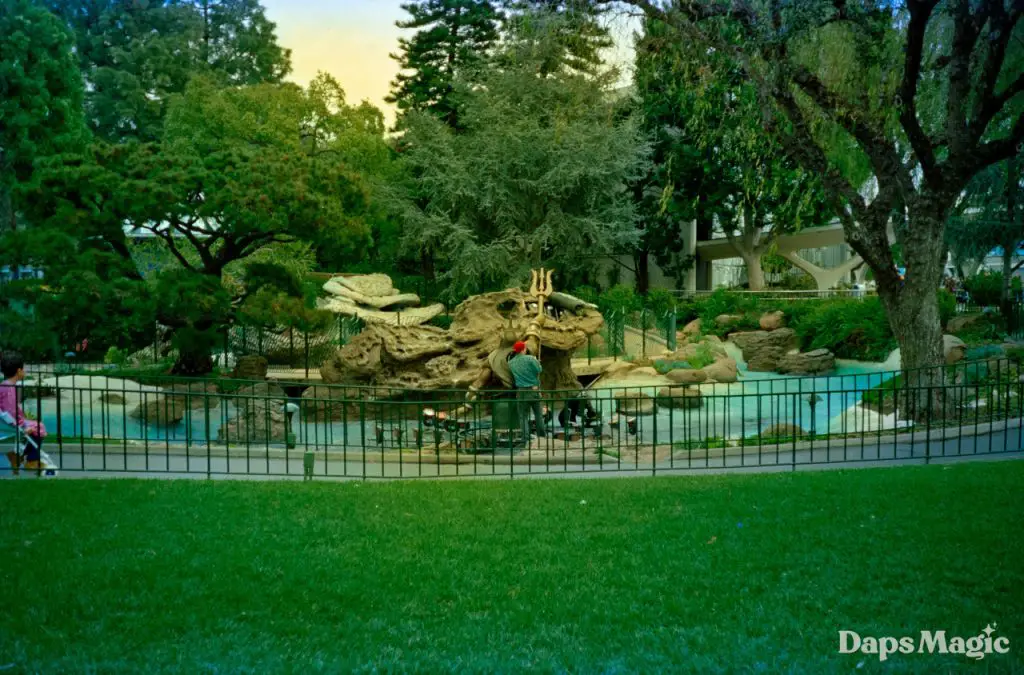
Triton Gardens quietly opened in early 1996. According to the February 9, 1996 issue of the Disneyland Line, it was a “water playground that becomes a romantic, magical corner after dark.” It was located in an area previously referred to as Alpine Gardens, and today it is the home of Pixie Hollow.
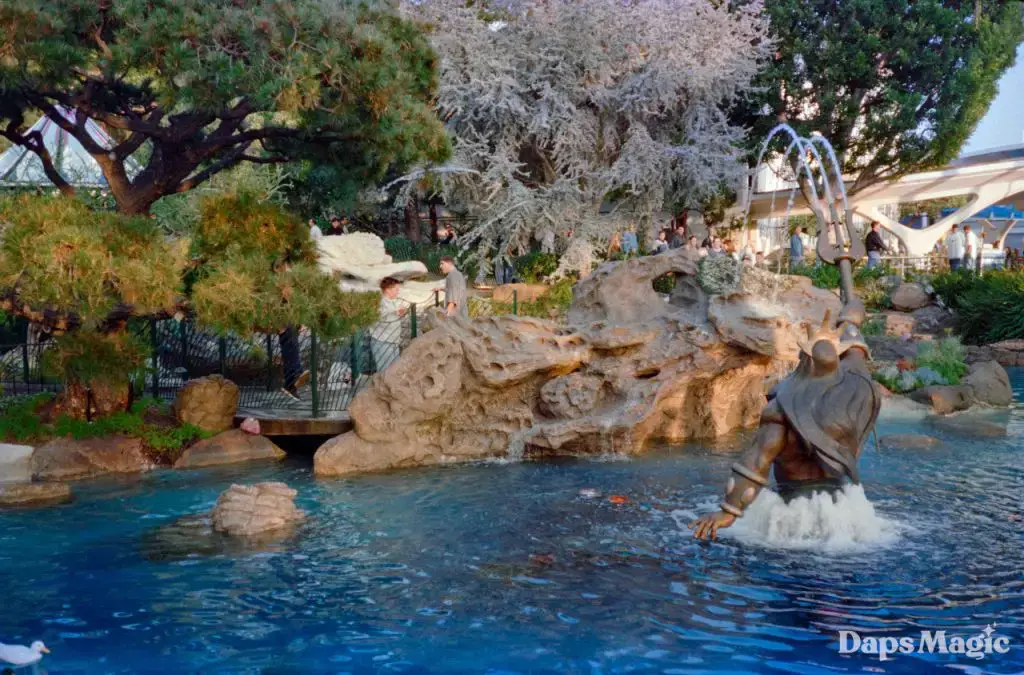
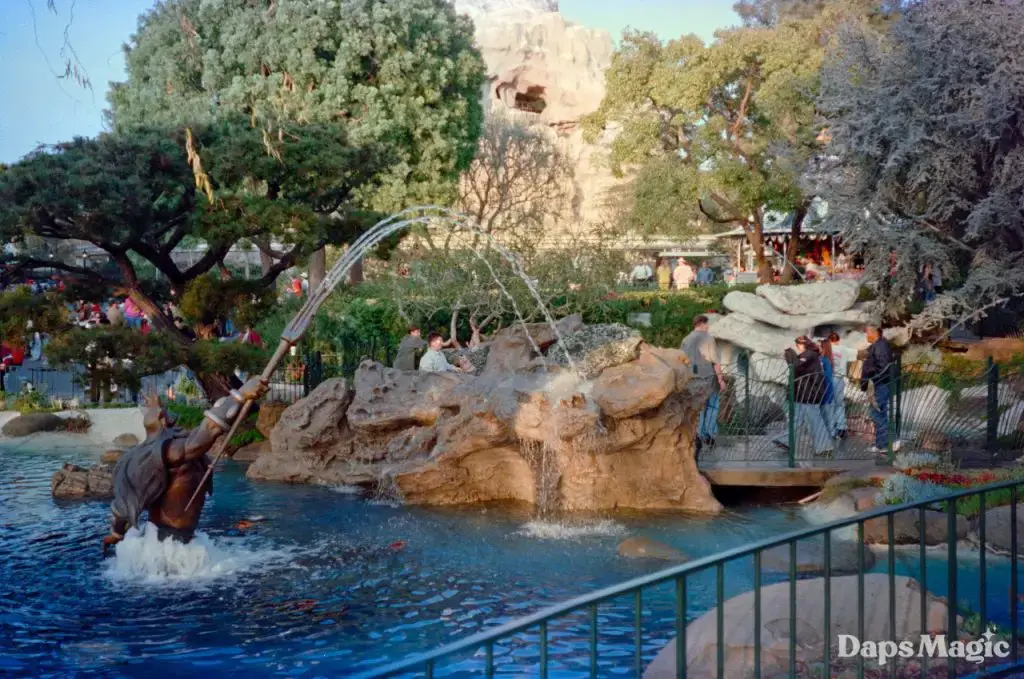
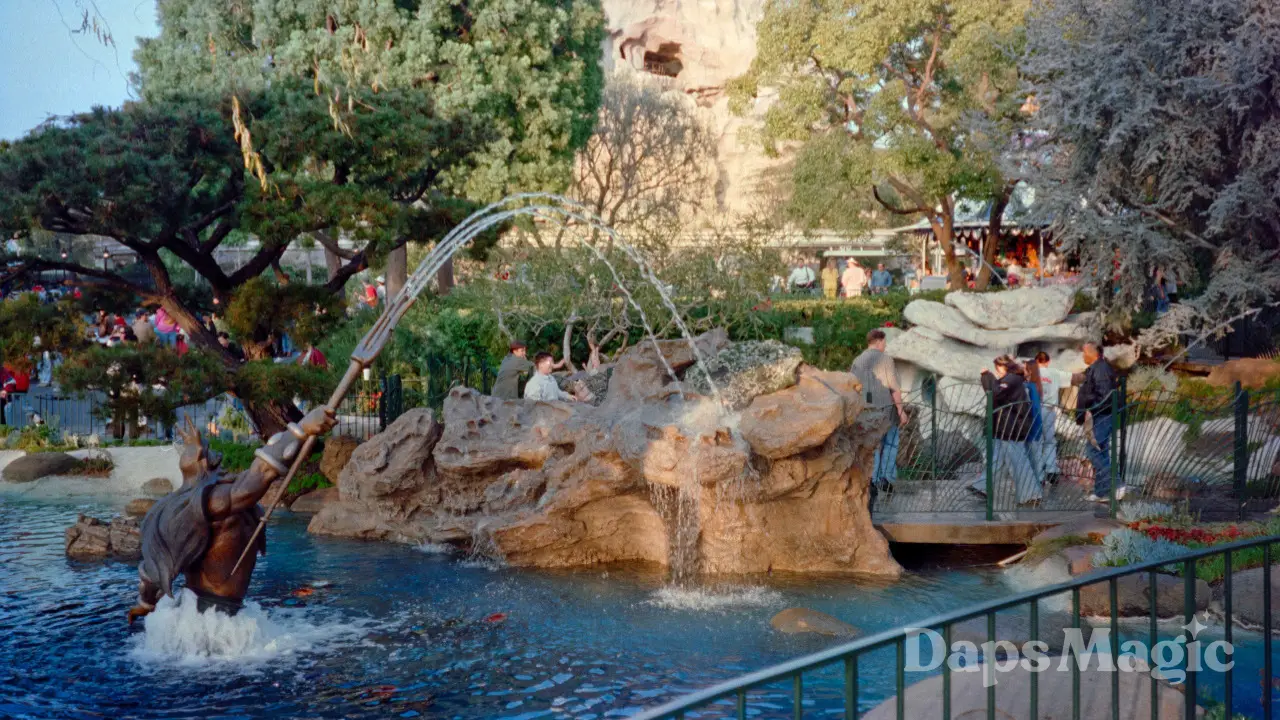
The centerpiece of Triton Gardens was a life-sized bronze statue of King Triton, from the 1989 Disney release The Little Mermaid. Visible from the waist up, Triton appeared to be rising from the center of a clear pond. In his outstretched hand, he held his trident, with jets of water spewing from the prongs. This was intended to evoke the rainbow he created at the end of the movie.
Those streams of water are known as laminar streams, which appear as clear tubes. Guests strolling the walkway through this newly landscaped area would find these same jets of water streaming out of rocks, arcing over their heads, and “diving” into small pools of water.
Fans of Epcot would have found these quite familiar, as they were (and are) a beloved feature of the gardens located at the entrance of the Imagination Pavilion. According to the Line, once those gardens were open, Imagineers began considering locating similar fountains at Disneyland.
They certainly spent a lot of time on this, as it was some fourteen years between the opening of Epcot and the appearance of Triton Gardens. During this time, they considered the entrance to Tomorrowland and the entrance to Toontown. Once the decision had been made to place them in the somewhat overlooked Alpine Gardens area, the first thought was to create a Maleficent dragon sculpture, spewing water rather than flame into the pond.
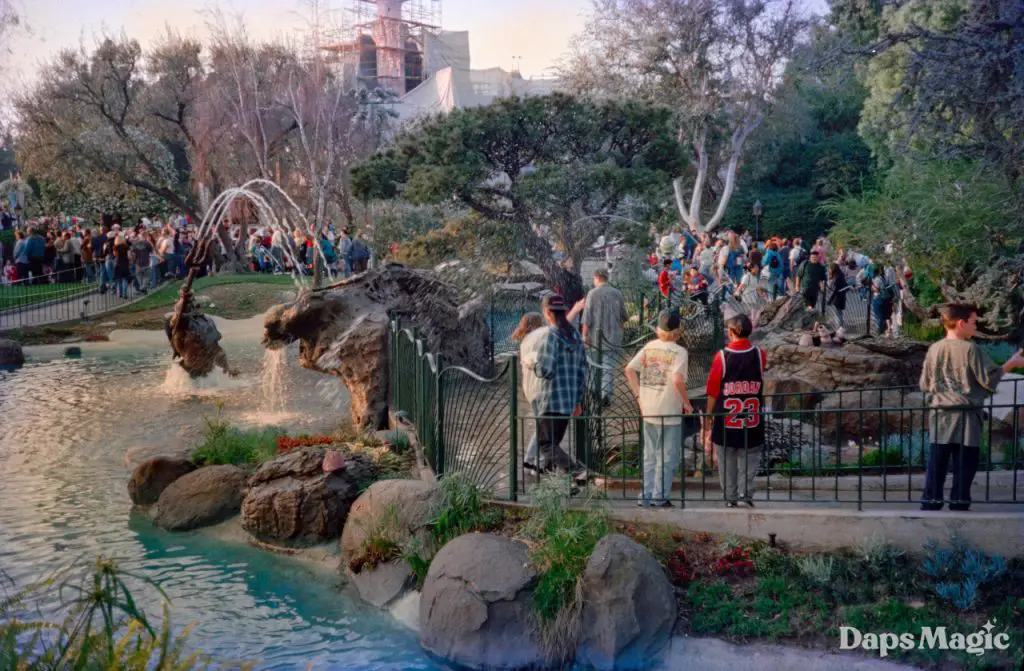
With the Little Mermaid as its theme, the new area was an immediate hit with Disneyland guests. Children especially enjoyed the water play aspect of the leaping fountains. Specially designed LED light in the base created colorful effects, best enjoyed at night. It is not entirely certain that this watery playground was as romantic as Art Director Kim Irvine hoped it would be. It certainly was a fine home for King Triton and Ariel herself, who also appeared as a bronze statue further into the gardens.
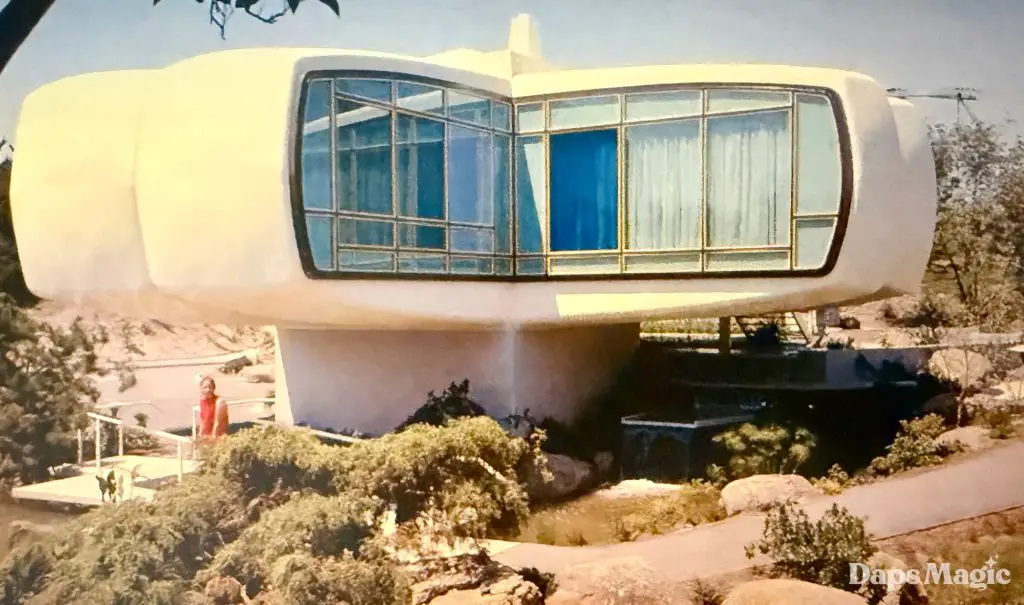
Disneyland fans with longer memories may know that the gardens were originally created to surround the unique House of the Future, sponsored by Monsanto. When it opened in 1957, the pond and gardens had a slightly more formal look to support the theme of the house. After the House was removed to make way for the 1967 new Tomorrowland, the area was given a new landscape and a new name, Alpine Gardens, to visually support the Matterhorn. Sharp-eyed guests will still find the retaining wall that once held the upper patio area of the House of the Future, still in place.
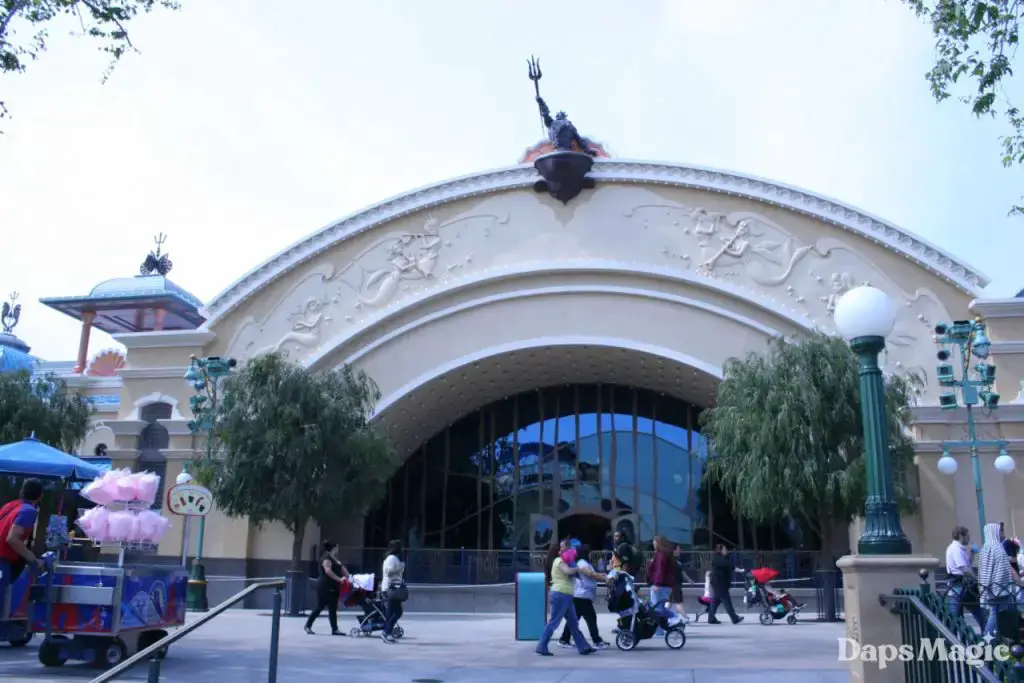
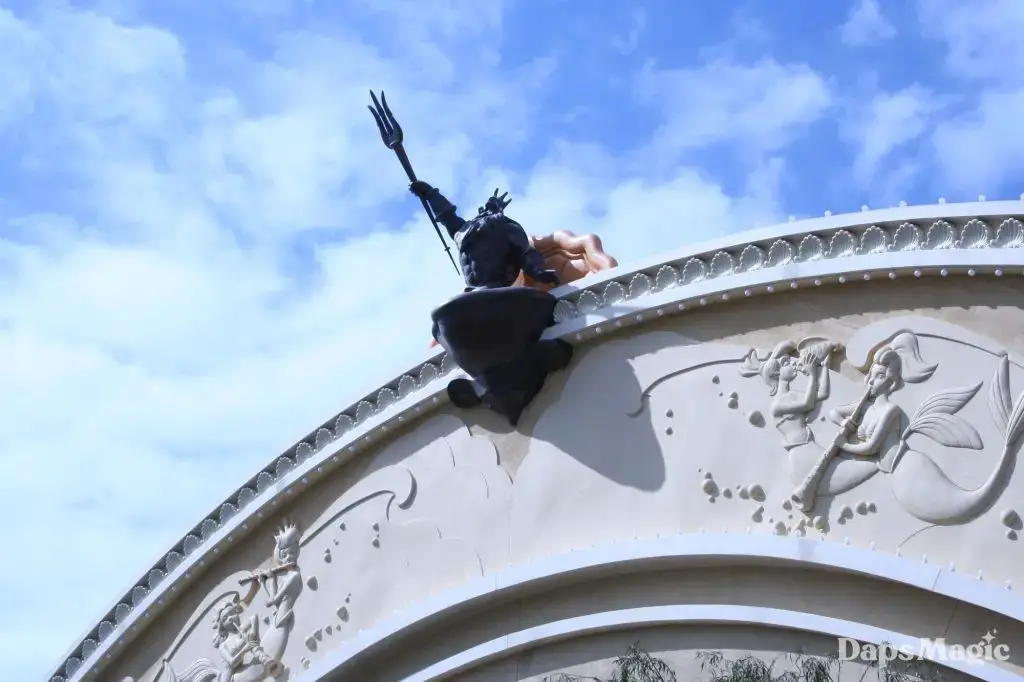
There is also an existing legacy from Triton Gardens in place across the Esplanade at Disney California Adventure. After the garden was closed on August 17, 2008 (to make way for Pixie Hollow), the statue of King Triton was carefully removed and incorporated into the design of the Voyage of the Little Mermaid attraction. His regal presence commands the top of the facade, although his trident no longer spews jets of water over guests. That is something that could be enjoyed only thirty years ago at Disneyland.